Wednesday, May 11, 2022

90-Year-Old Cardinal Zen Arrested for NSL


Cardinal Zen was arrested and released on bail hours later

I woke up this morning to the terrible news that 90-year-old Cardinal Zen Ze-kiun was arrested by the national security police along with three others on the charge of colluding with foreign forces for operating the now defunct 612 Humanitarian Relief Fund.

They were trustees of the fund that was set up during the 2019 protests to give financial, legal and psychological aid to those who had been arrested, and or injured during clashes with the police. In July 2021 the fund had over HK$250 million in donations.

The fund had to be disbanded last October
A few hours later Zen was released on bail, along with lawyer Margaret Ng Ngoi-yee, Chinese-Canadian Canto-pop singer Denise Ho Wan-sze, and professor Hui Po-keung who had been arrested at the airport a day earlier. He was on his way to Germany to be a visiting scholar.

Another trustee is Cyd Ho Sau-lan who is already in jail for taking part in unauthorised assemblies.

Last September the police said the fund had violated the national security law and served a court order, requesting information on its operations and financial transactions. That would include bank details, donor and recipient information.

The fund's trustees had announced it would stop operating by October 31 last year, after directors of the fund's holding company -- The Alliance for True Democracy Limited -- said it would soon disband.

As a result people whose trials are still in the system (and there are many) may not have enough financial means to pay their defence lawyers.

The fund was made of donations
China legal expert Jerome Cohen says the arrests were calculated to take place after incoming Chief Executive John Lee Ka-chiu's position was secured.

"Cutting off legal defense funds is a logical step in the systematic attack on the criminal justice system that has been under way since imposition of the National Security regime on HK," he writes on Twitter.

"We should recall that measures have also been taken to curb the availability of Legal Aid assistance. How many highly-paid HK barristers will be courageous and concerned enough to offer their services on a 'pro bono' basis?"

Meanwhile Human Rights Watch's Maya Wang condemned the arrests, describing them as "shocking".

"Arresting a 90-year-old cardinal for his peaceful activities has to be a shocking new low for Hong Kong, illustrating the city's free fall in human rights in the past two years. Human Rights Watch calls on the Hong Kong government to immediately release the five and drop all charges against them. The arrests, which comes days after the Chinese government's anointment of former security chief John Lee as the city's chief executive, is an ominous sign that its crackdown on Hong Kong is only going to escalate." 

Cyd Ho currently in jail
These people arrested this morning are not young people who some from the older generation may consider naive or rebellious for throwing bricks and Molotov cocktails are police. These are people in their 40s to 90s who tried to help protestors get the legal, medical and mental health support they needed.

The Vatican's response: "The Holy See has learned with concern the news of Cardinal Zen's arrest and is following the evolution of the situation with extreme attention," said the director of the Holy See Press Office, Matteo Bruni.

Usually the Vatican is low-key with responses when it comes to anything related to Hong Kong and China, and perhaps Cardinal Zen is not surprised, after having warned the Pope many times about China's modus operandi.

While it is thankful all four (minus Cyd Ho) were released on bail, Hui Po-keung won't be able to go to Germany, and they will have to prepare for trial. 

How much longer can they avoid revealing the donors and beneficiaries of the fund? 


Toronto Gets Michelin-Star Treatment


Toronto will see its first Michelin stars this fall

Toronto is all abuzz with the news that the Michelin Guide will make its first appearance in Canada's largest city this fall. 

Gwendal Poullennec, director of the international guides was in Toronto to make the announcement, and on hand were celebrity chefs Daniel Boulud and Alvin Leung. Boulud's Daniel restaurant in New York has two stars, while Leung's Bo Innovation in Hong Kong used to have three at one point, and is a judge on MasterChef Canada.

Leung, Boulud and Michelin Man at the event
"For the first time in its history, the Michelin Guide lands in Canada, and our inspectors are excited to experience the impressive culinary landscape of Toronto," said Poullennec. "This first selection for Canada's largest city, and our first in the country, will represent the local flavours, international inspiration, and distinct creativity that makes Toronto's dining scene world-class."

Hmmm he seems to hint that there could be guides in other cities -- Montreal perhaps? Vancouver?

Meanwhile Toronto mayor John Tory said this would help put the city on the culinary map for foodies to descend on Hogtown.

"This is an exciting moment for our city as Toronto will become the first Michelin Guide destination in Canada," Tory said. "This further bolsters our reputation as a world destination for food and cuisine. Our diverse city, along with the many renowned chefs who call Toronto home, have helped us get to this point and to be able to showcase all of the wonderful restaurants."

Toronto first Canadian city, who's next?
It has been long believed that Michelin will come to a city when the metropolis shells out for the guide through its tourism commission. 

And in Toronto's case, Michelin is teaming up with Destination Toronto -- a City of Toronto partner that promotes tourism and local businesses...


Tuesday, May 10, 2022

China's Never-ending Covid Strategy


WHO's Tedros says China's zero-Covid is unsustainable

The World Health Organisation has told China that its zero-Covid strategy is not sustainable and that it needs to find a way to transition out of it. 

But China seems to be doubling down with Shanghai still under lockdown after 51 days and in Beijing, workers in full PPE gear are putting up razor wire on the walls of compounds to prevent residents from leaving.

"When we talk about the zero-Covid strategy, we don't think that it's sustainable considering the behaviour of the virus now and what we anticipate in the future," WHO chief Tedros Adhanom Ghebreyesus said on Tuesday.

Shanghai's lockdown has left residents depressed
"We have discussed about the issue with Chinese experts and we indicated that the approach will not be sustainable. Transiting into another strategy will be very important."

Interesting Tedros is saying this now, over two years later -- as he was previously a champion of China's methods of stamping out the virus. Does this mean the WHO will also quietly stop endorsing Chinese-made vaccines using dead viruses and using TCM to treat symptoms?

Nevertheless, it's a significant shift for the WHO, but will China listen?

Chinese state media is parroting how the zero-Covid strategy is working well, but doesn't taken into account the economic price the country is paying, let alone its citizens' financial and mental health.

People are frustrated, angry, depressed and desperate being prevented from leaving their homes, unable to get enough food to eat, unable to earn a living, and wondering when this will all end.

In Shanghai they shouted from their apartments, banged on pots and pans, sent out as many messages as they could to the outside world, including a video compiled on April 6 of their desperation, and there are videos of them physically fighting with people in white PPE suits.

Beijingers are wondering if they are going to get the same treatment soon.

People's Daily on testing, quarantine, control
The easiest solution would be to vaccinate as many people as possible with mRNA vaccines instead of those using the dead virus; China has acquired them but refuses to use them in the hopes of developing its own version. 

But there is no time to waste -- China should be injecting these vaccines in the arms of the elderly in particular and anyone else who is immunocompromised as soon as possible.

It's a pity politics is taking precedence over science. And it has made people terrified of the virus.

On May 6 the People's Daily published a statement from the Politburo Standing Committee chaired by Chinese leader Xi Jinping on Covid strategy. The 1,900-word statement only had 10 words on the vaccination effort (circled in the red frame), while the rest talked about focusing on testing, quarantine and movement control. 

Not only does the zero-Covid approach hurt China, but also Hong Kong and Macau too, both waiting desperately for over two years for the border to the mainland to be lifted.

However, this is not Xi's priority -- he is determined to prove to the world that the zero-Covid strategy works and at any cost. But the rest of the world has ignored him and moved on, with some countries with clear protocols in place if someone vaccinated tests positive. 

They are not locked down indefinitely or worse -- shipped off to a quarantine camp where there are reports they are completely unsanitary, there are not enough supplies and no definitive word on when they can leave.

Tedros last visited China during Winter Games
People in China are not praising the country's efforts in fighting Covid-19 anymore -- they are concerned about their rights being infringed upon and are demanding answers. 

And since Tedros' comments about China today, they have been censored from China's internet.

Perhaps he is not the friend China thought it had anymore...

How About RATs for Restaurants?

Tsang suggesting diners show RAT results at restaurants

There are now eight people who tested positive in a cluster from eating in a restaurant in Yuen Long. They had eaten breakfast at Peony Golden Court last Sunday.

Seven of them were triple jabbed, one had two doses, and they all had mild or no symptoms.

Based on this, an infectious diseases expert is suggesting to the government that people not only use the Leave Home Safe app to prove they are vaccinated, but also show a negative rapid antigen test in places where masks are exempted, like restaurants. 

People take off masks to eat in restaurants
On a program on RTHK, Joseph Tsang Kay-yan said taking masks off in places like restaurants involves risk of transmission. 

"We ask visitors to the hospitals to show their RAT result of the day of visit because we're very worried they may be asymptomatic patients. Children also need to do RAT before going to school in the morning," he said.

"I don't know if the government will, after what happened [in Peony Golden Court], require people to show a negative RAT result before entering the scheduled premises where they can take their masks off, in order to prevent such incidents from happening again."

How is Hong Kong supposed to inch towards normalcy if experts like Tsang are putting more roadblocks in front of the public? Students are going to school all day, or at least longer than most meals, so it's understandable that they should get a RAT.

But what if someone needs to get a quick bite at a cha chaan teng, or a coffee with someone in a cafe? Do they need to produce a RAT for a 15-20 minute visit?

Getting RAT every time they dine is tedious
Here in Vancouver I attended a dinner with 16 people sitting at one table. Granted we were the only customers left in the dining area for a very late meal, but still, we all sat together, and not two tables of eight with plastic barriers in between.

That said, the restaurant closed at 10pm and we were out of there half an hour later.

Nevertheless, people in Hong Kong are tired of the extreme caution. There is the possibility the Yuen Long cluster will grow larger, or that it won't. 

If RAT is required, then there will be more people fabricating results, or recycling old ones because they can't be bothered to test everyday. Why create more opportunities for loopholes?

At least everyone who is dining out these days is vaccinated, which is the most important thing. 


Monday, May 9, 2022

Forewarning of John Lee's Reign

Lam met with Lee today before holding joint press conference

Today incumbent Chief Executive Carrie Lam Cheng Yuet-ngor met with her successor John Lee Ka-chiu and then they held a joint press conference, but no questions were allowed to be asked.

He made a statement saying he will work on developing Hong Kong's economy, but how if the border to the mainland remains pretty much shut, and the city's own quarantine regulations have deterred airlines from resuming their flights at Hong Kong International Airport.

How Lee is going to rejuvenate the city's economy remains a complete mystery as he only mentioned it in his platform with no detailed plans, and no other candidates running against him to challenge him.

Chung says Beijing has picked incapable leader
Perhaps even worse is that Hong Kong's next leader is not really qualified to even lead the city, according to Chung Kim-wah, the former deputy head of the Hong Kong Public Opinion Research Institute. 

"Lee has no experience in all the most important policy areas, such as economy, finance and foreign trade, or fields such as social welfare, housing, education, healthcare and labour. He has only been a cop," Chung said. "My fear is that under his rule, things will go wrong in every aspect of Hong Kong.

"Choosing Lee has chief executive shows Beijing doesn't mind picking a completely incapable person to do nothing but carry out its will," Chung added.

Ouch.

This morning's pro-Beijing newspapers harped on how Lee garnered 99 percent of the vote (not hard when you're the only candidate), but also it he was he who vetted every person in the almost 1,500-member Election Committee.

Ads praising Lee as the next HK leader
The same papers also had pages and pages of advertisements congratulating Lee on becoming the next Chief Executive. Some of the companies included Cathay Pacific, Swire, Jardine Matheson, KPMG, Deloitte, and PwC. Surely it was perhaps the best day in the past two years for the newspapers' advertising departments.

Another devastating assessment is from Chris Fraser, the former chair of the philosophy department at the University of Hong Kong. He described the election as "merely an elaborate public confirmation ceremony for a preordained appointee."

"To the millions who marched in the streets in 2019, the whole charade is little more than another waste of taxpayer money on a pointless ceremony demonstrating that the Hong Kong government will never be accountable to its own citizens," said Fraser, who is now at the University of Toronto.

All eyes are on Lee, who has given the appearance of jumping straight into work, with already an office and staff. 


Sunday, May 8, 2022

New HK Leader a Forgone Conclusion


Newly anointed Chief Executive-elect Lee with wife Janet

Well what do you know -- John Lee Ka-chiu is going to be the next Chief Executive of Hong Kong!
What a surprise.

Of the 1,428 votes cast, he received 1,416 of them -- 99.15 percent of the votes. It's not hard if you are the only candidate.

How can this even be called an election, despite the charade of having people voting for him. He even greeted voters before they cast their ballot which in a real election would have been a no-no.

Lee earlier greeted voters as they arrived
Nevertheless this is the result Beijing wants -- Hong Kong style democracy with Chinese characteristics, where you have a one-horse race where only 0.0002 percent of the population are eligible to vote.

For the record it only took 23 minutes to count all the votes.

"Lee was nominated by 796 Election Committee members and won 1,416 votes. this showed that he was supported by the majority of the committee members, and faces the expectations of the vast majority of Hong Kong residents," said Xinhua of the result. 

While Lee was showered with praise in the Hong Kong Convention and Exhibition Centre, the rest of the people not allowed to cast a ballot were resigned, angry or shrugged.

Just before the vote, three activists from the League of Social Democrats staged a mini protest. "Power to the people, universal suffrage now" they chanted as they marched towards the voting venue, though they were stopped by police.

Three lone protesters before the election
When asked by a reporter for his response that his performance will face challenges because of the lack of an electoral mandate, Lee replied:

"My election has been run according to the laws of Hong Kong. The election was conducted in a very transparent and fair manner. Anybody who is legally qualified can take part and run for election. I received a total of 1,416 votes and with that number of support, of course, it encourages me and gives me the strong confidence that my direction is agreed upon and shared by lots of Election Committee members."

He also said that the chief executive is accountable to both Hong Kong and Beijing, and that the two are connected. Lee added what Beijing wants to see in the city and what Hong Kong people want to see should be similar.

If only it were that simple...

A joke going around Twitter: 689 (Leung Chun-ying) + 777 (Carrie Lam Cheng Yuet-ngor) - 50 Years of no change = 1,416.


Saturday, May 7, 2022

Vote for the Only Candidate


Lee reveals his softer side during an election rally yesterday

Yesterday the sole candidate running for chief executive, John Lee Ka-chiu, made a last push for votes at a highly choreographed rally at the Hong Kong Convention and Exhibition Centre.

Sort of modelled on the US presidential elections, several people came up on stage to endorse Lee, including his campaign director Tam Yiu-chung, the sole Hong Kong representative of the Standing Committee of the National People's Congress, and former chief executive Leung Chun-ying, who is the chief convenor of the Election Committee with his peer, Tung Chee-hwa.

Leung made a pitch to endorse Lee
Interesting Leung made a pitch for Lee when Leung himself had expressed interest in becoming CE again. But perhaps this was the instruction from above, to play nice and support the only person running...

Meanwhile journalists were totally baffled by the slogan for Lee's rally: We and Us A New Chapter Together.

"We and Us"? 

In Chinese it literally says "Me and We", but that's also grammatically weird too, and besides his copywriting team has made many mistakes throughout his entire campaign that is basically a slam dunk.

Finally the man of the hour (if elected), arrived on stage. The emcee even asked people to turn on the lights on their phones and wave them in the air as if Lee were a rockstar about to sing a ballad.

He talked about his humble beginnings, living in Sham Shui Po, and how his family was poor, but his father managed to scrape together enough money to buy a television set. 

"We and Us"? What does that mean exactly?
After dinner they gathered around the TV and opened the wooden door, but closed the iron gate to allow the breeze in, and neighbours would stand nearby to watch the TV behind them. Lee said they later turned up the volume so they could listen and then eventually invited neighbours to come in to watch TV with them.

Then he quickly went over his four or five items on his election platform, including housing, security for stability, and develop the economy among them, and then that was it.

So this is the man Beijing wants to lead Hong Kong, from one of the poorest neighbourhoods in the city to becoming one of the highest paid leaders in the world at over HK$400,000 (US$51,000) a month -- apparently in cash.

What a rags-to-riches story.

He told about when he was robbed by older classmates once and was punched in the chest for not having any money to offer them, and felt angry he didn't dare speak up and decided to become a law enforcer instead, entering the police force at the age of 19. 

That's the reason why the almost 1,500 people on the Election Committee should vote for him.

Do they have any other choice?


Friday, May 6, 2022

ICAC insists on Getting Wanted Man

Peh says ICAC is "working hard" to extradite Ted Hui

Former lawmaker Ted Hui Chi-fung is wanted by the ICAC, the Independent Commission Against Corruption. His alleged crime? Calling for people to cast blank votes before the 2021 Legislative Council election.

Hui is currently in exile in Australia
He had already left Hong Kong in November 2020 and eventually settled in Australia, and the government has even frozen his bank accounts as well as those of his wife and parents.

But the ICAC have named Hui a wanted man and most recently commissioner Simon Peh Yun-lu reiterated the organisation was "working hard" to extradite the former pro-democratic lawmaker who is now in exile.

The snag is that Australia suspended its extradition treaty with Hong Kong after the implementation of the national security law in June 2020. And besides extradition usually requires dual criminality and Hui calling for blank votes on social media is not considered a crime in Australia.

Tsui was forced to resign after "partygate" scandal
So Peh is insisting in flogging a dead horse to show he means business, but in the end it's a dead end really. Why bother?

Or is he trying to demonstrate he is diligently doing his job after he attended Witman Hung Wai-man's birthday party a few months back that resulted in a spate of infections and snagged a few officials including then Home Affairs Secretary Caspar Tsui Ying-wai?

Nevertheless, with the upcoming Chief Executive election fast approaching on May 8, Peh said there was yet any signs of anyone promoting the eligible voters to cast blank ballots.

There are only 1,454 people on this election committee who have been vetted by Beijing. Surely they are not going to waste their vote when there is one candidate running?

Hung belting out a tune during his birthday party
It seems like a sure slam dunk for that person, former Chief Secretary John Lee Ka-chiu. How many votes will he get compared to Carrie Lam Cheng Yuet-ngor (777), and Leung Chung-ying (689)?


Wednesday, May 4, 2022

HKG-YVR Mask Comparisons

Vancouver's mostly wide open spaces help avoid Covid-19

I've been in Vancouver for two weeks now and it's been weird transitioning from a place where masks are worn everywhere except in your own home or when eating, whereas here it's all over the map.

There are a lot of people who don't wear masks outside while walking or exercising, though there are some elderly Caucasian people who wear masks while out and about, as well as Asians. Then it's interesting seeing the odd young person wear masks, when one would think others would make fun of them wearing protection.

Earlier children at school had to wear masks 
On public transport, about half the commuters wear masks, others don't, and again the vast majority of Asians wear masks and some elderly. It's quite surprising that bus drivers don't wear masks at all considering they are interfacing with different people constantly during their shift.

In supermarkets and places like Costco, again about half the customers wear masks. Most staff wear them, but not all. One cashier was double masked and really afraid to touch things other than her cash register, while her colleague only a few metres away was completely unmasked and happily chatting with customers. 

Some stores or offices demand that all visitors must wear a mask, including law offices.

On public transport about half wear masks
Also the mask hygiene levels here are pretty lax. In Hong Kong people sanitise their hands and get out a fresh tissue paper before taking off their masks, while here people just fold it and put it in their pocket, or worse, lay it on the restaurant dining table with no tissue at all -- and the part touching the face is face down on the table!

There are hand sanitisers in shopping malls and a few shops, but overall there aren't many people using them, or any alcohol spray at all. Since I was in the habit of using an alcohol spray in Hong Kong, I bought a spray bottle the other day, which was only in the pharmacy section of the store, mostly to treat open wounds to prevent bacteria.

Is Hong Kong overly fanatic about keeping clean? Or do Vancouverites need to learn more from Hongkongers? 

To enter some shops, masks are required
Fastidious hygiene is a good habit to have, and Vancouver is lucky in that there are big spaces and many live in homes that allow for social distancing. However, would it hurt to pay a bit more attention to cleanliness? We're touching so many things all the time...


Respected Ex-Lawmaker Moves to Canada


Cheung has left Hong Kong for Toronto

There was word today that former pro-democratic lawmaker Fernando Cheung Chiu-hung has left Hong Kong and migrated to Toronto, weeks after he was released from serving a three-week jail sentence in February.

He went there, because at least his "basic freedoms no longer needed to be granted by those in power".

He fought for ethnic minorities and disabled
Cheung's departure with his family was confirmed by Chung Kim-wah, the deputy executive director of the Hong Kong Public Opinion Research Institute, who had also left for the UK on April 25, citing "threats from powerful bodies" and fears over crossing "moving red lines".

"I wish my respected friend Cheung Chiu-hung and his family a happy life in Canada," Chung wrote on Facebook on Wednesday morning.

Cheung is known for advocating for ethnic minorities and people with disabilities, inspired by his daughter who has severe intellectual disability. He also has another daughter and a son. 

In his reply to Chung's post, Cheung said: "In my current situation, I need to spend more time taking care of my daughter and my family. Being a caregiver is not easy. We are still close to each other, no matter in any corner of the world, and we will not forget why we started.

"I am not yet in a stable situation now, but at least it is safe, and my basic freedoms no longer need to be granted by those in power."

Cheung forcibly removed from Legco
The 65-year-old Cheung was born in Macau, educated in Hong Kong and then went to the United States to study further, and obtained American citizenship.

However, he gave it up when he ran for a social welfare seat in the Legislative Council in 2004. He was in and out of Legco for 12 years until 2020 when he resigned with 14 other colleagues to protest the disqualification of four of their peers.

At the time Cheung said, "Our sky has fallen apart now... Even people like me, regarded as very 'soft' protesters, have become Beijing's target."

Since then Cheung kept a low profile, but this past February he was jailed for three weeks on a contempt charge for protesting against a rival, Starry Lee Wai-king, assuming control in a chaotic Legco meeting in 2020, in the first such conviction since indirect elections were introduced more than three decades ago.

When he went to jail, Cheung was very worried about his mentally disabled daughter, as the two are close and she was used to seeing him everyday. It was also heard but. not reported that Cheung was infected with Covid-19 while behind bars, and that the prisoners' rights were not respected.

Cheung with his mentally disabled daughter
He was released on February 25 and now he has left Hong Kong. 

It is a relief to hear this respected lawmaker finally somewhere safe. Also his daughter will have access to good social assistance when it comes to disabilities, unlike Hong Kong.

We wish Cheung and his family best of luck with their new lives in Toronto. He deserves peace and quiet after all the tumult they have been through in the last few years.

Monday, May 2, 2022

HK's Press Freedom Plunges Further


Hong Kong's press freedom has fallen to No. 148 this year

May 3 is World Press Freedom Day and it is sad and shocking to see Hong Kong plunge further down the Reporters Without Borders' World Press Freedom Index.

Alviani says HK has biggest drop of the year
In 2002 Hong Kong was ranked No. 18, when the index was first published.

Last year the city fell to No. 80.

This year it's ranked No. 148, in between the Philippines and Turkey. China is ranked at 175 out of 180.

"It is the biggest downfall of the year, but it is fully deserved due to the consistent attacks on freedom of the press and the slow disappearance of the rule of law in Hong Kong," said Cedric Alviani, head of RSF's Taiwan-based East Asia bureau.

"In the past year we have seen a drastic, drastic move against journalists," he added.

Lai in jail for numerous convictions and charges
The implementation of the national security law not only led to the arrests of pro-democracy lawmakers and activists, but also in the past two years against journalists as well.

Last year Apple Daily and Stand News, two popular outlets that were critical of the government, shut down after newsroom editors and executives were arrested and company assets were frozen by the security law.

RSF's database now lists 13 Hong Kong media workers in jail, a number Alviani described as "enormous", and equivalent to almost 10 percent of all known journalist detentions in China. 

In addition last week there was huge uproar when the Foreign Correspondents' Club announced it would "suspend" handing out Asia's prestigious Human Rights Awards, citing constantly changing "red lines" due to the national security law.

RTHK gutted into government spokes piece
While there is relief the Human Rights Awards will be awarded from next year at Arizona State University, the fact that it has moved not only tarnishes the FCC's reputation for lacking courage in this difficult time made the club look like a coward.

Several journalists on the Press Freedom judging panel quit the club as an act of protest. 

And while there are still international media outlets in Hong Kong, such as AFP, Bloomberg, CNN, the Economist and the Financial Times, how much longer can they stay in the city?

No media can do without correspondents in Hong Kong. But do the media need to have their regional headquarters in Hong Kong?" asked Alviani.

"Is it safe to leave your computer archive, to leave your server, to leave your management team in Hong Kong? In the current situation, maybe not."

RSF says 13 media workers jailed, like Stand News
Who would have thought in 25 years since the handover, but in particular in the last two years the media landscape would have changed so drastically in Hong Kong?

But here we are, sitting at No. 148, falling closer to its Motherland...


Mind-blowing Cello Concert

German Nicolas Altstaedt performed a cello recital today

This afternoon I went to my first in-person concert in almost a year!

The Vancouver Recital Society brought in German-French cellist Nicholas Altstaedt to perform a solo recital which opened my eyes to the versatility of the cello as well as his virtuosity in playing.

Held at the Vancouver Playhouse, the seats were just under half full -- even though the provincial government allows 100 percent capacity, the VRS only holds concerts that are 50 percent capacity to avoid being caught out by the social-distancing rules constantly changing. And while masks are not mandatory, they are highly recommended and almost everyone who attended complied.

There was less than half capacity at the concert
Altstaedt, 40, from Heidelberg, Germany, came onto the stage wearing the complete opposite of a suit -- loose fitting top and baggy pants -- and socks. His hair is very curly and long, looking like an untamed mass of hair.

Nevertheless he was here to perform and he demonstrated a diverse range of music playing. 

To start, contemporary composer Henri Dutilleux's Trois strophes sur le nom de sacher, followed by going back to the Baroque period with JS Bach's Cello Suite No. 5 in C minor, BWV 1011. To see Altstaedt fluidly move between the two completely different styles was impressive and revealed his technical skills.

But after the intermission, his final piece really demonstrated his musicality and skill in Zoltan Kodaly's Sonata in B minor for solo cello Op. 8. The Hungarian composer is know for his folk song style which is present in the first and third movements, heavy and rustic, brash and loud, while the second movement the performer plays the cello like an upright violin at times. His left hand constantly moving down the neck of the cello, while moving his bow back and forth, not the typical long strokes.

At one point he is using the bow, and plucking the string at the same time so it's almost like hearing two different instruments. To have an idea, here is another cellist, Sebastian Baverstam playing the third movement of the Kodaly piece.

Altstaedt receiving more applause from the crowd
We later heard that this is considered one of the hardest pieces a cellist can play, and Altsteadt nailed it with gusto as well as with refinement. Many audience members jumped to their feet after he finished playing this piece, and he gave us an encore of Bach.

Just before he played his encore he explained to the audience that each piece required the strings to be tuned a different way each time -- which totally blasted my assumption that all stringed instruments were tuned the same way. He said they were changed to give more depth to the notes he was playing. That insight blew us all away.

However he did not explain why he wore socks on stage! 

Nicolas Altstaedt

Henri Dutilleux
Trois strophes sur le nom de sacher

JS Bach
Cello Suite No. 5 in C minor, BWV 1011

Zoltan Kodaly
Sonata in B minor for solo cello, Op. 8


Sunday, May 1, 2022

Review: Revolution of Our Times

Behind the scenes of the 2019 protests

My friend YTSL told me that the documentary about the 2019 protests, Revolution of Our Times by director Kiwi Chow would be shown in Vancouver and I saw one of the last screenings this afternoon.

When I bought the ticket there were still many available, but that's because it was shown in February, and also a few times in the past two weeks.

Nevertheless it was heartening to see one of the attendees was an older woman in her 60s wearing a yellow raincoat, in reference to Marco Leung Ling-kit, who plunged to his death on June 15, 2019. The cinema was not full, but the vast majority were Asian.

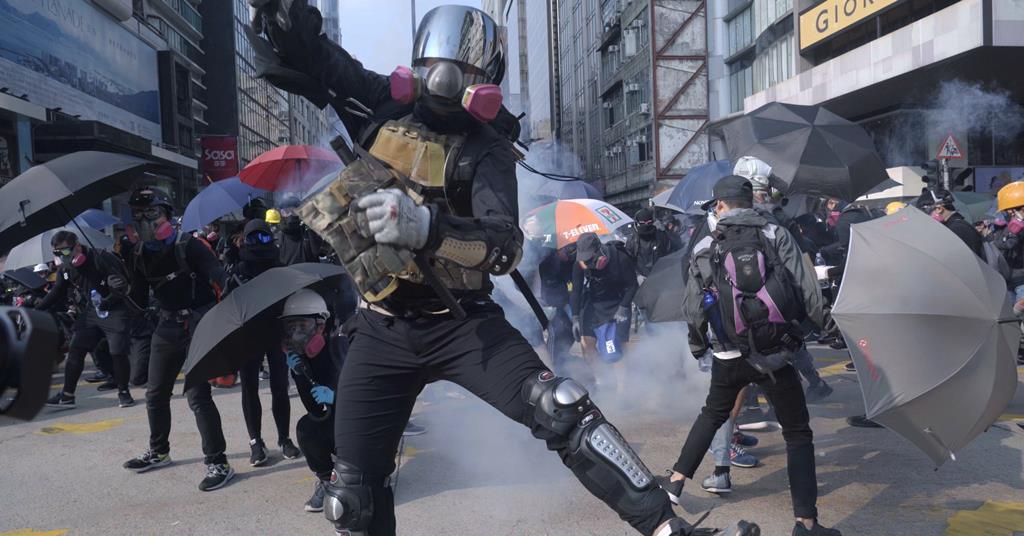
The documentary in general is a good record of what happened in 2019 from the perspective the protestors; it is quite obvious from the footage there was police brutality, which demonstrates how violence escalated in the ensuing months.
Protestors were faceless and leaderless
However, one needs to know the background of Hong Kong's history (a former British colony handed back to China, which then reneged on the "one country, two systems" promise of no change for 50 years) to understand how the city came to this moment. There is only a brief mention of the 2014 Umbrella Movement, which led to the explosion of the anti-extradition protests five years later.

One of the first scenes was of former legislator Claudia Mo Man-ching taking part in the initial peaceful protests -- it would be the first of several times I would cry because she is now languishing in jail, and many other people who are captured in the film are behind bars as well. 

It is very lucky of the director to have interviewed them for the record.

They include Benny Tai Yiu-ting, Avery Ng Man-yuen, Fernando Cheung Chiu-hung, Wu Chi-wai, Joshua Wong Chi-fung, Gwyneth Ho Kwai-lam Agnes Chow Ting, and those who are in exile: Ted Hui Chi-fung and Nathan Law Kwun-chung.
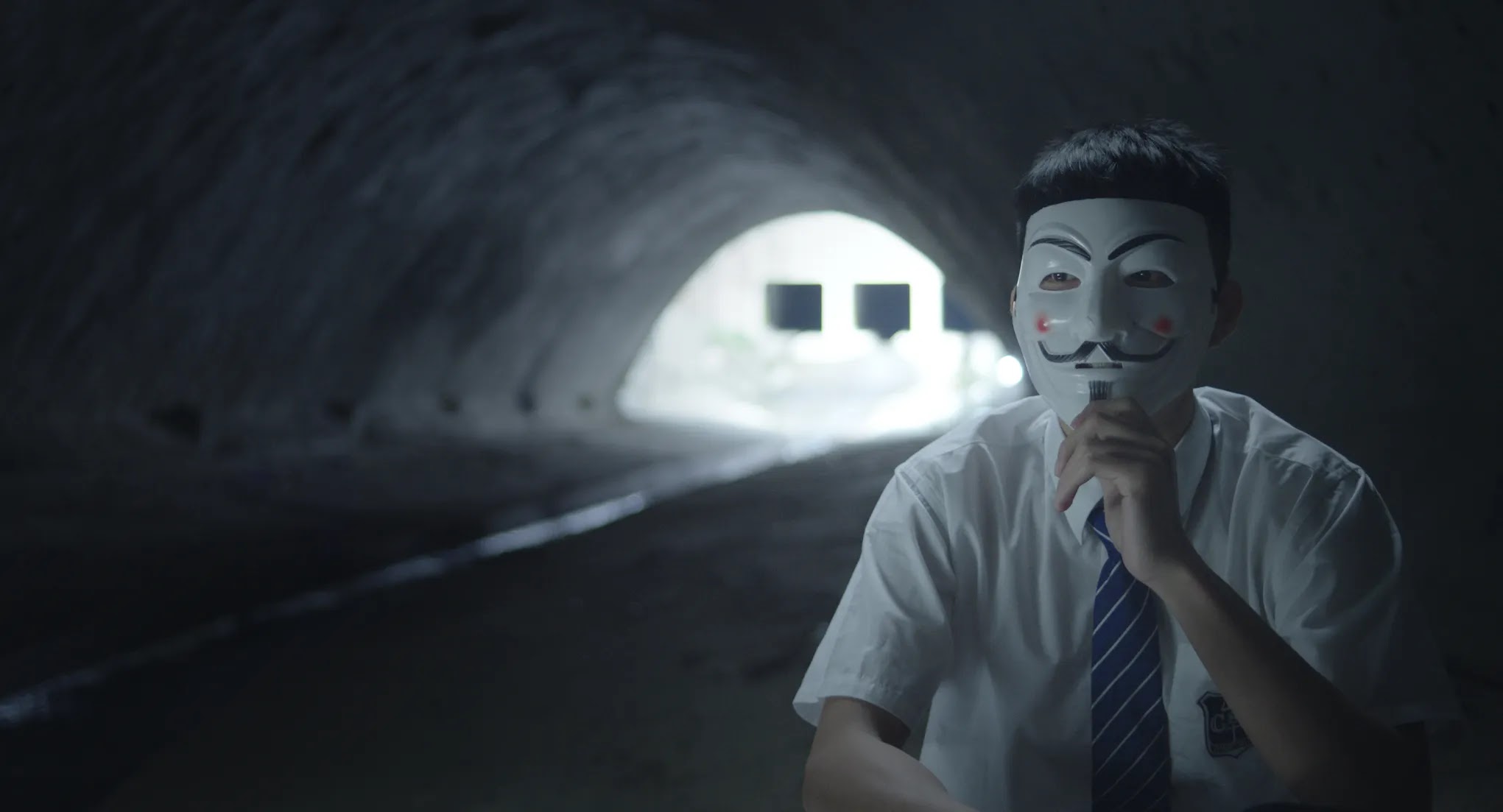
This 16 year old didn't tell his dad about protesting
But the film isn't about them, but the faceless and nameless protestors who followed Bruce Lee's mantra to "be water". They learned from the 2014 protests not to have a leader, but be leaderless and Revolution of Our Times follows their evolution, how 2 million people who came out to peacefully protest against the extradition bill proposed by Chief Executive Carrie Lam Cheng Yuet-ngor and then Secretary for Security John Lee Ka-chiu (and now sole candidate running for the next chief executive).

The turning point, as many remember was July 1, 2019 when some people decided to storm the Legislative Council. This is where Tai says the protest became fractured, where some protestors wanted to remain peaceful, while others said the government was not listening and felt they had to escalate to violence.

There is footage of them inside, but also the confusion and fear -- would the police storm in at anytime and arrest them? Would they come out alive? This is where viewers begin the empathise with them -- and are reminded these are young people in their teens and 20s.

After this interview, Gwyneth Ho is now in jail
As a result of the storming of Legco, there was another motto: "not one less" -- everyone together -- and they began organising themselves, from front-line protestors who lobbed bricks and pushed water barriers around, to rounding up cars to drive people home late at night, to "moms and dads" who provide logistical and emotional support, and those who collect information on the street to inform others on Telegram where to go and figure out strategies and exit routes on maps.

Another big event was July 21, 2019 when white-shirted men with sticks beat up people at the Yuen Long MTR station. There is a lot of horrific scenes of people literally being hit by sticks, and Gwyneth Ho's own footage of being attacked in a Facebook live broadcast shown in full. 

The public immediately complain to the police and the commander hardly acts concerned when he finally arrives at the scene, saying he came as soon as he heard... when the incident was already over. Many people believed the police had colluded with the triads, and there is even a clip of Junius Ho Kwan-yiu instructing the triads to mercilessly beat anyone in black. 

Chief Executive Lam looks like a deer in headlights at a press conference where former RTHK reporter Nabela Qoser grills her the next day about where she was when the Yuen Long attacks were happening; Lam and her ministers beat a hasty retreat. One hollers, "When will you die?"

This first aider gives his mask to an elderly man
As a result the protests escalate further to August 31 with the attack in the Prince Edward MTR station, when police brazenly shot pepper spray in the station and attacked people as they were desperately trying to flee. 

One of the first aiders begged the police to let him in to treat the wounded, but viewers can hear the police tell him he is a piece of excrement. The young first aider, only in his teens, is inconsolable. 

This led to a complete hatred of the police, and there are numerous scenes of them stepping on protestor's faces once they were caught, or kneeing them so they could not breathe, or still beating them, or dragging them on the ground. One protestor points out they understand the legal risks of what they are doing, but if the police do anything wrong, they aren't held accountable.

Meanwhile there is also a profile of Uncle Chan, a 73-year-old farmer who wanted to do his part to protect the young protestors. Wearing his fuchsia hat, gas mask and florescent vest, he tries to stop the police from physically harming the young people on the streets. There is an altercation between him and the police and for several agonising seconds viewers watch blurry chaotic footage, worrying if Chan is OK. 

Uncle Chan (left) tells a protestor to be careful
There is stunning drone footage of the protests, from the start showing the 2 million people flooding Hennessy Road, up at Lion Rock where protestors put up a statue, and unfurl a banner, but most impressive is scene where the police are running up Nathan Road to catch protestors and they disperse as quickly as possible like black ants. The police catch one person, then try to catch another, but another protestor knocks that officer down and then the two of them run their separate ways. 

Another is a comparison between October 1, 2019 in Beijing and how it is marked in Hong Kong. As one can imagine Chinese leader Xi Jinping's celebrations are controlled and grandiose, whereas protestors in Hong Kong tear down upbeat Chinese slogans and prepare to defend their hometown.

It all culminates into the final showdown, first at the Chinese University of Hong Kong, and then at Polytechnic University. Viewers see first hand the chaos and what it was like being on the front line fighting the police at both campuses. The protestors practice using sling shots, bows and arrows, prepare Molotov cocktails and ferry supplies.

But things turn for the worse when the police surround the protestors at Poly U and they are terrified there is no way out. They even try to escape through a sewer but without success. This was perhaps the lowest point of their morale along with fatigue that really hit the protest movement hard despite rallying from people outside the campus. 

Director Kiwi Chow 
Everyone knows the end of the story -- the national security law was implemented on June 30, 2020, abruptly ending the protests unless people were willing to sacrifice themselves to 10 years in jail. Director Chow records how over 10,000 people have been arrested related to the protests and lists the names of former lawmakers and activists who have been imprisoned and still awaiting trial. 

But then Chow tries to end on a high note, having primary school children write pro-Hong Kong messages on Post-It notes, and then has an orchestra and singers in protest gear reprise the protest anthem. It's very contrived compared to the rest of the documentary. It is understandable he wants to incorporate the song into the film, but these scenes are not genuine.

Nevertheless Chow should be commended for having the courage to put Revolution of Our Times together -- another filmmaker was doing a similar project but was spooked by the national security law and gave their footage to Chow to use instead. The people who came forward to be interviewed are brave too, even if they do not fully reveal their faces and voices. 

They are the ones who help the viewers understand their motivations, emotions and beliefs at that time, and how they were all united under one cause. People leaving Hong Kong do not blame the protestors for what they did -- instead they blame Lam and Beijing.

And following the "be water" mantra, exiles abroad are trying to figure out how they can keep the movement alive, because it is their love of Hong Kong that reminds them of why they need to find freedom elsewhere.

Revolution of Our Times
Directed by Kiwi Chow
152 minutes


Portugal - Desserts are Seriously Sweet

Pastel de feijao was a fantastic dessert made with white bean Outside of Portugal, the country is best known for its pastel de nata, the fla...