Showing posts with label real estate. Show all posts

Saturday, May 10, 2025

Unease Leads to Falling Property Sales

One of Vancouver's top condo markets has slashed staff count

Unease is in the air, and the next few months look extremely challenging for people on edge about their employment and financial situation.

It was disconcerting to read the news that one of the biggest condo marketers in Vancouver cut 25 percent of its staff.

Rennie laid off 31 of its office staff, claiming geopolitics, economic factors and artificial intelligence for the drastic move.

"It was a necessary step in response to a changing market, but no less painful," the company said on LinkedIn.

The company's post added Rennie is reducing its head office staff count to 92 from 123 [with a total of 400 employees], and pleaded for anyone looking for people to consider its "thoughtful, talented contributors who helped shape our culture and our business."

Real estate sales have slowed in Vancouver, dropping 24 percent in April year on year, and it was reported the other day the valuations of pre-construction condos have fallen -- which means those who put down payments a year or two ago cannot get mortgages at the previous higher valuation, but the current one.

That will result in more people being unable to afford their condos and will have to sell at fire sale prices.

Then there's the Trump factor, with the American president's indiscriminate tariffs casting a chill on thoughts of making any kind of big ticket purchases from cars to property.

And there's also AI, which makes having humans doing the same work redundant and cost-saving. 

Which is perhaps why Rennie says in the post: "The shifts we are seeing in real estate aren't temporary, they are structural. And yesterday is never coming back."

Yikes.

Monday, February 17, 2025

Vanity Plates Flaunt Vanity Wealth


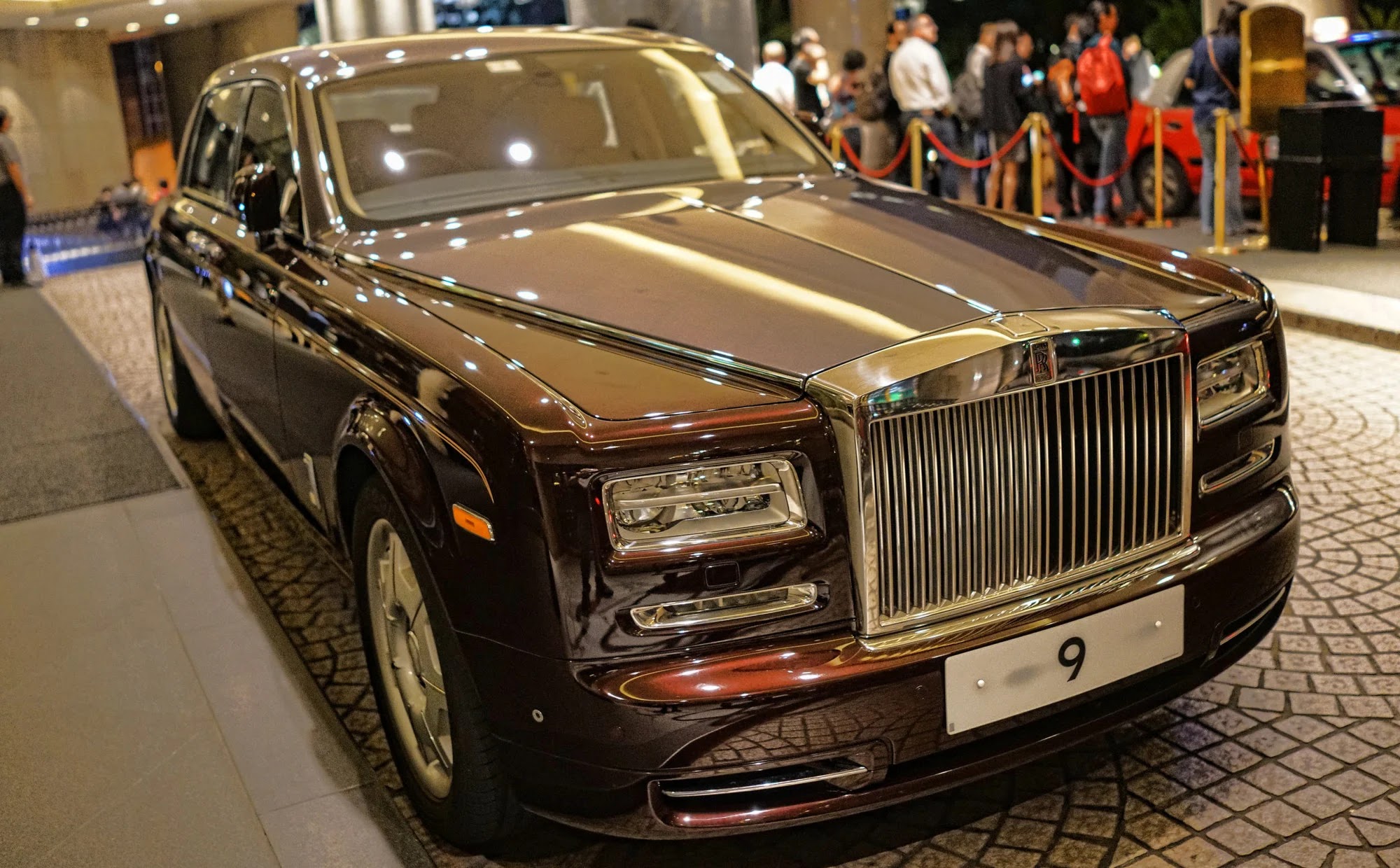
Single digit license plates can command high prices at auction

After real estate in terms of square footage and location, Hong Kong vanity license plates are another way to show off one's wealth. With a car, everyone around town can see how much you spent on the plates. And the fewer letters or numbers the better.

Forty-nine plates went under the hammer on Sunday at an annual Lunar New Year auction held by the Transport Department. And it seems that even though the local economy is struggling, the uber wealthy have no problems shelling out for vanity plates.

Lucky numbers are also in high demand
One that just had the letter "S" went for HK$14.2 million, while "88" was sold for HK$11.4 million.

Bids for the letter "S" started at HK$5,000, but a prospective bidder cut to the chase and offered HK$8 million as soon as bidding started. 

Single-letter plates are considered a sign of status and "S" is closely related to the Superman logo. There were already predictions ahead of the auction that this plate would go for around HK$10 million.

Meanwhile the digits "88" had the second-highest price, with bidding lasting for 13 minutes.

Another plate, "183" went for HK$725,000, while "BB18" was sold for HK$430,000.

To put these auction prices into perspective, he most expensive license plate in Hong Kong is the letter "W" at a whopping HK$26 million in 2021, and "R" was HK$25.5 million in 2023. 

When it comes to just numbers, someone paid HK$18.1 million for the plate "28". 

Only in Hong Kong...

Wednesday, February 12, 2025

Remembering Chef Margarita Fores


Fores, a tireless promoter of Filipino cuisine has died at 65

This morning I woke up to the tragic news that accomplished chef and tireless promoter of Filipino cuisine Margarita Fores has passed away. She was 65 years old.

According to news reports she died of a massive heart attack in her Upper House hotel room in Hong Kong, where she was on a stopover after traveling to Morocco and Madrid.

One of her chef friends, Vicky Cheng of Vea and Wing, was shocked and heartbroken, as he had only spoken to her hours earlier. He wrote on his social media post:

Cheng with Fores in a collaboration dinner
Why is life so not fair!!?
I was just speaking to you yesterday, you asked me to go out for a night cap…. And I said I had an early morning I couldn’t come out…. I didn’t know it was the last time you were ever going to ask me 😢😭

“Oh no worries! Will always be back to see you!…“ this was the last message you sent me 😭

I interviewed Fores back in 2023 for a Mother's Day story about how chefs' mothers or grandmothers influenced their career paths into the kitchen.

Her mother had just passed in March that year, describing her as "My Mothers, My Rock, My Everything", and how she introduced the young Fores to Europe, in particular Italy and fell in love with the cuisine.

Fores learned how to cook Italian and brought her skills and passion back to the Philippines, opening Cibo in 1997, followed by Lusso, Grace Park, and The Loggia.

In 2017 I made my first trip to her home town, Manila, where a food exhibition called Madrid Fusion was held. She introduced me and several other Hong Kong journalists to Filipino cuisine, from adobo, a braised meat stew, to kinilaw, where raw seafood is marinated in citrus juices much like ceviche. 

Fores fell in love with Italian cuisine
I learned how Filipinos eat rice three times a day and for festive occasions will roast a stuffed baby pig called lechon.

As we took in these sights and flavours, Fores was there to explain and demystify Filipino cuisine. We were excited to learn from her.

Before and after the pandemic she came to Hong Kong frequently, where she made friends with many chefs, praising their food, and was supportive of them.

Thai chef Thitid "Ton" Tassanakajohn wrote on his social media that Fores set an example to others.

"I will remember to be kind, to hold a good heart even [if] the world turns on me. I will make people smile and laugh. And I will remember to be a good person," he wrote.

Fores was born in 1959 into the wealthy Araneta family, her grandfather J Amado Araneta was a tycoon, and the family had businesses in real estate, food, leisure and hospitality.

In 2016 she was named Asia's Best Female Chef" by the World's 50 Best Restaurants. 

Fores survived cancer twice, including thyroid cancer around 2006. She has a son, Jorge Amado, who was learning the restaurant business from her and has his own restaurant, a mano.

Margarita your big smile and enthusiasm will be missed. RIP.

Sunday, December 1, 2024

Adrian Cheng's Successor Quits After Two Months


Hopes are riding on Huang to revive NWD


After scion Adrian Cheng Chi-kong's embarrassing exit as CEO of New World Development in late September, his successor has quit after two months on the job.

Eric Ma Siu-cheung who was formerly Hong Kong development minister resigned on Friday to "pursue his other personal commitments" and was promptly replaced with Echo Huang Shaomei on a three-year contract earning HK$984,880 (US$126,540) per month including a discretionary bonus and other benefits.

Ma quit after two months as CEO
"Having reviewed the development direction of the group, I understand that timely phased changes need to be made, and the role of the CEO also [needs] to be adjusted," chairman Henry Cheng Kar-shun said in a statement. "I'm very pleased to have found a more suitable candidate."

Will Huang be able to turn around New World's fortunes after Adrian plunged the company to have HK$19.7 billion in losses, the worst performance since the company's inception in 1970? And he was making HK$1.51 million per month...

Huang will have the difficult task of continuing to off-load assets to lighten the company's debt load, and then figure out a way to help New World generate more revenues in the property sector, probably from the mainland.

She has worked for New World China since 2015, and became the CEO just as the pandemic hit in February 2020, leading many major commercial projects. Huang is also a member of the Guangdong Provincial Committee of the Chinese People's Consultative Conference and its standing committee.

Cheng was booted out in September
Good luck to Huang as she's got a tall order ahead of her. It's always the women who have to clean up messes that men make...

Tuesday, November 26, 2024

Chinese Tycoon Loses Big on Property Fire Sale


Chen has liquidated his HK property at very cheap prices

Another Chinese tycoon has had a fire sale -- selling nine flats in Hong Kong at over half the price he bought them.

Chen Zhuolin is the chairman of distressed mainland Chinese developer Agile Group, and he recently sold all nine luxury units in Kowloon Tong for HK$90 million -- but they had a market value of HK$213 million. 

The flats in Hamburg Villa on Eastbourne Road were sold at between 53 percent and 63 percent of the original price.

Chen owned some units on Eastbourne Road
One is a three-bedroom unit, 872 sq ft and sold for a bargain basement price of HK$8 million on November 1; he had bought it for HK$21.4 million in 2018, a 63 percent discount.

The 62-year-old Chen is in a tight financial spot; he and his wife Luk Sin-fong, through a family trust, own 58 percent of Agile, but its shares have plunged more than 90 percent in the past five years.

Luk also has a place in Repulse Bay and used it as collateral to get loans. She was hoping to secure HK$500 million...

Agile itself also owns land on Eastbourne Road as well, paying about HK$3.3 billion for two lots in 2017.


But the company failed to pay interest on a US$483 million bond that matures in May 2025.

Other uber wealthy in financial straits: the family of Ho Shung-ping, and the family of the late retail magnate Tang Shing-bor.

On the one hand, it's comeuppance for these wealthy Chinese who snapped up Hong Kong properties at jaw-dropping prices several years ago, and now they are desperately trying to liquidate at fire sale prices. The buyer who snapped up the HK$8 million got a really good deal, though as property prices continue to fall, you don't want to be the last one holding the bag...

Thursday, September 5, 2024

HK's Golden Retail Era is Over


A mall with empty shops isn't a very inspiring experience

In another sign that Hong Kong's economy is floundering is to look at the retail sector, plunging to pandemic levels. Yes, not pre-pandemic but during the Covid-19 era.

Mainland visitors, who used to be the priority customers in luxury boutiques snapping up designer handbags to pharmacies for shampoo to baby formula are tightening their belts and preferring a cheaper way to visit the city.

Hong Kong's retail sales plunged 7.3 percent in the first seven months of the year compared to 2023, according to government data that was published on Friday. And that's a big drop considering there was a 52.2 percent increase in visitors during the same period.

Street-level shops are also sitting empty
Mainland visitors who stayed overnight spent HK$6,495 (US$833) per capita in 2023, while same-day visitor spending plunged 37 percent to just HK$1,383 last year.

Why? 

"The reduced spending of middle class Chinese tourists in Hong Kong can be attributed to the economic slowdown -- started by the property downturn, shift in consumption patterns, increased focus on savings due to challenging employment prospects and changing travel preferences," said Christine Li, head of research for Asia-Pacific at Knight Frank.

She says this has led to mainland visitors focused more on experiences than material goods, and there are first-timers to Hong Kong who don't have has deep pockets as previous Chinese tourists. As a result they opt for "zero-dollar" tours, where everything has been prepaid.

"They take pictures for their online accounts, but they don't spend money. They're not spending the same amount of money in shops or restaurants like they used to," observed Simon Smith, Savills' regional head of research and consultancy for Asia Pacific. "The golden era for Hong Kong's retail market is over. That's the reality."

Of the 30 shops in Heritage 1881, only 3 open
Ouch.

To make it even worse for the local retail scene, Smith says Hongkongers are rushing to Shenzhen on the weekends to take advantage of restaurants and shops at one-third of the cost in Hong Kong.

Shopping malls like Heritage 1881 in Tsim Sha Tsui are practically empty. It used to have high-end shops like Tiffany and Co, watch shops and Shanghai Tang, as well as a very expensive Japanese restaurant, but according to Bloomberg, of the 30 shop spaces, only three are occupied now.

Many analysts say it will take a long time before Hong Kong's retail industry bounces back, and when that happens how many shops will survive that long?

Wednesday, July 17, 2024

China Luxury Sales in Big Slump


China's slowing economy affecting global luxury brands

Another sign that China's economy is weakening further -- the sales of luxury goods continues to slump, affecting brand name companies' bottom lines by as much as US$200 billion.

Burberry and Hugo Boss have issued profit warnings, while Richemont has seen a 27 percent drop in sales in China, Macau and Hong Kong, as Chinese consumers stop shelling out for big-ticket items.

Middle-class consumers aren't spending as much
Consultancy company Bain says China accounted for 16 percent of 362 billion euros (US$393.8 billion) of global luxury spending last year.

But this year the country's economic growth in the first quarter was slowed by the property slump and job insecurity. There are no signs things will get significantly better in the second half of the year.

Bain predicts this year will be the weakest for the global luxury market since the pandemic, as China's super rich are avoiding flaunting their wealth for more discreet fashion.

That said, the uber wealthy are still happy to spend, and high-end luxury brands are benefitting, such as Hermes and Brunello Cucinelli.

In early 2023 when China finally lifted its Covid-19 restrictions, Chinese consumers went on a massive spending spree on luxury goods, but that tapered off when the property sector weakened further.

Hugo Boss, Burberry, issued profit warnings
The longer it isn't resolved, the longer the luxury sales slump will continue... and that will have a trickle down effect on other retail and hospitality sectors...

Tuesday, June 4, 2024

Learning about Abandoned Spaces Part 2

Molson brewery has been vacant since 2016

Another space we visited during the photo walk was the former Molson Brewery on 1550 Burrard Street.

It's a place I have passed by in the car so I have never looked at it up close before. Many of us on the tour hadn't either. So we looked through the large windows to see the giant steel vats and walls tiled with shades of indigo blue to aquamarine. It also looked very dusty inside and sadly deserted.

Giant containers that used to store beer!
We were told by museum staff that this was the original site of 6 Capilano Brewery that was established in 1953 by a Sikh family from Alberta. They had first opened on 1445 Powell Street before they relocated to the foot of the Burrard Street Bridge.

It previously had a number 6 neon sign that also gave the weather, much like the Molson sign that came later.

After five years, the brewery was sold to Molson, which at its heyday had 260 employees. Molson operated here for 60 years and then in 2016 the 7.4-acre site was sold to a developer for a whopping C$190 million.

The developer had plans to build a high density, mixed-use building that also generated employment (ie shops and offices on the ground floor), but the site has been left idling ever since because developers are still waiting for its rezoning application to get the green light from City Hall. Hello Mayor Ken Sim???

Large vats and pipes inside
Museum staff point out that even though Vancouver is short of land for housing, space for industrial use is even smaller. Ideally for a city of Vancouver's size the ratio should be around 4 percent, but in reality it's only 0.16 percent... is it any wonder there is no industry in this city?

For example, goods shipped to Vancouver need to be stored in Alberta because there is no space, and then delivered back to Vancouver. What a waste...

Monday, January 29, 2024

Evergrande Must Liquidate in HK


Shares in Evergrande plunged following the liquidation order

Big corporate news today -- a Hong Kong court has ordered China Evergrande, the world's most indebted property developer, to go into liquidation after it still could not restructure the over US$300 billion it owed banks and bondholders.

Judge Linda Chan approved a petition by the creditors on Monday, though the Guangzhou-based company can still appeal. A provisional liquidator was to be named later on Monday.

"The hearing has lasted for one and a half years, and the company still has not been able to bring forward a concrete restructuring proposal" to restructure its US$328 billion in liabilities, Justice Chan said in her ruling. "I think it is the time for the court to say enough is enough."

Liquidation only affects Hong Kong operations
Following the liquidation order, shares in Evergrande group plunged. Evergrande Group fell 21 percent to 16.3 cents, Evergrande New Energy Vehicle Group dropped 18 percent to 23 cents, and Evergrande Property Services Group Limited decreased 2.5 percent to 39 cents before trading in all three shares were halted.

Interestingly at the same time other Chinese developers' shares rose in Hong Kong, with Country Garden gaining 2.9 percent, and Sunac China Holdings jumping 4 percent. 

Evergrande CEO Shawn Siu told Chinese news outlet 21Jingji that the order only affects the Hong Kong-listed China Evergrande unit, and that the company feels "utmost regret" at the liquidation order.

He said Evergrande would strive to continue smooth operations and deliver properties to buyers. It has some 1,200 projects in different stages of progress, ranging from under construction to almost completed, according to its 2022 annual report.

It is unclear how the liquidation in Hong Kong will affect the company's operations in China. Lance Jiang, a partner at Ashurts LLP says the liquidators may have a challenge ahead.

Evergrande has over 1,200 projects in progress
"The market will pay close attention to what the liquidators can do after being appointed, especially whether they can achieve recognition from any of the three designated courts in the People's Republic of China under the 2021 Arrangement regarding Cooperation on Cross-border Insolvency Cases between the mainland and Hong Kong."

In any event, the provisional liquidators can now take over Evergrande's management and handle its affairs, including debt restructuring with creditors and taking control of its assets, books and records.

Creditors need to submit a proof of debt form to the liquidator, and staff of Evergrande Hong Kong can claim unpaid salaries and dues from the Protection of Wages on Insolvency Fund. 

While for many years real estate drove China's economic boom, developers borrowed heavily, leveraging projects to get more capital to the point where the total corporate, government and household debt was the equivalent of more than 300 percent of annual economic output, unusually high for a middle-income country.

The ruling in Hong Kong also shows creditors there can use the rule of law to force the company into liquidation, something which might be harder to do across the border...

Wednesday, December 27, 2023

Hong Kong Property Prices Continue to Drop

HK property prices are expected to continue to fall next year

Hong Kong's property prices have had a rough ride this year, hitting a seven-year low in November following the seventh consecutive drop, according to government figures.

Figures from the Rating and Valuation Department showed the prices of private flats fell by 2 percent from October to November. Home prices were still 6.6 percent lower than the same month last year despite the removal of some property cooling measures by the government in October.

Prices of flats dropped by 5.6 percent in the first 11 months of this year, though interestingly rents.

Kennedy Town prices dropped over 12 percent
In the case of my former flat in Kennedy Town, the price fell 12.3 percent in just over two years.

However it is interesting to note rents have gone up by 0.6 percent in November to a four-year high, the 10th consecutive month of rent increases.

Next year things don't look good for property prices, says head of valuation and advisory services Hannah Jeong at Colliers Hong Kong. She expects the downward trend to continue in 2024, though the extent of the decline depends on the impact of any US interest rate cuts.

Friday, August 18, 2023

Ip Evades Stamp Duty Buying HK$51.8M Flat

Ip's holding company to buy flat is called Magic Fiddle

Executive Council Convenor and chairperson of the New People's Party Regina Ip Lau Suk-yee has recently made a purchase.

It's not a Burberry handbag, but it's blooming big -- a flat called Bowen Place on Bowen Road for a whopping HK$51.8 million (US$6.62 million).

But what's interesting is the way Ip went about buying the place by avoiding paying the 15 percent stamp duty which would have been around HK$7.66 million

Bowen Place on Bowen Road in Mid-Levels
She set up a company called Magic Fiddle Limited to buy out Allway Holdings Limited, which owned the flat in Mid-Levels.

Instead Ip only paid 0.2 percent in taxes, or HK$103,600.

Ip explained the flat was for her daughter, and that she had wanted to purchase it as a first-time homeowner, but that the seller wanted to do the transaction through a company transfer, or buying out the shares.

The owner of Allway Holdings was Michelle Cheng, who is the owner and CEO of Occasions Asia Pacific, a public relations company. Ip added while Occasions had helped her with organising an event before, she claimed she did not know Cheng personally.

In 2018 local policy think tank Liber Research Community found the Hong Kong government had lost at least HK$9.4 billion since 2010 because buyers evaded paying stamp duties by buying real estate through share transfers.

Ip with daughter Cynthia in 2008
According to the study of the 126 transactions, 90 cases involved foreign buyers, with some being high-level executives of mainland property companies, ex-members of the Chinese People's Political Consultative Conference, and local celebrities.

One would have thought after a study like that the government would want to close that loophole in a bid to build up its coffers, but it still hasn't done so five years on.

After Ip's purchase was reported in HK01, she defended it, saying the transaction was above board, and that she did nothing wrong.

"A lot of the comments are unfair and really quite ignorant... I think it is quite unfair to suggest that [property] purchased through a company is tax evasion... It is the buyer's choice, in a way which is the most convenient," she said.

Being rich has its benefits, including being even richer.


Wednesday, August 16, 2023

China Stops Publishing Employment Data, Outlook Grim

Job prospects for fresh grads in China are very slim

China's expectations that its economy would bounce back after all its Covid-19 restrictions were lifted did not come to fruition.

Instead the economy is sputtering, further exacerbated by massive property developer Country Garden, that may default on bank loans unless it delivers some 100 million completed apartments across the country soon. If it does not attempt to pay back its loans, it could cause China's financial outlook to fall even further.

Another concern is its recent graduates are unable to find jobs. The latest figure is that the unemployment rate for 16 to 24 year olds is now a record 21.3 percent, and it has risen each month this year.

Govt not releasing unemployment data now
It's gotten so bad that the government has announced it will not release this information anymore, causing speculation that China's economy is not doing well, and fears that kind of data could be reason enough to cause social unrest -- something Beijing deeply fears.

And young people have reason to be angry -- they have been stressed out since senior high school to prepare for the dreaded gaokao or university entrance exams. If they pass and get into tertiary education and then graduate with no job prospects, then what is the point of even going to university?

As a result many young people are "lying flat", rejecting the work ethic of working long hours, and overachieving -- for what? 

Now with less chances of finding a job after graduation, more young people will be joining the ranks of the "lying flat" cohort. That in turn has led to slowing consumption, because the unemployed won't exactly be shelling out for luxury handbags or designer clothing, let alone even attempting to buy a home.

Part of the reason for such high unemployment numbers stems from China's zero-Covid policy, interrupting students' studies for over three years, and resulting in hardly any opportunities for internships which usually lead to jobs. 

Getting a job is like winning the lottery
Competition is fierce for "iron rice bowl" jobs in the civil service. Last year a record 2.6 million people applied for only 37,100 entry-level positions. It's like trying to win the lottery.

However, there are jobs -- in construction and transportation -- which migrant workers are qualified to do, while graduates aren't willing to do these blue-collar jobs after having studied four years in an ivory tower.

Chinese leader Xi Jinping's response? "Eat bitterness". Not quite sage words of advice from Xi Baba the next generation want to hear...


Wednesday, July 19, 2023

Metro Vancouver's Unaffordable Housing Crisis


Vancouver housing options are shrinking fast for renters

The housing situation in Metro Vancouver is fast coming to a head with a terrible combination of rising interest rates and inflation, while salaries are not keeping up.

Before there was a lot of scorn poured on the real estate industry, with blame put on foreign buyers for jacking up property prices that made it near impossible for locals to get a foot in the door.

The City of Vancouver responded with an empty homes tax -- any home that was vacant for long periods of time the owner would be subject to a 5 percent tax of the assessed value of the property. The rate was recently reduced to 3 percent for this year.

Densifying neighbourhoods with townhouses
The empty homes tax was a bid to force property owners to not leave places vacant and open up more housing opportunities for people. There were stories of mansions were rented out to numerous students, who in turn created a mess in the home... for others it was a god send to have a decent place to live in.

But now because of rising interest rates, those homeowners with variable mortgages are suffering, and may have hoped to have a "mortgage helper" by renting out their place, but now the renter can't afford the jacked up rent and has to find another place to live.

In some cases people are "reno-evicted" -- where the landlord claims they are renovating the place and the renter has to leave, or the landlord claims they will sell the place, or it is sold, the rent is increased and unaffordable.

That leaves more people looking for somewhere to live.

This morning a local radio show opened up the phone lines to hear from renters about their situations and it sounds dire.

An example of a basement suite
One person talked about looking at a budget of C$2,500-C$3,000 for a basement suite. The caller added landlords are preferring one person or maximum two people for a two-bedroom suite, whereas she had three in her family and was ignored.

Another person said on Twitter that a few months ago in order to keep renting their current place, they had to agree to a C$300 increase otherwise the landlord would sell it.

One woman said the place she was renting was burned down in March and since then has essentially been homeless. She makes just under C$70,000 a year and cannot find a place to live. Originally she was living with her adult daughter but since they became homeless, they had to split up in the hopes of bettering their chances of getting roofs over their heads. Their senior cat is living with someone on Vancouver Island.

She said in finding a place to live she has seen more rooms available than enclosed units, and suggested some of the housing that could have been rented out is being used for air bnbs, which is illegal in Vancouver.

People with decent incomes have to throw away the rule that rent should take up 30 percent of their salary and instead spend up to 50 percent now. How can they afford their utilities, gas for their car and food and still save something in the end? Newspaper articles report many people have resorted to buying groceries on credit cards. How will they pay back these bills?

Homes like this will be scarcer in the city
Some elderly landlords rent out spaces to help with their own bills as they have small pensions, but with inflation, the rents they are charging aren't enough, while other landlords aren't even humans but real estate investments trusts or REITS, that are only out there to make as much money as possible. 

It's evident the system is broken, but how to fix it? How do we make sure everyone who needs an affordable place to live can find one? We're not even talking about home ownership -- just a roof over their heads that they can afford that is not leaving them in survival mode.

The city is trying to densify neighbourhoods and approving building permits faster, but these people need places to live now. 

At the other end of the spectrum are seniors who have lived in their homes for decades and can't understand why the municipal government is forcing them to accept six-storey condos in their neighbourhoods, or that developers can build up to six units on a plot of land next to theirs.

It's sadly a situation of the haves versus the have-nots and the inequity is becoming starker by the day...


Friday, July 14, 2023

Good Deals in HK's Luxury Property Market

Two homes on the Peak were sold for a sweet deal

Looks like the uber rich are hunting for good deals in the real estate sector.

Two mansions on the Peak located next to each other were recently sold for a whopping HK$560 million (US$71.5 million) -- about HK$200 less than the asking price.

Each over 4,000 sq ft with a pool, garden
The homes are at 11 and 13 Watford Road and they are owned by the wife of Wong Kwan, former chairman of Pearl Oriental Oil Ltd, according to Sing Tao.

Each house is 4,016 square feet with a large garden and swimming pool. They are conveniently located down the road from the German-Swiss International School and a Wellcome supermarket nearby too.

The asking price was HK$380 million each, but somehow the price was slashed by almost HK$100 million each.

As a result the luxury property market is sluggish, with rising interest rates and lack of new expats moving in that is slowing the transactions.

Will HK's real estate market be sustainable?
However, it is a bigger sign of Hong Kong's decline, according to Kevin Yam Kin-fung, a Chinese-Australian lawyer who is one of the eight with a HK$1 million bounty on his head.

"Hong Kong will not just die suddenly like someone with a massive heart attack. There are still takers for luxury properties," he wrote on Twitter.

"But the fact that demand for this and other things in HK have unceasingly trended downwards means HK is being debilitated slowly and painfully."

Who wants to be left holding the bag?

Tuesday, June 27, 2023

105 Keefer Gets Development Approval


This vacant lot will have a nine-storey condo building

Six years after its proposal was rejected, developer Beedie Holdings Ltd's controversial plans to build a nine-storey building with luxury condos in Chinatown were approved this afternoon.

The decision on 105 Keefer Street by Vancouver's development permit board was unanimous -- but with some conditions, including adjustments to the building's facade, and improving the building's relationship to nearby "cultural significant" features, such as the Chinatown Memorial Monument, and the Dr Sun Yat-Sen Classical Chinese Garden.

Architect's rendering of 105 Keefer development
Rob Fiorvento, managing partner of Beedie, said the company was "obviously pleased" with the decision and "we look forward to working with city staff and community groups to move this project forward."

However, to say those who were vehemently opposed to the project were upset would be an understatement.

When the announcement was made, Melody Ma of #savechinatownyvr tweeted "The @cityofvancouver is on the wrong side of history".

Jade Ho is an organiser with the Vancouver Tenants Union that opposed the condo project, and said the decision marks a "singularly appalling moment" in a city that continues to prioritize "profit over people."

"The decision that they made today is going to exacerbate displacement and it's going to accelerate gentrification in a neighbourhood that is already increasingly unliveable for low-income seniors and residents," she said.

More than 140 people went to City Hall to voice their opposition to the project, a hearing that took three days to complete. Many complained the condo building's design was not cultural sensitive, that it was right next to a memorial square, and the neighbourhood's residents would be unable to afford any of the units there.

Many elderly seniors strongly opposed the project
However, several business groups in Chinatown supported the development of the land, now a parking lot, a move that has polarised the neighbourhood, with groups like Vancouver Chinatown Foundation and Vancouver Chinatown Business Improvement Association, Chinese Cultural Centre of Greater Vancouver, and Chinese Benevolent Association of Vancouver for the condo development.

Ironically back in 2017 these groups opposed Beedie's proposal, but now -- despite no changes to the plans -- they have changed their minds and are keen for any kind of development in the belief that it will help revitalise the neighbourhood.

But while the city has approved this project in the hopes of increasing its housing stock, it could be years before these condos will be built -- if ever. There are still many hurdles ahead, not to mention getting enough capital to start digging up the parking lot. 

Mayor Ken Sim and his ABC Vancouver majority in City Hall are sympathetic to developers and 105 Keefer is proof of it, along with other concessions to these firms in the hopes that they will build more housing. But more checks and balances need to be made to ensure completion of these buildings otherwise nothing will have been achieved.


Thursday, June 8, 2023

Fact of the Day: Saving Forever for a Home

The takes about 38 years to save up for a down payment

Vancouver continues to have the reputation for being the least affordable urban area in Canada when it comes to buying a home, where home buyers pay an 89.9 percent premium compared to the national urban composite.

The price of a house in Vancouver is on average C$1.59 million (HK$9.3 million) in the first quarter of 2023.

And the average household income needed to afford a home at that price is C$322,245.

Condos aren't much cheaper than homes per sq/f
Based on that income, the number of months needed to save for a down payment, at a saving rate of 10 percent is 454 months, or just under 38 years.

Condos are cheaper of course, but still relatively expensive. An average price is around C$721,230, and an annual household income of C$171,052 is needed to afford it, and will take 67 months, or just over five and a half years to save enough for a down payment.

Is it any wonder young people who don't have parents who can help with the down payment, have given up completely on home ownership and instead focused on travel or other priorities instead of being indentured mortgage slaves?


Thursday, June 1, 2023

Controversial Development Yet to be Decided


The condo project is right next to Chinatown Memorial Plaza

The fate of the plot of plot of land in Vancouver's Chinatown that has divided the neighbourhood, will not be known until June 12.

On Monday evening, 70 people signed up to speak for or against the proposal on 105 Keefer Street to build 111 luxury condos on nine floors right next to the Chinatown Memorial Plaza. Some 20 still have yet to give their say.

Most of the people who spoke in the City of Vancouver development permit board hearing that lasted almost two hours beyond the scheduled time, were against the project.

Seniors want affordable housing on that land
Beedie Holdings bought the property, currently a parking lot, 10 years ago. Twice it went to the permit board hearing, the first time its plans for the building were criticised for being too tall, and then in 2017 it was shorter, but was resoundingly rejected.

Now it is back to the permit hearing board again -- with no changes to the plans. 

Seven Chinatown groups are for the project including the Chinatown Business Improvement Association, saying post-Covid it is time to get any kind of economic stimulation in the neighbourhood. They believe having these condos will bring at least 111 more people into the area and patronising the businesses in the area.

However, those against complained the condos should not be for the wealthy but social housing for the elderly, as inflation has made it harder for them to afford rent and food. Meanwhile others claimed the design was not culturally appropriate for the area, as it is near the Chinese Cultural Centre and Dr Sun Yat-Sen Classical Chinese Garden.

Lily Tang, 80, arrived in Chinatown in 1968, and has lived in her social housing building for about 25 years. She says life in Canada is becoming more unaffordable.

The fate of the land to be decided on June 12
"We are not against constructing this building, but it's looking at our needs," Tang said days before the hearing. "The last several years the government hasn't built much housing for us. There used to be a bit, but now governments just give lip service."

Russell Chiong, president of Chinatown Today agrees. 

"There is no affordable or seniors housing and no safeguards against gentrification. It would just do irreversible damage to the sense of place and community vibrancy of Chinatown," he said of the proposal.

Even people who lived in neighbourhood who are not Chinese also told the hearing they did not want to see luxury condos built there, and felt strongly for the unique character of the area to remain.

Meanwhile, Rob Fiorvento, managing partner at Beedie, said last week that the development will bring much needed mixed-use housing to the area, which is aligned with the city's goal of making the historic community prosperous again.

However, Fred Mah, founder of the Chinese Community Centre and an elder activist for Chinatown, said at the hearing he met with Beedie, but they agreed to disagree. They could not come to any compromise and so he does not support the proposal, saying it is not culturally appropriate nor does it cater to seniors.

But now that the City of Vancouver is pushing for market housing as a priority, it may be that the Beedie plan will be given the green light. It's also interesting that people who were against the project in 2017 have changed their minds even though the plan hasn't been modified in the last five years...


Saturday, May 27, 2023

Developer Proposes Luxury Condos in Chinatown


The empty site sits next to Chinatown Memorial Plaza (front)


Vancouver's Chinatown is fiercely divided over what should be built on 105 Keefer Street, a plot of land that was a parking lot for many years. It is next to Chinatown Memorial Plaza, which pays tribute to the Chinese workers who built the Canadian Pacific Railway, and Chinese-Canadian soldiers who fought for Canada in World War II.

The plot of land was bought by developer Beedie Holdings in 2013 and the following year its subsidiary Beedie Living proposed a tall building of luxury condos which would dwarf the memorial next to it, and the Dr Sun Yat-Sen Classical Chinese Garden nearby.

The building plan will be discussed on Monday
Three years later the Chinatown community joined together to oppose the mixed-use, slightly shorter building proposal, even though it included a seniors centre and underground parking. After listening to hours of comments from the public, the plan was resoundingly rejected by city hall.

On Monday a revised proposal is back in front of city hall, but this time the community is divided into two camps, one all for it, the other against.

Those for it, including seven business organisations, say now that the Covid-19 pandemic is over, Chinatown is barely hanging on economically, and believe construction of these 111 luxury condo units will help revive the neighbourhood. 

Some of the groups for the plan include the Chinatown Business Improvement Association, Chinese Benevolent Association of Vancouver, Chinese Freemasons of Vancouver, Chinese Cultural Center of Greater Vancouver, and Vancouver Chinatown Foundation.

However, those who oppose it say luxury condos don't fit into this area, where most of the residents are seniors living on pensions. They would like to see social housing on the site and culturally appropriate programming as well as architecture to integrate the building into the neighbourhood.

Seniors oppose the latest proposal from Beedie
One senior interviewed felt the voices of the elderly were being ignored and instead the government was more interested in development, leaving these vulnerable people behind. They are barely subsisting as it is financially and feel the new condos will push them out. 

Meanwhile legacy businesses like Kent's Kitchen which offered cheap food, are closing, resulting in seniors becoming even more food insecure.

A few hundred people showed up at a rally on Thursday afternoon next to the site opposing the plan, while those for it believe people living in these luxury condos will patronise the area's businesses, thus keeping them afloat.

But who will want to live in a luxury condo in Chinatown which is right next to the Downtown Eastside? It's not exactly a desired location. Affordable housing would be a better solution, but perhaps Beedie's patience has worn out and wants to recoup its costs as soon as possible.


Monday, March 20, 2023

Young People Want to Leave Hong Kong

Young Hongkongers want to leave

Looking at the calendar it's not April 1, but this is quite a striking headline coming from Oriental Daily.

The top headline says: "Half of all Hongkongers want to leave", and below that, "Willing to leave even if their English is poor".

The survey was conducted by the Hong Kong Association for Academic and Teaching Exchange on 503 people, most of whom were high school students.

Students feel they have no future in Hong Kong
The article says Hong Kong's poor governance and draconian anti-epidemic measures in the past three years have made people's livelihoods miserable, the economy tanking. The story adds professionals and highly-educated elites have already left the city.

Seventy-one percent of those surveyed have thought about going abroad to study, and 38 percent intended to work overseas.

While 95 percent think it's important to have good English to go abroad to work or study, 36 percent think their English is poor, 49 percent think it's average, while only 15 percent think their English is excellent.

The most common reason for wanting to leave is life pressure at 57.5 percent, followed by the political environment at 51.9 percent, the economic downturn at 31.4 percent, and lack of job opportunities at 31.2 percent.

The article quotes social sciences lecturer Chan Wai-keung of Hong Kong Polytechnic University who says with property prices so high, it affects young people's thinking about their futures. 

They are willing to leave even if English is poor
If those with good jobs need to spend a good chunk of their salary on mortgages, then those with lesser prospects feel their chances of social mobility are very slim and would rather want to try their luck elsewhere. 

This has been a common refrain for decades, but with opportunities shrinking, young people feel that even if they did work to the bone, they still wouldn't be able to own a flat... so what's the point?

The issue is particularly acute in Hong Kong, but also in many other places around the world, including Vancouver.

So while these young people hope to get a new start elsewhere, they might be shocked to find out housing prices are out of reach globally...


VIFF -- Review: Our Mr. Matsura

Matsura (right) with a local in Okanogan County Frank (Sakae) Matsura, was the son of a Samurai in Hirado, Japan, but by the time he was gro...