Showing posts with label population. Show all posts

Tuesday, January 20, 2026

China's Birthrate Continues to Fall

China's birthrate made a record 17 percent drop last year

China's birthrate has dropped for the fourth consecutive year, despite government efforts for couples to have more children.

Last year registered births fell to 7.92 million, down 17 percent from 9.54 million in 2024, the biggest drop since the establishment of the People's Republic of China in 1949.

Yi Fuxian, a demographer at the University of Wisconsin-Madison was quoted in The Guardian that births in 2025 were "roughly the same level as in 1738, when China's population was only about 150 million."

The government's incentives aren't enough
The falling birthrate is not news the authorities were hoping to hear after years of trying to encourage couples to have more kids.

One of its initiatives that begins this year is 90 billion yuan (US$12.9 billion) poured into the first nationwide childcare subsidy program for children under the age of three. There are also plans to expand national healthcare insurance to cover all childbirth-related expenses, including IVF treatment.

But when the economy is slowing down coupled with high unemployment -- particularly among fresh graduates, people don't feel it's the right time to have kids, who have also become a very expensive investment.

The average cost of raising a child in China until the age of 18 is 538,000 yuan -- more than 6.3 times as high as the country's GDP per capita, compared to 4.11 times in the United States, and 4.26 times in Japan, according to a Chinese population think tank.

It's also a big problem when companies frown on young women getting married and having children, overlook them for career advancement, and society still expects women to do the household chores.

Instead women are pushing back, choosing either to remain single and childless, despite calls from the government, including Xi Jinping, for Chinese people to "actively cultivate a new culture of marriage and childbearing and strengthen guidance on young people's view on marriage, childbirth and family."

The drumbeat has already begun, with women receiving calls from community workers asking about their plans to have children. But dangling 3,600 yuan ($500) a year for families with children under the age of three is hardly much of an incentive, particularly for those living in cities. 

So... perhaps a re-think on how women are treated before coming up with plans on bumping up birthrates?

Wednesday, April 2, 2025

Tokyo: Looking at the Japanese Capital from Up High


Looking up at Tokyo Tower at night

A good way to have a grasp of a city you're visiting is to see it from up high, and Tokyo, a metropolis built vertically, has not one, but two towers from which you can perch from and look down. 

When I went to Tokyo for the first time in the mid-1980s on a school trip, going to Tokyo Tower was a big deal. I still remember the guide book I bought and some souvenirs like key chains. 

Fantastic night scenes of the city
Shaped like the Eiffel Tower in Paris, but 9 metres taller, Tokyo Tower was built in 1958 and stands 332.9 metres and has an observation deck at 150 metres, and a higher one at 250 metres. We went after dinner and were surprised to find there was no line up. We just bought tickets and went up the elevator to see Tokyo at night. 

Admittedly it was difficult to make out everything in the dark, but it was enjoyable with less visitors. As it is sakura season, the observation deck area was decorated with a fake sakura tree and pink petals decorating some of the windows (making it harder to take pictures). Nevertheless it was a clear night and so our night pictures were pretty good.

A day later we had afternoon tickets for Tokyo Skytree, which is also a broadcast and observation tower, the tallest in Japan at 634 metres. And because it opened in 2012, visitors are more interested in coming here than Tokyo Tower.

Women in kimonos at Sensoji Temple

We first went to Sensoji Temple and it was packed with people, as it was a Sunday and beautiful weather, and most importantly sakura or cherry blossoms had bloomed. Many young women were dressed in kimono, but we could only tell where they were from when they opened their mouths -- some spoke Cantonese, others Mandarin. Then there were a few non-Asians who managed to squeeze into the kimonos, and one guy went barefoot, perhaps because there were no socks in his size...

They rented these outfits in order to have their pictures taken by professional photographers. 

Looking across the river we could see Tokyo Skytree in the distance and began walking towards it. Along the river are restaurants and cafes, while others sat on the grass or ground and had hamani, or picnics to appreciate the cherry blossoms.

We walked around 20 minutes and arrived at the base of Tokyo Skytree, which includes a shopping complex with various brands, and yes McDonald's, and other cafes.

Walking towards Tokyo Skytree
Luckily we decided to line up "early" for the 4pm slot because others had already begun standing in line. We soon realised that it zig-zagged around and it was quite the ordeal waiting for one of three or four high-speed elevators to get up to the observation deck. 

Finally after 4pm we finally made it to the front and allotted to an elevator where we had to wait for it to go up and then come down before opening its doors to collect us. We got the combo tickets where we could visit both observation decks at 350 metres and 450 metres. 

I could see how tiring it was for the staff to corral people all day, repeat the same spiel about Tokyo Skytree every 10 minutes or so and to bow as the elevator doors closed, then repeat. Again and again.

There was a tour group from India and they were able to bypass lines to get their own elevator spot; the Tokyo Skytree staff were used to this and gave them priority, making the rest of us wait another several minutes.

But once we were up on the 350-metre high deck, it was quite the sight. Seeing Tokyo by day it made me realise how many rivers there are snaking through the city, and as a result there are numerous bridges. 

The observation tower at 450 metres high
We could barely see what we going on down below, just tons of buildings like Lego bricks poking up from the ground and standing straight, while the curves of the river forced the structures to conform to the shape. The city stretched out as far as the eye could see, with a population of over 14 million. 

There were some glass skywalks inside, where there was nothing holding you up except the thick glass. Some found it scary, others exhilarating. 

One young woman was dressed up in a cosplay outfit so that she could take pictures at Skytree; many were willing to pay for the privilege.

We walked up an incline to get to the next elevator at 450 metres, but here it was even higher and everything looked even smaller down below. There were also more supports on the windows, which didn't give clear views for photographs.

Many rivers snake through the city
Getting back down was also an ordeal, again waiting in line for the next elevator, though once we were in (at the 350 metre level), we were warned we couldn't go back up again, and that was that. Lots of souvenir shops below, though none of them sold any printed guidebooks. 

Finally getting out of Skytree we were relieved to get away from the mass crowd of visitors. It must be so tiring for the staff dealing with so many people everyday.

Friday, December 20, 2024

Metro Vancouver to Hit 4 Million by 2045

Metro Vancouver is projected to have 4 million people by 2045


There are projections that Metro Vancouver will grow to a population of 4 million by 2045, nine years earlier than predicted.

An average of 50,000 new residents come to the city, with most of them from outside Canada. There are expectations there will be more deaths than births by 2035.

To house all these new residents are 21,000 new living units built each year until 2051, with two-thirds of these being apartments, and Vancouver and Surrey absorbing 45 percent of the future growth.

In addition 22,000 jobs will be added annually.

"Accurate data like this helps us work together to better understand the growth pressures our region will face in the future, and help ensure collective planning efforts are consistent with the goals in the regional growth strategy, Metro 2050," said Eric Woodward, chair of Metro Vancouver's regional planning committee in a statement.

And the jobs that will be in the most demand in the next three decades? Professional, technical health and welfare sectors.


Saturday, June 17, 2023

Canada's New Milestone

As of today, Canada has a population of 40 million

Canada has reached a new milestone -- 40 million people as of today, June 16, 2023 according to Statistics Canada.

The country is now on par with Iraq (40.2 million), a dubious distinction...

The Canadian population made its single biggest jump in 2022 with just over 1 million people or 2.7 percent thanks largely in part to temporary and permanent migration. 

Migration has bumped up the population
A few thousand of those were from Hong Kong, taking advantage of Canada's pathways specifically designed for young people to come here to work and gain permanent residency.

"From an economic perspective, newcomers have been really important both to fill jobs that are here and to connect us with the economies out into the wider world," says Matti Siemiatycki, director of the Infrastructure Institute and a professor at the department of geography and planning at the University of Toronto.

If the current trend continues, Canada could see the number of residents jump to 50 million in 2043.

However, the population will not be able to grow if there is not enough housing -- and affordable housing at that. According to the Canadian Real Estate Association, the average selling price of a home in April was C$716,000... and Vancouver is the most expensive city in the country followed by Toronto.

"We're in a housing crunch. We haven't been building enough units across the country, especially at the affordable levels," he says.

Governments at the municipal, provincial and federal levels have promised to hire more skilled labour in the construction sector, but the wait is excruciating for those anxious to have a place to call home.


Tuesday, April 4, 2023

Hong Kong's Declining Workforce, Student Populations

Hong Kong doesn't have enough workers across all fields

In yet another sign that Hong Kong's population is decreasing, last year the city lost over 94,000 employees, the biggest drop in the working population since records began almost 40 years ago.

The downward trend has been happening since the 2019 protests and in the last four years some 220,500 workers have left Hong Kong. The drop has been exacerbated by baby boomers retiring at 60 or 65, and experts say the combination of these factors will continue for the next year or two.

Many workers left Hong Kong or retired
"Many of the people who were born in the 1960s, when Hong Kong was experiencing the post-war baby boom, have reached retirement age. Meanwhile, the city is also seeing many emigrate to other regions and countries," said Professor Paul Yip Siu-fai, associate dean of the University of Hong Kong's faculty of social sciences.

As a result there are 73,150 job vacancies in the private sector, a jump of 20 percent from last year.

The education industry is in dire need of people with 7,750 positions that need to be filled, followed by transport and logistics at 7,390 jobs. Human health services is third at 6,510 vacancies.

Hong Kong's official population figures show the population has dropped for a third consecutive year to 7,333,200, a 1 percent drop from 2021.

Schools with few students may need to close
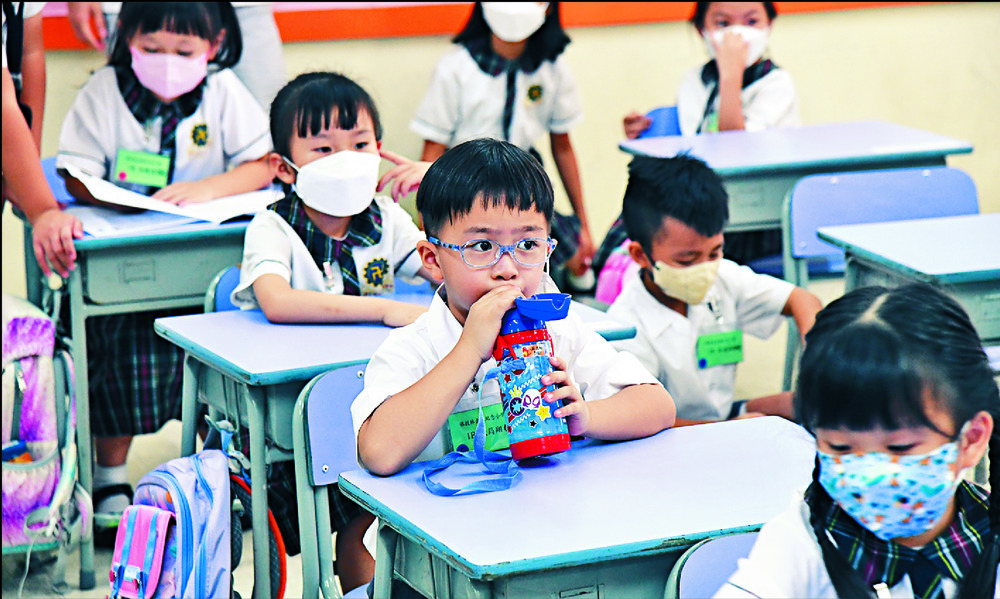
And because of the falling population, at least two primary schools may close because they don't have the minimum of 16 students to stay open.

Pupils and teachers have been leaving Hong Kong during the school year, and that coupled with the declining birth rate has led to fewer Primary One classes. The actual number of Primary One classes won't be known until the school year starts.

However, it is worth considering that with the government's push to develop the Northern Metropolis, the area near the border with the mainland, there could be an increase in students there. The plan is to turn this area into a residential and tech hub with some 900,000 flats and up to 650,000 jobs.

"If we axe schools now, when the population of the district goes up again in the future, there will not be enough schools," says Chu Wai-lam, vice-chairman of the New Territories School Heads Association.


Thursday, October 27, 2022

Changing Face of Canada is Asian

More immigrants make up the Canadian population

Statistics Canada has unveiled its latest population figures and 8.3 million people or 23 percent of the national population were either immigrants or permanent residents from 2016 to 2021.

This percentage tops the previous record of 22.3 percent in 1921.

Metro Vancouver has 54 percent visible minorities
Asian-born immigrants were the largest ethnic group at 62 percent last year, compared to only 12.1 percent in 1971. India was the source of most of the Asian immigrants, contributing 18.6 percent of the total number arriving between 2016 to 2021.

They were followed by those from the Philippines at 11.4 percent, and then China at 8.9 percent. Part of the drop of Chinese immigrants could be because of Covid-19 pandemic restrictions that prevented many people from leaving, and also China making it harder for people to move money out, thus hampering their exit plans.

When it comes to Metro Vancouver, 54 percent identify as visible minorities, compared to 49 percent five years ago.

The largest non-white ethnic groups are Chinese at 19.6 percent of the population, and South Asian at 14.2 percent, and Filipino at 5.5 percent. 

Richmond has over 80 percent visible minorities
When analysed further, Richmond has the highest proportion of people who are visible minorities at 80.3 percent, followed by Burnaby, Surrey, Coquitlam and then Vancouver at 54.5 percent. 

This national census also gave people the opportunity to identify themselves as from Hong Kong as opposed to just China, and that number is 8,560 in Metro Vancouver. Also interestingly there seems to be some 12,000 more Chinese women than men in the 25-40 age group. One urban planner suggests perhaps it's because of astronaut families with husbands back in Asia.

However, there is much chatter post-National Congress that many businessmen in China have either left or are leaving, and with conscription in Russia, we could see more Chinese and Russians landing on our shores...


Sunday, September 4, 2022

Young People Leaving in Droves

Ming Pao's chart showing departure statistics


There is further evidence that a slew of young people have left Hong Kong for good.

Political economist and sociologist Hung Ho-fung posted a chart from Ming Pao listing the various age groups and how many have departed Hong Kong from December 2021 and June this year.

No surprise those in the 15 to 19 years group and 20 to 24 years group have seen the biggest departures at 11.8 percent and a whopping 23.4 percent respectively.

This is only a short time period and he believes there will be many more sending underaged kids overseas for school or fresh grads leaving this summer (that ends labour day, September 5 in North America).

He sarcastically adds: "I bet most of them have left for the great opps [opportunities] in the Greater Bay Area. Horray!"

Other age groups saw a drop:

25-29 (8.6 percent)
30-34 (2.1 percent)
35-39 (5.2 percent)

But for those 40 and older, that age group somehow increased.

40-44 (0.9 percent)
50-54 (4.5 percent)
60-64 (4.5 percent)
65 and above (12.5 percent)

In time we will find out where all these people have gone in the respective countries' census counts, and Canada is now more sensitive about finding out exactly where all the ethnically Chinese people came from, including an option for Hong Kong and mother tongue as Cantonese.

The Hong Kong government cannot frame this as a minor or temporary blip. These are permanent moves by people who are voting with their feet and wanting to have a better life elsewhere even if it means a big sacrifice of leaving the city they love so much.


Friday, August 12, 2022

Hong Kong's Population Continues to Drop


Hongkongers will continue to leave in the next 2-3 years


Hong Kong's population continues to drop, as more than 113,000 people left the city in the past 12 months, a record 1.6 percent decrease in the population. It is the second straight annual decline in numbers.

The figure is from the Census and Statistics Department released on Thursday. Hong Kong's population fell to 7,291,600 from 7,413,100 from mid-2021. There were also 61,600 deaths and 35,100 births between mid-2021 and mid-2022, a decrease of 26,500 people.

The graph clearly illustrates the population plunge
Some of those deaths can be attributed to Covid-19 when a spate of elderly people passed away after contracting the virus in seniors' homes.

The decline to 7.29 million people was sharper than last year's 1.2 percent decrease.

Of course the Hong Kong government is trying to explain away the numbers, saying the drop in the population is due to people moving away for school and work, while strict quarantine measures have made it hard for people to come back or move there, and the birth rate has fallen further because of the Covid-19 pandemic.

The authorities don't want to own up to the reality of why people are leaving, as someone on Twitter put it succinctly: "If 'one country, two systems' in Hong Kong is such a success, there wouldn't be hoards of middle class in their 30s and 40s giving up what ought to be the start of the most economically lucrative stage of their lives to move to another place to start again or even semi-retire."

People in 30s and 40s leave HK to start over again
Professor Paul Yip Siu-fai, a population health expert at the University of Hong Kong, predicts the emigration wave will continue for at least the next two to three years, as many residents are looking for ways to leave.

"The pull and push factors are in one direction, which go against Hong Kong," he said.

He called on the government to address the housing shortage as well as concerns about the city's overall development.

"Some people do not understand the national security law, they are really worried. So the government should explain the law clearly to allay their concerns. This is very important," he said.

Alas will the government heed Yip's advice, when the NSL is deliberately vague to scare people?


Sunday, July 10, 2022

Differing Vaccine Strategies

Hong Kong has consistently encouraged people to get jabbed

Today is the 900th day Hong Kong has dealt with the Covid-19 pandemic. 

What a milestone.

The city recorded 2,791 cases yesterday, with hospitalisations and critical care cases climbing steeply.

In this context the new Secretary for Health Lo Chung-mau says Hong Kong is mulling adopting the health code now used on the mainland and Macau.

Lo considering China health code system in HK
He said the measure was justified, as the government was looking for ways to avoid further tightening of social-distancing measures.

Just another step in dragging Hong Kong closer to the mainland...

Meanwhile in British Columbia where the population is 5.2 million compared to Hong Kong's 7.3 million, the former reported 765 cases from June 26-July 2. The week before it was 620 cases.

There is also a steep 35 percent jump in hospitalisations compared to the week earlier.

In BC 91 percent of residents have had two shots.

In Hong Kong anyone can get inoculated anytime as long as they book an appointment online, and they are strongly advised to get the fourth dose.

British Columbia is taking a bizarre approach -- Dr Penny Ballem, head of the province's immunisation program announced yesterday that the big push for the fourth shot would launch in the fall, when the current third wave of Omicron is at its highest. 

People below 70 wait until fall for 2nd booster
It is believed at that time the newest vaccines will be available, which can not only fight the newest variants, but also the original Covid-19.

Only those who are 70 years old and older are eligible to get the second booster now, while the rest of us have to wait, which is very frustrating.

Some people have taken to social media to complain that they need the fourth shot now because they have immunocompromised parents who they look after or live with, or they themselves have health issues, or they just want to get the vaccine in their arm for some assurances they will be OK if they are infected.

Why can't people who want to have the second booster, get it before the third Omicron wave is at its highest?

But BC health authorities are ignoring these people, and instead want those who haven't had their first booster to do that. Every other province in Canada is encouraging people to get their second booster.

However, the BC government had to dump 200,000 doses of the vaccine because some people didn't want their third or fourth shots...

Ballem says third Omicron wave is in BC
Many people in BC are over Covid-19 even though this latest strain is more contagious; health authorities are highly recommending masks indoors in places like supermarkets and public transit, and washing hands thoroughly and often.

And with summer sort of here (it keeps raining periodically and temperatures are hardly scorching), people even more so don't want to wear a mask.

Hello? What about the rest of us who want that fourth dose now?

It boggles the mind... at least in Hong Kong vaccines are readily available regardless of which dose you're on. They would rather you have a vaccine in your arm than none at all. 

And those of us who had our shots in December and January, Dr Horatio Bach, a UBC clinical assistant professor says those who have only had two shots offered "very little or zero protection" against Omicron BA.5 variant in Israel where second boosters were rolled out in January.

I'd rather have a fourth and then fifth shot soon after than have to wait another until the fall.

Or am I being overly cautious?


VIFF -- Review: Our Mr. Matsura

Matsura (right) with a local in Okanogan County Frank (Sakae) Matsura, was the son of a Samurai in Hirado, Japan, but by the time he was gro...