Showing posts with label Japanese. Show all posts

Wednesday, October 28, 2026

VIFF -- Review: Our Mr. Matsura


Matsura (right) with a local in Okanogan County

Frank (Sakae) Matsura, was the son of a Samurai in Hirado, Japan, but by the time he was growing up, feudalism was in decline. In 1901 he left this deteriorating aristocratic lifestyle and got on a ship to Washington State.

Our Mr. Matsura opens with present-day locals pointing out their relatives in the photographs they have that were taken by the Japanese photographer.

But who was he? The documentary tries to piece him together in the film.

Matsura wasn't shy in front of the camera
Matsura first arrived in Seattle, but feeling adventurous, he went east to Okanogan County, a small town that had miners, ranchers, Indigenous people, and immigrants. Matsura was fluent in English, Christian (he converted in Japan), and learned photography.

Interestingly he was the only Japanese in Okanogan County, and because he spoke good English and was well-dressed, the locals took to him quickly. He took lots of photographs of them, some in their regular clothes, others dressed up, or of the scenery of the area, which are wonderful evidence of what the place was like in the early 20th century.

There are also many photographs Matsura took of himself and with others; in some of them he pokes fun of himself, showing his easy going humour. He was far from reserved and shy.

But it was sad to discover that he died of tuberculosis at the age of 39, though his funeral had a massive turnout of mourners.

Director Beth Harrington who also wrote and produced the documentary creates an interesting portrait of Matsura, gathering as much information as she could about him from Japan and Okanogan County. 

He also took pictures of Indigenous people
His Japanese relatives send postcards and letters to him, but we don't know what he replied back to them. They always asked how he was, and if he was coming back home. But perhaps he was having too much fun, or couldn't see himself being back in Japan.

"A Japanese immigrant alone in a region hundreds of miles from the nearest compatriot, forming deep connections with people of different backgrounds," Harrington says.

"One can't help but admire the combination of emotional intelligence, empathy, humour, and inner resilience it took to navigate the complex landscape of the Pacific Northwest during a time of great change."

She also says his photographs do not show stereotypes, but individual personalities; Matsura respected people for who they were.

"In Matsura's photographs, we encounter his humanity, the humanity of others depicted who may not be 'like' us, and we also feel our own humanity rise in a kind of sympathetic vibration," Harrington says. "That depth, that joy, that connection form a bridge."

Our Mr. Matsura

Directed by Beth Harrington

97 minutes

Wednesday, September 23, 2026

Paris - Paying Homage to Monet in Giverny


The pond features a Japanese bridge, very photogenic


Visiting Claude Monet's home and garden in Giverny, France, is a magical experience. The massive garden is most impressive, filled with all kinds of flowers, from roses to irises, dahlias, tulips, sunflowers, wisteria and on and on... you can't help but be in awe of such a place. It's kind of an organised chaos.

Then the pond with the waterlilies, complete with the Japanese bridge helps you immediately see why Monet painted his famous waterlily paintings.

Monet's house is painted pink with green shutters
He lived at this house for 43 years, from 1883 until his death in 1926. 

I visited his home over 10 years ago and was so transfixed by the experience that I promised myself I had to come back if I had the chance.

So when I found out we were going to Paris, Giverny was definitely on the list.

The first time I went was part of a tour, and the tour bus took us directly there. So this time we were on our own and I did a bit of research, as Giverny is about a one hour away by train from Paris. There are a few blog posts explaining the process, which is pretty straight forward.

First check the train schedule, and we took the 10.12am train from Gare Saint Lazare to Giverny. 

I bought the tickets online, but it was quite a hassle to figure out how to scan the QR code for us to pass through the turnstile! Nevertheless, it was eventually sorted and we got on the train.

One of the rooms upstairs in the house
An hour later we got off the train found a mini electric open-air train in front of the station with a woman selling 10 euro return tickets per person to get us to Monet's home. It turns out her tour is 20 minutes, winding around some other landmarks, whereas a giant coach can take tourists to the house in half the time.

After we were dropped off at the parking lot, we still needed to walk another 15 minutes through the small village to the actual house. I bought timed tickets (12pm) ahead of time so we were able to go straight in (along with a lot of other people).

First up -- the house. There was a long line to get in, and it took a while for it to move because visitors were excited to take pictures of the first room, the gallery, which was filled floor to ceiling with paintings and photographs. 

The house, painted pink with a green trim, is large for 10 people, as Monet and his second wife Alice Hoschede-Monet had a total of eight children from previous marriages. While the gallery is quite large, as well as the bright sunny kitchen in yellow, the bedrooms are actually quite small.

A large stove with a beautiful tiled backsplash
Visitors can also see Monet's fascination for Orientalism, or things Japanese in particular, with Japanese prints in the kitchen -- including one of a women's bath house -- and others sprinkled around the home. There are also two ceramic sleeping Siamese cats.

However it's the garden that's much more interesting! The flowers are so photogenic, everywhere you look you can easily compose a nice photo. Some influencers are wearing dresses to take selfies.

The pond and waterlilies are in another area, which entails going through an underground passageway leading to a large pond surrounded by greenery, including large stalks of bamboo. Everyone flocks to the Japanese bridge, which is covered in green wisteria leaves; could you imagine when the wisteria flowers are in bloom? 

Off to the side of the house is where the gift shop is, and it does a brisk business selling all kinds of things Monet, from photography books to children's books about the artist, colouring books, scarves, T-shirts, and jewellery.

One can easily picture Monet painting this scene
We had to hurry through the gift shop because we had to catch the 1.40pm shuttle back to the village in order to get the 2.52pm train back to Paris. It's a pity there isn't another train after 3pm -- it doesn't come until around 5pm.

One tip we discovered is not to go on a Sunday -- almost all the restaurants in the area are closed! We managed to find one enterprising restaurant serving mostly pasta and pizza that was open. The pizzas we ordered were freshly made and delicious. 

Many other people who were at Monet's house the same time as us were catching the same train back. 

Nevertheless we arrived back in Paris around 4pm, invigorated and inspired by Monet's garden!

Claude Monet's home
84 rue Claude Monet
27620 Giverny

Tuesday, September 15, 2026

Paris - Cloud of Mist the Bourse de Commerce


A large cloud forms out of water mist in the rotunda


For our first day in Paris started with blue skies and temperatures in the low 20s. We made our way to the Palais Royal, and from there walked to the Bourse de Commerce (Commodities Exchange), which holds the Pinault Collection.

We were lucky to catch the tail end of the Fujiko Nakaya show -- the only thing going on at the Bourse de Commerce.

Visitors being enveloped in the cloud
The 93-year-old Japanese artist is best know for her fog sculptures. They aren't sculptures per se, but art installations, where water droplets are spewed into the air and create cloud-like formations. In this case it is called "Cloud #07156."

Visitors had to wait in line before being allowed to enter the circular space designed by Tadao Ando. On the floor are rows of grates on the floor in the middle shaped like a square, and they are timed to shoot out the water droplets that move from one side of the room to the other, enveloping people in the mist as they sit.

After a few of these sprayings, which is exactly the same as water mists sprayed on vegetables in the supermarket, visitors are invited to stand up and take pictures, but not to stand too close to the grates.

Ando's design contrasts the building 
The whole thing lasted about 15 minutes. It was quite the experience to be enveloped in this way, and it reminded me of when I saw the Ryuchi Sakamoto exhibition in Tokyo, where the courtyard was filled with mist!

Interestingly, the fog sculpture don't seem to affect the paintings above it. They are four paintings by four different artists, depicting the trade France had with different countries and continents, like Asia, North America, Russia and the Mediterranean.

None of the artists had been to all these places, so they were stereotypical depictions of the people represented. The paintings were all painted on canvas before they were glued onto the circular wall.

The Bourse de Commerce has an interesting history in itself all the way to today.

Built in 1763-1767, the circular building was originally used to house grain, and later became a marketplace for residents to buy and sell food stuffs. It was an open air interior courtyard that was later enclosed with a wooden dome, one of the largest of its kind in Europe.

But in 1802 a fire destroyed the dome and it was later replaced with a copper frame with glass.

The paintings above depict trade with continents
In 1854 the Bourse de Commerce became a commodities exchange, buying and selling items like wheat, rye, oats, flour, sugar, oil, and alcohol. But then in 1998 with the ushering in of the age of the internet, market activity ended in the building, and was left abandoned.

In 2016, the then Mayor of Paris, Anne Hildago, offered Francois Pinault, one of the richest men in France, a 50-year lease of the Bourse de Commerce for his art collection for 15 million euros and yearly fees, to fund the renovation of the building, which was finally opened in 2021.

Pinault chose Japanese architect Tadao Ando to design a massive concrete cylinder inside the building at the cost of US$170 million. It was quite controversial because why did concrete cost that much and what would happen to the integrity of the building?

The double spiral staircase
But it turns out it's quite interesting, smooth concrete that has holes in it to display works of art, and down below in the basement level is a small auditorium where visitors can watch videos or presentations.

2 rue de Viarmes
75001 Paris


Wednesday, June 17, 2026

Review: Mistura


Mistura is a cinematic vehicle to promote Peruvian cuisine

It was almost a full house at VIFF at dinnertime to make us salivate while watching Mistura, a 2024 Peruvian foodie film.

Set in 1965 in Lima, Norma is half French and half Peruvian, the daughter of a French ambassador who has lived in rarified circles. But she discovers her husband has cheated on her, leaving her to figure out how to pay off the mortgage on the house.

Viewers quickly see what pressure she is under with everyone gossiping about her situation, and how Norma deals with it. Despite her husband's infidelity reported in the papers, Norma is determined to keep her head held high, and retain the house -- her house -- somehow.

Norma's driver inspires her to open a restaurant
At the encouragement of her chauffeur, Norma decides to open a restaurant in her mansion, and hires a Spanish-speaking Japanese chef who had once cooked for her father. The chef makes food that diners cannot relate to, let alone pronounce the names of the dishes.

There are also scenes showing her relationship with her adult son. As she is prim and proper, Norma vehemently disapproves of his hippie look and lifestyle, but an incident later brings them closer.

Eventually the restaurant evolves to reflect Peru and the people in the kitchen, and the film's end note explains "mistura" means mixture, combining different things together, which best describes Peruvian cuisine -- featuring Indigenous, Spanish, Japanese, Chinese, Middle Eastern, African and Italian influences. 

While the scenes in the kitchen didn't show as much cooking as the 2023 film The Taste of Things (Le Pot-au-Feu), we got the idea, watching Norma chop luscious tender beef cubes with her manicured hands, see how ceviche is made, and grilled meat skewers.

Norma is a half-French, half-Peruvian socialite
Mistura is a good movie, though in some parts one wonders if it's really possible for Norma to have a 180-transformation in her perception of others, or maybe she realises she needs all the help she can get? 

Actress Barbara Mori who plays Norma carries the film, and subtly shows her character's emotions below the surface, while having an unconventional relationship with her driver, played by Cesar Ballumbrosio.

Nevertheless, the film is a cinematic vehicle to promote Peruvian cuisine, and it definitely gets viewers curious (and hungry) to try some!

Mistura

Written and directed by Ricardo de Montreuil

101 minutes


Saturday, May 9, 2026

Hayato Sumino "Cateen" Dazzles Vancouver


Sumino is very comfortable playing the piano -- a lot!

Last night was a memorable evening with Japanese superstar pianist and composer Hayato Sumino tinkling the ivories in a show-stopping performance at The Orpheum.

There were concerns the tickets would not sell out like Carnegie Hall a few weeks ago -- but the Vancouver venue was packed with music lovers, Japanese fans and the rest of us eager to watch Sumino make his debut with the Vancouver Recital Society.

An upright piano adjacent to the grand piano

And the 30-year-old delivered finesse and more, with a two-hour concert (with an intermission) that flew by. On stage was a Steinway grand piano, and perpendicular to it, another Steinway, but upright, with the front panel removed to reveal its strings and hammers.

In the first half of the concert, Sumino played Bach's Chromatic Fantasie and Fugue in D minor BWV 903, and Chopin's Nocturne in C minor,  Op. 48 No. 1, and Scherzo No. 1 in B minor, Op. 20.

In between Bach and Chopin Sumino played his own compositions, one a riff off of the latter, Recollection (after Chopin). Sumino's own works sound like movie scores, ranging from a bit of drama to tenderness, his fingers caressing the keys.

During the intermission fans rushed towards the stage to take selfies with the two pianos. They seemed to anticipate something more amazing was going to happen, and they were right.

The first half was just the prelude to what Sumino was capable of. He walked on stage and with a microphone greeted the audience and explained he had a big cat and the next piece he was playing was called Big Cat Waltz in a dedication to this cat who likes to jump around.

And indeed one could imagine a furry feline jumping onto the piano, or trying to distract his master from practicing on the keyboard.

Sumino has a science and engineering degree
Sumino then unleashed a lot of energy and emotion into playing his own arrangement of Gershwin's An American in Paris; Sumino seems to love riffing off of others and one could imagine he makes each performance slightly different. He brought out a melodica, a tiny keyboard with a mouth piece attached to a tube. 

In some parts he played the melodica with his right hand, while his left stayed on the grand piano; he went back and forth to playing the small instrument to the piano, and then ended with such an energetic finish!

He left the stage and moments later returned to play Ravel's Bolero. When the orchestra plays this work, it's the drummer who has the toughest job keeping a steady beat, but here it's Sumino who has to keep his "drum" going. He went to the upright piano and with a piece of felt fabric, the hammers on the piano created a gentle thud that he started and then was able to continue automatically.

Sumino straddled both pianos at first, and then focused mostly on the grand piano, continuing the drumming with his left hand throughout while slowly building the crescendo in the nine-minute piece. What dexterity and talent! We all jumped to our feet after!

Vancouver got three encores
Was there any doubt there would be at least one encore?

He performed Chopin's Etude in C major, Op. 10 No. 1, the audience couldn't get enough so he came back and played  Kapustin's Toccatina No. 3 from Eight Etudes Op. 40, and again the crowd was clamouring for more and Sumino played his signature 7 Variations on Twinkle, Twinkle Little Star.

Throughout the concert Sumino looked like he enjoyed playing the piano and re-interpreting the music he way he likes to play it. At the age of three he began learning the piano, but when he was in university he studied science and engineering at the University of Tokyo's Graduate School of Information Science and Technology. He graduated just as the pandemic was starting in March 2020. He was also a drummer who wanted to play in a rock band!

But perhaps the piano was calling him, as two years earlier he won the Grand Prix at the 42nd PTNA Piano Competition, a Japanese piano competition, which helped start his fan base at home.

In 2021 he participated in the XVIII International Chopin Competition in Warsaw (where Canadian Bruce Liu won), and Sumino advanced to the third round.

He also seems to enjoy performing with other people, from fellow pianists to orchestras; when he played his own arrangement of An American in Paris, it would have been even better with him performing with a bassist, saxophonist and drummer, each with their own solo.

Nevertheless, Sumino has done a lot for classical music, garnering a lot of young fans thanks to his Youtube videos, showing them classical music doesn't have to be stuffy and boring!


Friday, March 20, 2026

Sake to the Hollywood Stars and Beyond


Dassai Junmai Dai Ginjo 23, 39, 45 and Nigori 45

In the late 1980s sushi and sashimi came to Vancouver, and along with it, sake.

At the time Japanese restaurants served sake warm, presenting them in silver buckets meant for ice, but instead filled with warm water.

Bluefin tuna crudo with blood orange
For a long time that's how many of us thought that was how sake was supposed to be imbibed.

However it turns out warm sake is typically lower-grade sake to mask the harsh flavours, while premium ones are served chilled, much like white wine.

Last night I got a chance to try some sake by the brand Dassai, which I have tried a few times with Japanese food.

At the Governors Ball following the Oscars last Sunday, Hollywood elite were treated to Dassai sake to have with food prepared by celebrity chef Wolfgang Puck, along with sushi prepared by sushi chefs. And for those curious, it was Dassai 23.

But the exercise last evening was to sample the sake with Western-style food to show non-Japanese that sake can be paired with anything from cheese to pizza and steak.

Rice polished at different percentages
The Sake Samurai for Canada is Patrick Ellis and he loves talking about sake. He became a Sake Samurai in 2018, where he was inducted in an hours' long ceremony where he had to give a speech in Japanese about what sake means to him.

He explained that sake has umami, the fifth sense, described as savouriness which can be found in food like tomatoes, mushrooms, soy sauce, anchovies, cheese and dashi.

The numbers on the bottles indicate how much the brown rice has been polished. In the case of Dassai 23, that means 77 percent of the rice has been polished, and for Dassai 45, 55 percent of the rice was polished. The more the rice is polished, the cleaner the flavour and brighter the aroma.

We started off with a sparkling sake which was milky in appearance, followed by Junmai Dai Ginjo Dassai 23 Centrifuge paired with bluefin tuna crudo with blood orange segments. The centrifuge helps filter the sake from the lees for a cleaner taste, or so they say. This pairing extended the sweet taste of toro and chutoro.

Foie gras torchon with brioche and apricot
The tasting continued with Junmai Dai Ginjo Dassai 39, which tasted cleaner, and a bolder taste, paired with foie gras torchon on toasted brioche with apricot gelee.

The main course of USDA prime Omaha striploin was rolled with proscuitto and served with stewed San Marzano tomatoes, black truffle and whipped potatoes, and was paired with Junmai Dai Ginjo Dassai 45. This was similar to Dassai 39 with a clean taste that had no trouble holding up to the strong flavours of the beef.

For dessert, Madagascar vanilla panna cotta with poached pear sauce together with Nigori Dassai 45.

After dinner, Ellis also told us that Dassai sake ingredients were sent to the International Space Station last fall to try sake fermentation in space! It returned to Earth recently and will be made into sake soon. He was hinting that if we end up living in space, the easiest alcoholic drink to make there will be sake, not wine.

Striploin rolled with proscuitto in tomato sauce
Representing Dassai were two executives who specifically flown in to Vancouver just for this event and left today: Shohei Yamane, director at Dassai, and Takenari Yamamori, manager of international business.

I asked Yamane about how Dassai managed to get served at the Governors Ball and he explained that one of the Dassai partners is in the movie business. What a great marketing strategy! Apparently director Steven Spielberg pronounced their sake as "exceptional".

When I asked Yamane about the biggest sake market outside of Japan, he said it was China. Before it was Hong Kong, but like seafood and steaks, some of it goes across the mainland and it's hard to know exactly how much.

We also talked about Hong Kong, and he knew of a sake bar called Sake Bar Ginn that he had visited, and I had been too! Too bad it closed during Covid.

Yamane talking to the sake crowd
Dassai is hoping to grow sake consumption in Canada, and it starts with dinners like these to educate diners what sake is and how it complements pretty much everything you eat.


Friday, October 17, 2025

Picture of the Day: Japanese Chicken Curry


Japanese chicken curry rice in Chinatown the other day

Chinatown eats this week at The Boss Bakery & Restaurant: Japanese chicken curry.

I was expecting the sweet and slightly spicy curry sauce with potato and carrots, but not the chicken being similar to a weiner schnitzel, but covered in panko and deep-fried.

The presentation of the randomly placed chicken strips looked like an octopus with fuzzy arms!

Portuguese-style egg tarts for a sweet finish
For dessert we had Portuguese-style egg tarts with flaky layered pastry and an egg custard that wasn't cloyingly sweet.

Friday, October 3, 2025

Vancouver's Two New Michelin Stars


Chef Lee of Sushi Hyun with one star

The 2025 Michelin Guide awarded two new Japanese restaurants a star each -- Sumibiyaki Arashi and Sushi Hyun, making it 12 Michelin-starred places in Vancouver.

The last two years have also seen Japanese restaurants win stars: last year was Sushi Masuda and the year before Okeya Kyujiro.

Sumibiyaki Arashi has a star
In a way Japanese restaurants tick the boxes for Michelin, with impeccable service and food, fresh produce and exquisite presentation. The price tag is stratospheric though, starting at $200 per person!

Will Vancouver have two Michelin-starred restaurants? Highly doubt this, but the excitement around Michelin has definitely brought foodies to Vancouver. This helps when a lot of locals aren't dining out as much because they can't afford to...

Saturday, June 14, 2025

Review: Shall We Dance?


Light-hearted Japanese comedy with lots of dancing 

Many years ago in Hong Kong, my friend YTSL suggested I watch a 1996 Japanese film called Shall We Dance? and I remembered it was funny. Fast forward to today and saw it was being shown in Vancouver so I went to rewatch it and there were so many details I had forgotten!

A Japanese salaryman, Shohei Sugiyama (Koji Yakusho) has just bought a house in the suburbs with his wife and teenage daughter, but he feels his life is missing something. On the train on the way home, he looks up to see a beautiful woman looking out the window of a dance studio.

A funny cast of characters with their own stories
Sugiyama works up the courage to go there and inquire about lessons; she is Mai Kishikawa (Tamiyo Kusakari), who turns out to be a professional competitive dancer, though he begins taking group lessons from an older, kindly woman.

Comedy ensues with the two other male students, and Sugiyama discovers his colleague from work has an alter ego on the dance floor, particularly when it comes to Latin dance.

But Sugiyama gets the hang of dancing and begins to enjoy it immensely -- but doesn't dare tell his wife and daughter. However, his wife gets suspicious when she smells perfume on his clothes and hires a private detective to find out what's going on...

The name of the film takes the line from the Rodgers and Hammerstein musical The King and I in the film adaptation starring Yul Brynner and Deborah Kerr.

I had forgotten how amusing the various characters were, from the dance classmates, Sugiyama's colleague, and the bitchy Toyoko Tanaka (Eriko Watanabe), who seems to see through everyone.

Secretly practicing in the office bathroom
And it turns out every character also has a story to tell about why they became obsessed with dance, some delivering monologues that further reveal their personality and motivation to dramatic effect.

The light-hearted film gives a nice introduction to the world of ballroom dancing, the culture and what it takes to compete. Even Mai learns more about herself, coming to terms with her mistakes in the past.

The main message of Shall We Dance? is to not be afraid to demonstrate your passion for something, because that will make you happy. 

Even though the film is almost 30 years old, it has aged well (OK apart from few big shoulder pads). 

Shall We Dance?
Directed by Masayuki Suo
1996
136 mins

Sunday, March 30, 2025

Tokyo: Artist Ryuichi Sakamoto Revered


Many people lined up to see this exhibition

Today was the last day of the Ryuichi Sakamoto: Seeing Sound, Hearing Time exhibition at the Museum of Contemporary Art Tokyo and we managed to see it on the second last day. We had gotten tickets in advance so we were able to walk past the massive queue of people who were patiently waiting. They were mostly young people, and a few with young children and a handful of elderly.

My first introduction to the Japanese artist Sakamoto when he composed the soundtrack for The Last Emperor that came out in 1987. I was impressed by his work, and he indeed won an Academy Award for Best Original Score, the first Japanese composer to do so. 

Patterns made by vibrations
Other films he worked on include Merry Christmas, Mr Lawrence, The Sheltering Sky, Little Buddha, and The Revenant. Sakamoto didn't look down on anything -- he also composed music for video games and anime. 

The next time I learned more about him was in 2019 when the restaurant Araki opened in Heritage 1881 in Tsim Sha Tsui. Funded by Richard Li, the Japanese restaurant was helmed by chef Mitsushiro Araki, who made the entire dining experience a performance.

As guests filed into the restaurant, he was already there, deftly breaking down a giant chunk of tuna.

I later learned that the wooden countertop in the restaurant was gifted to Araki by Sakamoto.

In 2014 Sakamoto was diagnosed with throat cancer, and took a year long break, which led to cancer going into remission. However, in early 2021 he was diagnosed with rectal cancer, though he continued to work, even giving what was to be his final performance, Ryuichi Sakamoto: Opus in 2023 before he died that year on March 28.

So we attended the exhibition almost two years to the day of his death, which explains why so many people were at the museum. It seems the Japanese still revere him and want to continue paying their respects to him, much like how Hongkongers try to commemorate Leslie Cheung Kwok-wing's death on April 1.

Fog created by the water of immortality
The exhibition, Seeing Sound, Hearing Time, demonstrates Sakamoto's interest in combining music with technology, film and art and see where it goes. There were a few exhibits we were not allowed to film, but they seemed Daoist in nature.

Perhaps he was acutely aware of how much time he had left; one was a "film" where a poem was read out that suggested that life is like a dream. Another was a long horizontal video that showed lots of lines that eventually revealed a photograph, or a moving image of waves crashing onto rocks.

A small room had several photographs and videos group together that looked like an apartment -- was it Sakamoto's? But no one was there, though the kettle was on the stove, hot water boiling, the wind blowing leaves in another video, photographs of his music studio.

Meanwhile a large dark room had large square plexiglass suspended from the ceiling with water and smoke that was projected on the floor that showed different patterns of vibrations according to the music or sounds. 

Another room had a deconstructed piano that played random notes. But the final exhibit showed him performing at the piano when he was younger, and it is projected so that it looks like he is playing a real piano in front of us, the keys pressed down. It is as he wants us to remember him, younger, vibrant and expressive.

Sakamoto playing the piano
There was one exhibit that was interactive with visitors in the courtyard of the museum. At 20-minute intervals, people could interact with "fog", jets of water blown into the air to create "smoke", but really it's water.

The "fog" is the water of immortality, that is supposed to weave together with Sakamoto's music... the fog can be overwhelming, as at times you can't see anything, but you will be able to see people right in front of you. A few seconds later the fog subsides a bit, but the jets spray more water into the air again. For Hongkongers it could trigger the feeling of looking at tear gas, but it's not at all.

At the end, visitors can return inside and use paper towels to wipe themselves down if they so wish. How Japanese.

I'm glad I was able to see this exhibition, to learn more about Sakamoto and see how the Japanese still love him as an artist and want to be closer to him whenever possible.

Contemporary Museum of Art Tokyo
4-1-1 Miyoshi, Koto-ku
Tokyo

Sunday, November 10, 2024

Review: Wa-Bagel Sandwich

The Pacific sandwich with salmon and pickled vegetables

The other day I was downtown and grabbed a late lunch at Wa-Bagel, a shop that sells Japanese-style bagels. There are interesting flavour combinations like matcha cheesecake, sweet potato and black sesame, and red bean and cream cheese.

I ordered one of their sandwiches, the popular Pacific, which features smoked sockeye salmon with interesting garnishes like plum paste, pickled red onion, cured cucumber, shiso and caper crisps that cut the richness of the cream cheese on a plain bagel that I requested it be toasted.

These Japanese bagels are softer and less dense than western-style bagels, so the focus is more on the filling, which looks colourful, appetising and was refreshing. The salmon slices were thick rather than thin, while the portion size was just right.

I've tried the Montreal smoked meat sandwich, but the Pacific was better, probably because I'm partial to the pickled and cured vegetables in the latter.

Wa-Bagel isn't a restaurant, but a take-out shop; that said, there's a common area just outside the shop where customers can eat their bagels.

As for the other flavoured bagels, I have yet to try them, but hear the matcha cheesecake is pretty popular!

Wa-Bagel by Aburi

Concourse Level, Park Place Building

B09-666 Burrard Street

Vancouver, BC

Friday, October 4, 2024

Michelin Adds Another Star in Vancouver

The Michelin man is in Vancouver again!

The 2024 Michelin Guide Vancouver results were announced this evening and some relatively not well known restaurants were given some prestigious nods.

Sushi Masuda only opened in March and just has six seats and was awarded a Michelin star, along with its chef-owner Yoji Masuda, who also won the Young Chef Award. It costs C$230 per person to eat there.

Masuda with his wife Akari (right)
The Vancouver-born Japanese chef only days away from turning 33 and he has many years of experience under his belt, having worked in Japan on and off; he moved back to Vancouver two years ago.

Now there are 10 one Michelin-starred restaurants in Vancouver, though no two stars yet. I had wondered if Le Crocodile by Rob Feenie would be included, as it's just been opened for six months, but some argue it's a rebrand of a restaurant so it doesn't count as a new one, whereas others think it deserves to be considered new.

Another under-the-radar restaurant that won the Bib Gourmand this year is Gary's on South Granville, which also won the Outstanding Service Award. It looks interesting, using local seasonal produce, a place to try next time -- if I can get a reservation.

The other awards were Exceptional Cocktail to Kissa Tanto, and Sommelier to AnnaLena. Interestingly no Green star was given out, which is supposed to recognise a restaurant that is in the forefront when it comes to sustainable practices. I heard Burdock & Co was bummed they didn't win the award.

All 10 one Michelin-starred restaurants on stage
Other than that last year's nine restaurants retained their one-star rating, though a handful dropped off the Recommended and Bib Gourmand lists. What's the difference between these two lists? According to Michelin, Bib Gourmand restaurants are those that "offer good quality food for a good value", and apparently are the anonymous inspectors' favourite places to dine on their own time; there isn't a particular description for the "Recommended" restaurants...

Some of the Chinese restaurants that were highlighted:

iDen and QuanJuDe Beijing Duck House (one star)
Seaport City Seafood Restaurant (Bib Gourmand)
Chef's Choice (Recommended)
Dynasty Seafood Restaurant (Recommended)
Neptune Palace Seafood Restaurant (Recommended) 

Monday, June 3, 2024

Learning About Abandoned Spaces Part 1

Construction at Senakw, by the Burrard Street Bridge


Yesterday I went on a photo walk with a group of strangers and led by staff from the Museum of Vancouver. It has an exhibition called Mirage: Disused Public Property in Taiwan by photographer Yao Jui Chung that is on until September 2. 

For 14 years he and his students documented abandoned government-funded buildings all over Taiwan not only to draw attention to them, but also hold the government to account and challenge the authorities to reuse them, or allow others such as NGOs, artists, the elderly or young people to repurpose them.

Some of these photographs are shown in the exhibition, which encourages visitors to pin point unused spaces on a map of Vancouver.

On Saturday the museum staff invited some amateur and professional photographers to come and investigate some neglected places in the city (well those near the museum).

After visiting a run-down house that has been left empty for years, we went to see a plot of land with many construction cranes near the Burrard Street Bridge.

On Musqueam, Squamish and Tsleil-Waututh land, the development is called Senakw or "the place".

Museum staff explained that the indigenous people lived here, but in 1869 they were forced to move to the North Shore. They were told they would get C$100 cheques each when they got to the other side and were only given a short time to pack their belongings. When they did reach the North Shore, their cheques were void -- in other words fake.

We were also told the place was multicultural. In 1908 the first gurdwara or Sikh temple in Vancouver was built in Kitsilano; it was taken down and interestingly Canadian architect Arthur Erickson designed the Ross Street Temple in 1970.

Japanese-Canadians also lived in the area before they were interned in World War II.

The large towers at Senakw will add a lot of housing and services to the area; neighbours are concerned about what's coming in, while others are optimistic about the land use and look at it as a model for future development in Vancouver...

Wednesday, May 29, 2024

Housing a Sweet Afternoon Treat

Fancy some afternoon tea in this house?


When my friend and I were walking along Hamilton Street in downtown Vancouver, she pointed out a row of heritage houses that I had never noticed before.

She took me into once of them, which is called Patisserie Fur Elise. On the ground floor was a refrigerated showcase with some macarons and by the windows were trinkets, many of them Sanrio items like Hello Kitty mugs and a golden retriever wearing a beret called Pompompurin.

A server asked us if we were interested in afternoon tea, but we declined, as we already had lunch and just finished a refreshing lemonade drink.

She suggested next time we could come try the afternoon tea at C$49 each and includes items like a proscuitto croissant sandwich, pork terrine cone with balsamic vinegar, smoked salmon on brioche, buttermilk scone with an almond struesel, and desserts like panna cotta, lemon yuzu tart, dacquoise and macaron.

We were also advised to make a reservation, as there are only eight seats upstairs where the afternoon tea is served.

Sounds very exclusive!

Patisserie Fur Elise

847 Hamilton Street

Vancouver, BC

(604) 684 1025

Sunday, January 7, 2024

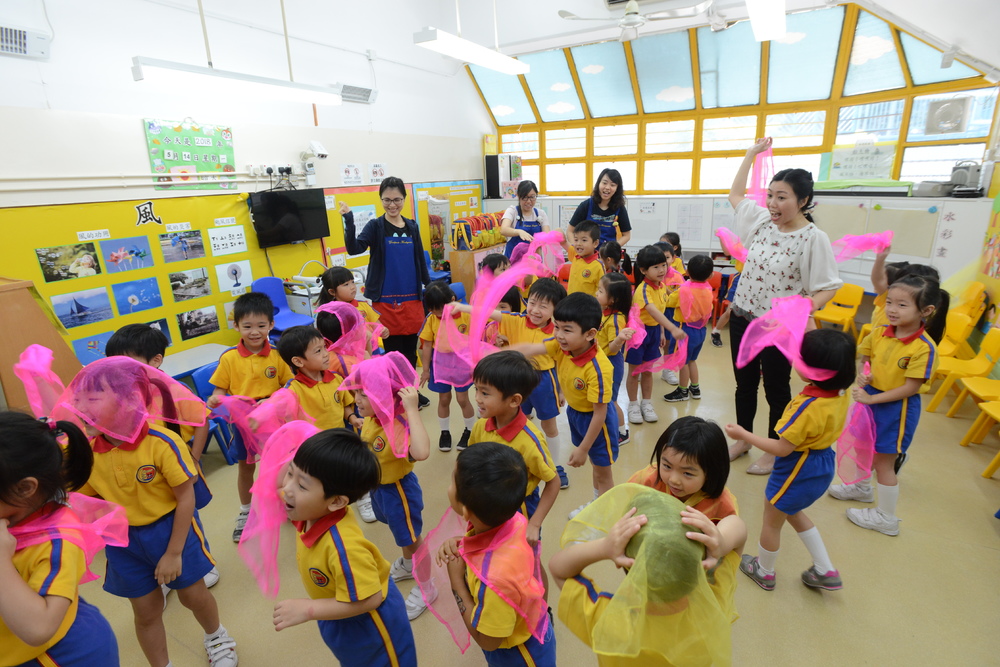
Kindergarten Numbers Continue to Fall in HK


Kindergarten schools are competing for fewer students

Kindergartens in Hong Kong and desperate for students, as the number of applications is one-third less than last year, due to emigration and the falling birth rate.

Parents need to submit a "Registration Certificate for Kindergarten Admission" in order to get government subsidies, and the number of applications for this designation has also fallen by more than 20 percent in five years according to official data.

Lam says the birth rate continues to fall
Nancy Lam Chui-ling, vice-chairwoman of the Hong Kong Federation of Education Workers and a kindergarten principal says the actual number of kindergarten students is actually even smaller.

"This is because parents will sign up for a few kindergartens to pick from, so the actual number of registrations will definitely be even lower than the number of offers we give out to the applicants," she said. 

"The number will keep falling as people emigrate and tend not to give birth. I do not think the emigration wave will stop."

For example, the number of births began dropping in 2017, from 56,500 to a record low of 32,500 in 2022.

In the first 10 months of last year, the number of registered births fell slightly from 27,823 to 27,293. The final figure will be revealed in February.

A few months ago the government announced it would offer a HK$20,000 bonus to eligible parents with newborns. The authorities project a 20 percent increased birthrate to around 39,000, but that's well short of the more than 50,000 recorded in 2020.

Many young families have emigrated overseas
Lam suggested kindergarten schools offer full-day classes, but are kids ready for that? For some just going to school is traumatic already... That said full-day classes would allow both parents to work.

Nevertheless, kindergartens are trying to entice parents to sign up with them by offering to teach their children other languages, such as Spanish, French and Japanese on top of English, Cantonese and Mandarin.

As if kids don't have enough to learn already!


Tuesday, December 19, 2023

Review: Princess Kaguya

A delightful hand-drawn animated film based on a folktale

On the weekend I watched my final Studio Ghibli movie of the year, Princess Kaguya, recommended by my friend YTSL, who prefers it over The Wind Rises.

Princess Kaguya was co-written and directed by Isao Takahata, based on The Tale of the Bamboo Cutter, a Japanese folktale.

It's about an elderly bamboo cutter who is in the forest and finds a glowing bamboo shoot. Intrigued he comes closer and discovers a miniature girl and scoops her up, believing she is a sign from heaven. He excitedly shows his wife and suddenly the girl is the size of a newborn baby. The childless couple believe she is a princess and calls her that, and in months she quickly grows into a toddler, child and then teenager.

An elderly man discovers a princess in the forest
While the girl loves being in the rural area hanging out with boys, her elderly father has other plans. He has managed to collect a lot of gold that he found in bamboo he has cut in the forest and decides to build a home for her in the city where she can be trained to be a proper lady, now known as Princess Kaguya.

Word of her beauty perks the ears of five suitors who try to woo her through a screen by professing their love to her with metaphors of exotic things that don't exist, to which she cleverly demands they must bring these items to her.

The characters in Princess Kaguya are drawn with quality of a drawing, as if pencil or charcoal strokes, and yet viewers are gently enticed into the story, which has numerous touches of humour which keep things light and fun to watch, in particular the training she goes through, and the suitors who try to win her love.

Even more interesting is the feminist quality of Princess Kaguya -- she has an independent streak and thinks for herself, but this clashes against what Japanese society and tradition expects of her -- to be demure, accept her fate and follow the life cycle of a woman. It is ironic she has the power to decide who can marry her but she cannot choose to return to her simple life.

Five suitors try to win the princess' love
Her father seems obsessed with having his daughter married off to one of these suitors, and neglects what she really wants, whereas her mother only towards the end has clued into the young woman's desire to return to their home.

At times throughout the film, there are scenes that play out that later turn out to be dreams, and so viewers may wonder what is real and what is imagined. 

In the end, is there a lesson in the end? Men should be more attentive to women's needs? Fathers should listen to their daughters? Or is it just a folktale to enjoy?

It's an interesting insight into Japanese culture, though sadly its society has not progressed fast enough to value women today. Princess Kaguya was definitely ahead of her time.

Princess Kaguya

Directed by Isao Takahata

Written by Isao Takahata and Riko Sakaguchi

137 minutes


VIFF -- Review: Our Mr. Matsura

Matsura (right) with a local in Okanogan County Frank (Sakae) Matsura, was the son of a Samurai in Hirado, Japan, but by the time he was gro...