Showing posts with label Kuomintang. Show all posts

Sunday, January 11, 2026

Review: Last Boat Out of Shanghai


A riveting history book

Several years ago I interviewed a woman who was doing research on her grandmother who had lived in Shanghai during the Chinese revolution and mentioned a book I should read: Last Boat Out of Shanghai by Helen Zia.

She didn't give any hints on what the book was about, just that it was a really good one.

I finally got around to requesting it from the library and after waiting for my turn I finally got a copy to read.

Chinese residents forced to bow before Japanese
It brings history to life, focusing on four children from different families in Shanghai, one chapter dedicated to each "character", from when they were between two and 13 years old when the Sino-Japanese War caused havoc in China. We learn about each of their family backgrounds, what their parents and siblings were like, and how they each navigated life under Japanese tyranny.

There's one boy whose father is a Japanese collaborator, another from a landowning class, a girl whose impoverished father sells her to a family, and another girl whose father was a Nationalist official. Their childhoods contrast each other economically and politically, and the family dynamics are also fascinating to read, including details of what they ate, how they dressed, and their living arrangements.

After the United States dropped atomic bombs on Hiroshima and Nagasaki in 1945, World War II was over for everyone else, but civil war continued in China, with the Communists fighting against the Nationalists. The book follows the four now teenagers and their circumstances when it is clear Chiang Kai-shek and the KMT are retreating to Taiwan, while the Communists peacefully take over Shanghai.

Each time these young people and their families wonder what is best for them and their futures, is it time to leave, and if so where?

As I read Last Boat Out of Shanghai, I couldn't help but think about my great aunt who was born in Shanghai and left on a boat to go to San Francisco to meet my great uncle to marry him. They had only corresponded by letters and exchanged pictures. 

Shanghai emigres made new lives in the US
I also thought about my dad, who was born at the beginning of the Sino-Japanese War, and how his family hardly had anything to eat, constantly on the run. They left Canton (now Guangzhou), but after the war went back there, unaware the Communists were coming and had to flee again.

We have been taught to believe that we are masters of our own destinies, but in the case of those living in China, there was such massive upheaval because of war and political ideology and instability, these factors dictated millions of people's lives. 

Everyone did what they thought was the best way to survive, be it collaborating with the Japanese, fighting with the Nationalists, or literally trying to ensure a roof over their heads. 

Author Zia has done an astounding amount of research on this book, starting with her own family, and then interviewing as many people as she could about their personal experiences and weave them into the book. 

Zia captured her mother's story in the book
The acknowledgements alone go on for pages with hundreds of names, including the likes of former Hong Kong Chief Executive Tung Chee-hwa, famed chef and restaurateur Cecilia Chiang, and journalist Frank Ching, along with the four main people in the book.

She also gives a lot of historical context and details that give a nuanced picture of what life was like for Shanghai emigres in the United States and Hong Kong, how their experiences were different from those from southern China. 

Zia explains how the Shanghainese are so much more sophisticated than other Chinese in terms of fashion and culture, as the city was known as the "Pearl of the Orient," and apparently was more modern than many cities outside of China. As a result, many found it difficult to establish themselves elsewhere and it required humility and flexibility to not only stay alive, but also fit in.

There's also more background information on the tensions between the Nationalists and the Taiwanese, how the former controlled the island with an iron fist, despite thinking their stay was temporary, while the latter felt their rights were trampled on.

Zia did a lot of research, interviews
Last Boat Out of Shanghai was a page turner and almost read like a novel -- with real characters.

So grateful for Zia for interviewing these people, documenting their personal experiences in English so that we can have a better understanding of life during this turbulent period, and see how history continues to repeat itself even today. 

She also hopes the book will encourage readers to have greater empathy for refugees who are faced with heart-wrenching decisions, in the hopes to have a better future for themselves and the next generation.
Sunday, January 14, 2024

Taiwanese Vote for Self-Determination in DPP Win

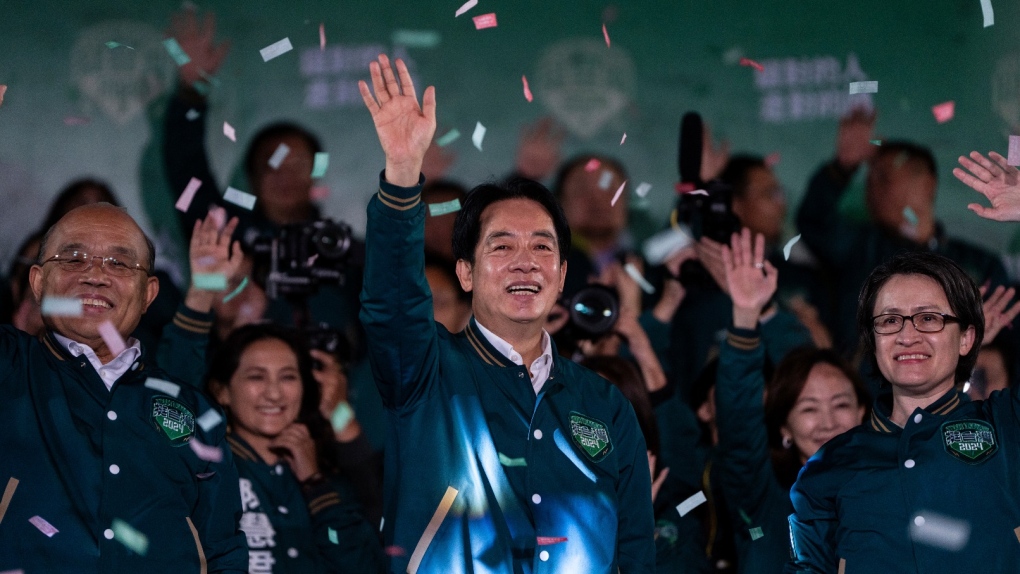
Lai of the DPP will be the next President of Taiwan

Before the Taiwan election on January 13, the People's Republic of China had warned voters to "make the right choice", and the Taiwanese heard it loud and clear -- re-elect the Democratic Progressive Party back into office, this time with Tsai Ing-wen's deputy Lai Ching-te as the next leader of the island.

Lai won about 40 percent of the vote, followed by the Kuomintang's Hou Yu-ih at 33 percent, and Ko Wen-je of the Taiwan People's Party with 26 percent.

Although votes still need to be counted, Lai will become the next President of Taiwan, though the DPP may not have full control of the legislature with a projected 51 seats out of 113, while the KMT is expected to have 52 seats, eight for the TPP.

KMT is projected to have more seats in parliament
Nevertheless, the third consecutive win for the DPP shows the island is keen on standing its own ground and does not want to be usurped by Communist China, particularly by force. 

There are concerns former KMT president Ma Ying-jeou should not have said that Xi Jinping should be trusted, which may have turned off voters; but after the Taiwanese had front-row seats watching what happened to Hong Kong in 2019 and 2020 with the imposition of the national security law, they don't want the same thing to happen to them.

Meanwhile Hongkongers wistfully looked to Taiwan and watched its residents able to freely exercise their right to vote, and wondered if the city would ever achieve universal suffrage.

Lai is 64 years old and a former doctor turned politician, whose party is pushing for self-determination, social justice and rejection of China's threats. 

However, Beijing painted Lai as a stubborn "Taiwan independence worker", a "destroyer of cross-strait peace", and potentially a "creator of a dangerous war". 

Taiwan has over 19 million eligible voters
Nevertheless, Lai took a less radical approach during his campaign, saying Taiwan did not need formal independence, and in his victory speech said he would seek "cooperation with China", following the path of of his predecessor Tsai. 

This seems to have appealed to voters, much to the chagrin of Beijing, which does not seem to understand how it is perceived on the island.

It's a well-known trend that the older generations are generally more supportive of the KMT, as they were the ones who moved to Taiwan after 1949 and want to see some kind of reunification. However, the younger generation voters identify themselves as Taiwanese. They are well aware of the existential threat that Beijing imposes, but they do not align themselves with China.

Beijing will have to recalibrate its response to the election results as Lai is signalling his willingness to have some kind of balanced approach to cross-straits relations. Constant threats by China have had the opposite effect and made the Taiwanese more interested in controlling their fate the best they can. 

Monday, August 28, 2023

Foxconn's Terry Gou Makes Taiwanese Presidential Bid

Gou has announced he wants to run in Taiwan elections

The upcoming Taiwan presidential elections next year are going to be very interesting now that Foxconn founder Terry Gou has thrown his hat into the ring.

For months he has kept political pundits guessing, but now that he has made the announcement, the jockeying for power can begin in earnest, though some experts think the businessman does not have much of a chance.

That's because he is running as an independent and will need signatures of 1.5 per cent of Taiwan's voting population, or 290,000.

As for his platform, Gou aims to unify the opposition to defeat the governing Democratic Progressive Party led by Tsai Ing-wen, who has led Taiwan for two terms and cannot seek another.

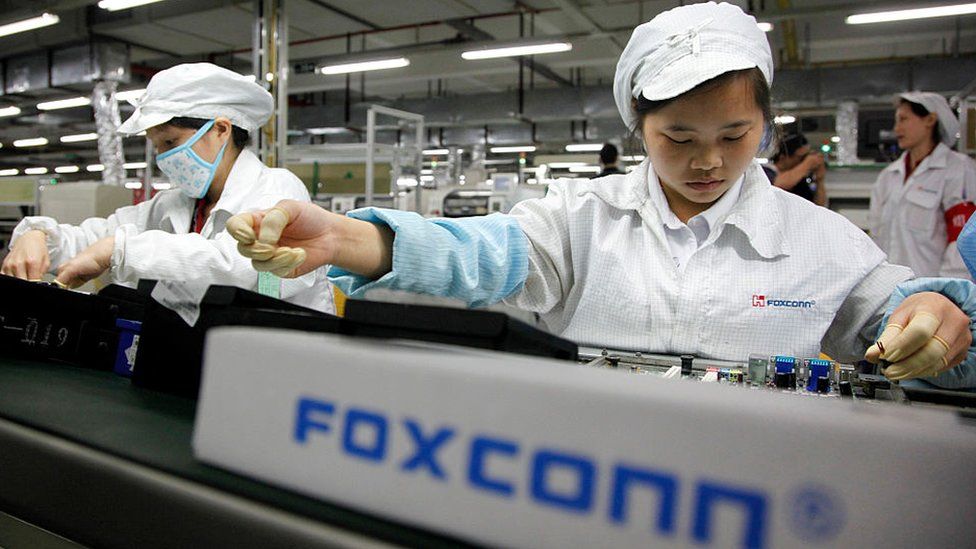
He made his wealth from Foxconn factories
He criticised the DPP for its policies of bringing "Taiwan into the risk of war" with China, as it threatens to take back the territory it has claimed is its own.

"I will definitely not allow Taiwan to become the next Ukraine," Gou said.

He also said Taiwan needs new strategies for economic development and for issues at home.

"Domestically, the national policy direction is filled with all sorts of mistakes. There's no way to solve the difficulties of Taiwanese industry and people's livelihoods."

Politically he is more aligned with the Kuomingtang, who ruled China in the first half of the 20th century, then lost to the Chinese Communists in 1949 and fled to Taiwan ever since, and vowing to take back the mainland one day.

However the Kuomintang is worried Gou is splitting the vote of its own party, even though he claims to be uniting the opposition party. 

Gou has made his wealth from Foxconn, the main supplier to Apple that has many factories in China that produce iPhones.

One wonders what Beijing thinks of this entrepreneur friendly to China, running to become president of Taiwan...

Lai of DPP is leading in the polls
But for now Gou's immediate task is to find the 290,000 signatures he needs to qualify as an independent. 

According to Wang Yeh-lih, a professor of politics at National Taiwan University says Gou has never garnered more than 20 percent of support that put him in the running with three other candidates: former Taipei city mayor Ko Wen-je of the Taiwan People's Party, and current Vice President Lai Ching-te of the DPP, and new Taipei City Mayor Hou Yu-ih for the KMT.

Lai is the frontrunner, with Ko and Hou trailing.

Nevertheless, one can't dismiss Gou just yet -- with Taiwanese politics, anything can happen from now until voting day on January 13, 2024. 

VIFF -- Review: Our Mr. Matsura

Matsura (right) with a local in Okanogan County Frank (Sakae) Matsura, was the son of a Samurai in Hirado, Japan, but by the time he was gro...