| Only a few of Carr's paintings focus more on the sky than trees |
| Wood Interior, 1909 |
| Only a few of Carr's paintings focus more on the sky than trees |
| Wood Interior, 1909 |
![]() |
| Kuok became CEO of Shangri-La hotel group last August |
![]() |
| Cheung examines how people of colour are portrayed in media |
I just finished reading a thought-provoking book, especially for journalists and media outlets. Called Under The White Gaze, it's written by former Tyee reporter Christopher Cheung, who previously worked at Metro and the Vancouver Courier.
He grew up in a multicultural neighbourhood, went to school with classmates with different backgrounds, and then wondered why people who were not white were not covered in mainstream media in Vancouver.
As a journalist Cheung tried to rectify the situation, only to encounter many issues. When he tried to specifically do stories about Chinese people, they would downplay their achievements and not think they should be covered in the media, or found mainstream media would only cover different cultures through their holidays, such as Chinese New Year, Nowruz, Diwali, and so on.
It reminds me of the years when I worked at CBC Radio and I was tasked with producing the programming for the Chinese New Year show. There were expectations of what my managers wanted, and what the Chinese community was hoping would be covered in the show. And how do you make it sound fresh the following year, when the same topics are covered, like the symbolism of the food eaten, the tradition of wearing red and the meaning behind "Gung Hei Fat Choy!"
In Under The White Gaze, Cheung explains that even though he as a person of colour may report on a topic through a cultural lens, ultimately it's white editors who decide how people of ethnic backgrounds are portrayed in the media, which can verge on being racist. Hence the white gaze...
Cheung uses a lot of examples in the media, from the CBC, to Maclean's, to the Toronto Star, the Globe and Mail, and community papers to illustrate his points. Why are ethnic restaurants usually described as "hole-in-the wall", or "hidden gem", or when interviewing someone for whom English is not their first language, why is their broken English literally written out?
In one early chapter he talks about "darlings" and "deviants". Darlings are model minorities, immigrants who come to Canada and work extremely hard to succeed. The polar opposite are deviants, people of colour who give their community a bad name, such as those arrested for trafficking drugs, or convicted for murder.
Another situation is when words in a culture are equated to an English or western word. My father likes to describe jellyfish as "rubber bands", or baked char siu buns as "Chinese hamburgers". Other examples are banh mi is called described as a "Vietnamese sandwich", but then they are sometimes called banh mi sandwiches which is redundant, or dim sum being equated to Chinese tapas, which it definitely is not!
The book makes the reader think about stories they have read on people of colour and how they were portrayed; it also forces journalists to think carefully about how they should cover cultural topics in the future.
In Hong Kong, non-Chinese communities, particularly Indians, Pakistanis, Filipinos and Indonesians should be covered more in the media, and with more sensitivity. For the most part, it's as if they don't exist, unless an employer severely mistreats their domestic helper and is dragged to court. There are many successful professional Filipinos in the city, while many Indian families have long roots in Hong Kong.
Under The White Gaze leaves a lot for the reader to consider, and in particular journalists who want to do a better job of covering their communities, which are becoming even more multicultural. In general we need more understanding of others, giving people the opportunity to speak in their own words with context, and report on them in a sensitive way. That will help all of us understand and appreciate each other even more.
| Hong Kong is facing challenging times these days |
Last year when I visited Hong Kong, it was eerily quiet as a lot of people had left the city for Easter break.
This time around it looked busier, but looking at the shopping malls it is sad to see how empty they are, as the shops are empty. Not a single customer inside. The shop staff are looking at their phones or looking very bored. This is the state of retail these days.
| Times Square mall was quiet just after 6pm |
No locals are buying because they are worried about their financial situation. A few days ago a friend told me that his manager and mid-level managers were let go -- immediately. His immediately boss had no idea she would be sacked and after seeing the human resources manager, went to her desk to pack up her stuff and left.
Another who had an inkling of what was going to happen, said farewell to colleagues, took their purse with them and they didn't see them again. People at work purposely keep only a few items in the office just in case they will be axed.
Meanwhile those left behind must pick up the pieces and take on even more work, for the same amount of pay, or a pay cut even, as times are tough.
| Sunset light reflects on ICC building |
Editors are even using AI to rewrite stories for them -- the job they are supposed to be doing! Do they want to be out of a job themselves? It's so bizarre and crazy that this is happening so fast. My friends joked they will have to turn to basket weaving to sustain themselves financially.
Meanwhile millennials are challenging to work with, unable to follow instructions or have the passion to work hard. Two friends told me they are literally babysitting the staff they work with, following up to make sure they finish their assignments, and they do so at odd hours -- like 3am or 5pm, or don't consider how their work will be perceived outside of the company. But they can't be fired otherwise my friends will have to do even more work.
It feels like schools are downsizing by the month, as teachers continue to quit and leave, and about the same proportion of students; this has resulted in lowering qualifications for teachers, in particular NET or native English teachers, while the same goes for the police, who have pretty much done away with stringent physical tests.
How can Hong Kong survive like this? It's hard to be optimistic for the city when you see the difficulties and no light at the end of the tunnel.
But when looked at another way, a friend who moved with her two daughters from Beijing to Hong Kong a year ago, they love being here, despite the challenges of having to learn Cantonese and English. They enjoy eating different kinds of cuisines, like the fact there are hardly any queues for rides at Hong Kong Disneyland, and they are exposed to different kinds of opinions.
Nevertheless does the government have ideas on how to navigate the city through these challenging times? It's time to think outside the box to stimulate the economy and bring back visitors who splurge, not ones who follow advice on Xiaohongshu to spend the least amount of money...
![]() |
| Orban's power has been unchecked for the past 14 years |
![]() |
| Orban confronted by sharp whistling by Szabo |
![]() |
| Antal is a nurse who demonstrates regularly |
![]() |
| Field was at tonight's VIFF screening |
![]() |
| Are HK's days over? Leung says it has "irons in the fire" |
Former chief executive Leung Chun-ying wants to have a chat with former Morgan Stanley Asia Head Stephen Roach to tell him Hong Kong's still got its mojo.
Last week Roach wrote in the Financial Times that China must fix its economy and allow Hong Kong to run itself if it wants the financial hub to have a better future.
"The most important thing Beijing can do is, number one, fix its own system," said Roach, a senior lecturer at Yale University.
![]() |
| Roach says Beijing needs to leave HK alone |
In his column he said Hong Kong's embattled stock market was a sign of the end of the city's economic success over the past 20 years, and Beijing's grip on the former British colony and China-US tensions made the case that it is fast declining.
"It pains me to admit it, but Hong Kong is now over," he wrote. "A city I once called home and have cherished as a bastion of dynamism has had the world's worst-performing major stock market over the past quarter of a century."
Leung has the opposite view.
"I think it's out of date and also out of touch. I'd very much like to sit down with him and have a conversation with him as to the new irons in the fire that Hong Kong has," Leung told RTHK.
![]() |
| Leung says HK can build marine insurance sector |
He said the English language, fully convertible Hong Kong dollar, the legal profession and independent judicial system can help build a robust maritime insurance sector.
And? What of the other irons?
He also pointed to the audit business.
"In the high quality development of the country, many manufacturers and exporters need third party, independent, standard, and testing and certification services. And Hong Kong is very good at this. Hong Kong has the goodwill, has the credibility, and that's the reason why we have such a thriving audit business," he said.
Right...
![]() |
| The force is actively looking for applicants at home and abroad |
![]() |
| Tang gave an update at the Legislative Council |
![]() |
| University recruitment poster in China |
![]() |
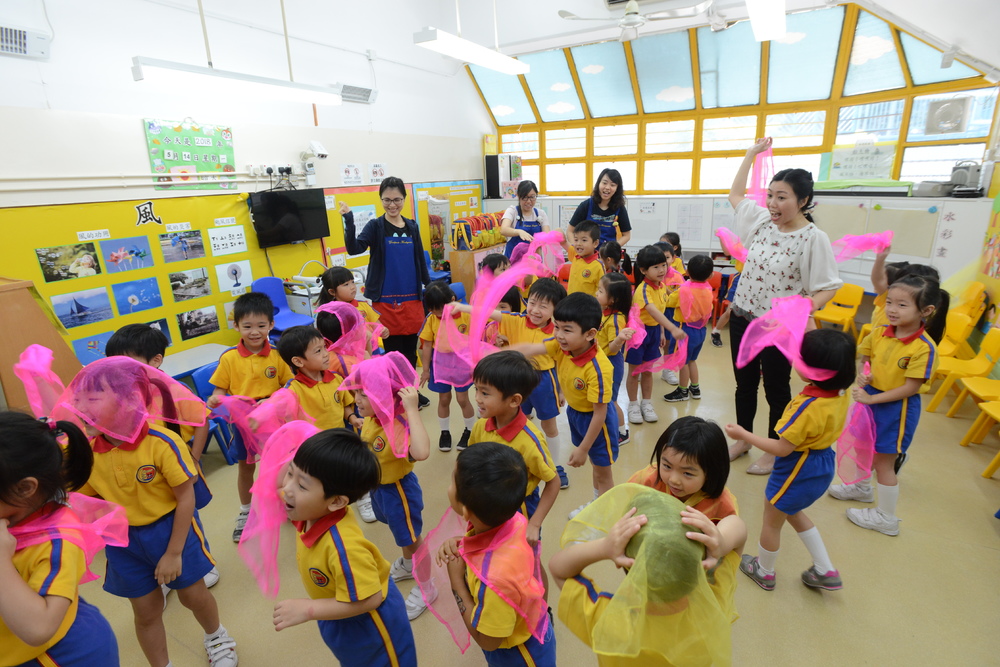
| Kindergarten schools are competing for fewer students |
![]() |
| Lam says the birth rate continues to fall |
![]() |
| Many young families have emigrated overseas |
![]() |
| Getting the "noodle dance" performance |
| Enough food to eat? The perils of over-ordering |
![]() |
| Perry (far left) was one of the stars of the hit sitcom Friends |
Shocking news from Los Angeles tonight -- Friends' star Matthew Perry died at the age of 54 of an apparent drowning at his home.
He was best known as Chandler Bing, a successful executive on the hit sitcom Friends that also starred Jennifer Aniston, Lisa Kudrow and David Schwimmer. They played a group of friends navigating their professional and personal lives in a comedy series that lasted 10 seasons, or over 200 episodes.
![]() |
| He had written a memoir released last year |
While Friends was never shown legally in China, everyone born in the 90s watched bootlegged versions of the show as a way to learn English. Many of my colleagues in Beijing told me it was their favourite American show.
One person posted on X, formerly known as Twitter:
"Friends was my first sitcom. My first English TV show. For kids in China growing up in the 2000s, Friends has some symbolic significance that cannot be summarised that easily. It was our first experience of the outside world. Matthew Perry, I'm forever grateful to you. RIP."
He did have a Canadian connection -- his mother worked for Prime Minister Pierre Trudeau in Ottawa, and Perry and Justin Trudeau went to school together.
Tonight Justin Trudeau paid tribute on X as well:
"Matthew Perry's passing is shocking and saddening. I'll never forget the schoolyard games we used to play, and I know people around the world are never going to forget the joy he brought them. Thanks for all the laughs, Matthew. You were loved -- and you will be missed."
![]() |
| Three Cathay flight attendants were fired for mocking passengers |
![]() |
| Lam will ensure training and "customers first" |
![]() |
| Young Hongkongers want to leave |
![]() |
| Students feel they have no future in Hong Kong |
![]() |
| They are willing to leave even if English is poor |
![]() |
| A captivating book about the CCP today |
![]() |
| Duan and Shum on their date before marrying |
![]() |
| Wining and dining businessmen in Bordeaux |
![]() |
| Duan, Ariston and Shum in happier times |
![]() |
| Children will spend more class time on patriotic education |
Hong Kong parents who have taken their children out of the local school system to be educated overseas must be breathing a sigh of relief they did the right thing.
That's because the Education Bureau has asked (not directed) primary schools to spend up to one-quarter of the study time towards patriotism and national security during the six years of primary education.
Topics to be covered include "the understanding of Chinese culture, the constitution, Basic Law and national security education".
Authorities also recommended organising "cross-disciplinary" exchange visits to mainland China.
This is the first change in the curriculum in eight years. A bureau spokesman said there was a need to update the primary curriculum guide to "enhance student learning", and noted the ones for kindergarten and secondary school had been updated in 2017.
There are seven learning goals, but the first and main one is to "understand our country and the Chinese culture, and cultivate a sense of belonging and national identity towards our country through national education and national security education".
In order to teach all this information, schools are to set side up to 25 percent of the 4,752 hours of lesson time during the six primary school years for organising activities to brush up their understanding of the constitution, the Basic Law and national security.
That time will be cut into lesson time for learning the Chinese and English languages, as well as mathematics.
As a parent this must be infuriating to know that precious class time is being squandered on national education, training young children to parrot Communist ideas and beliefs.
Perhaps there will be a continued spike in students leaving the city later this year?
![]() |
| Students need to learn more Mandarin for better opportunities |
![]() |
| Choi says Putonghua should be used in schools |
![]() |
| Students are already learning Mandarin |
Matsura (right) with a local in Okanogan County Frank (Sakae) Matsura, was the son of a Samurai in Hirado, Japan, but by the time he was gro...