Showing posts with label Sham Shui Po. Show all posts

Wednesday, March 19, 2025

Wok Hei at a Hong Kong Dai Pai Dong

Two chefs cooking with wok hei at dai pai dong Oi Man Sang

In Chinese cooking, particularly Cantonese, people talk about how good a dish is by the "wok hei", literally "the breath of the wok".

It involves intense heat or fire, that heats up the wok so much that ingredients are cooked and caramelised in less than a minute, resulting in a slight char or hint of smokiness that adds another layer to the flavour of the dish.

Baked casserole, stir fried beef ribs, razor clams
Most Chinese restaurants in Hong Kong have wok stations to create wok hei, but may not be able to get that intense heat that can be found in dai pai dongs, or open-air food stall. One of them is Oi Man Sang in the Sham Shui Po area, more specifically around Prince Edward district.

Dai pai dong literally means "big license stall", and they began proliferating after World War II. But decades later in a bid to clean up the streets for hygienic reasons, the government restricted the number of dai pai dongs, relocating many of them in government-run cooked food markets. 

The numbers of dai pai dongs dwindled further when the authorities only allowed owners to pass on the license to family members. 

Which brings us to Oi Man Sang, which has been around since 1956, making it one of the oldest in Hong Kong. 

Typhoon shelter crab with garlic and spices
Typically there is a massive line of people waiting for tables -- no reservations are taken -- and diners are literally eating on the sidewalk while the mobile kitchen is on the street, with two big gas burners fuelled by kerosene. As chef Lucas Sin likes to say, they use jet fuel to cook.

This was my first time to Oi Man Sang and was excited to try the food that I had read and heard so much about. We got a table set up on the sidewalk, metres away from the open-air kitchen and watched two chefs deftly manipulate the woks as they were heated up by the roaring fire underneath.

Another good thing about eating here is that there is no corkage, so we brought a bottle of sake to try with the food. 

The first dish to arrive at the table was baked fish intestines with liver in egg casserole, and here it was topped with thin slices of you tiao or savoury Chinese doughnut for a contrasting texture. This was done well, fluffy from the eggs combined with the offal.

Stir-fried cabbage with minced pork and shrimp
Next was stir-fried small razor clams, which you don't see often. The narrow strips of sweet clam meat were about two to three inches long, cooked with a tiny bit of spice, and roughly chopped onion and peppers.

We also ordered stir-fried beef ribs, very tender and attached to the bone, together with onion and peppers again, and typhoon shelter crab, which is cooked with a lot of minced garlic and spices. The meat itself was sweet, though quite messy to eat.

A favourite was stir-fried cabbage with minced pork and dried shrimps in a clay pot. The cabbage soaked up the salty flavours, and in the sizzling pot stayed warm for quite a while. 

Stir-fried prawns is considered a popular dish, though again a bit messy to eat, though the prawns were very large, meaty and sweet.

While most of these dishes demonstrated wok hei, perhaps the only dish that was disappointing with the yeung chow fried rice; the individual rice while plump, were not cooked well enough in the wok to have the wok hei flavour.

Large meaty prawns served at Oi Man Sang
Nevertheless, we were quite satisfied with our dinner. I ventured over to the kitchen to take a look and indeed the two chefs there cooked dishes in seconds thanks to the intense fire on the stove. 

At one point there was a lot of banging -- the fire was so hot that it had warped the wok and the chef had to hammer it back into shape!

The evening we went there weren't many people waiting in line, which some attribute to not many tourists coming. We hope Oi Man Sang and other dai pai dongs continue their tradition for years to come, though who in the next generation is willing to work with such heat day in, day out?

Oi Man Sang
Shop B-C, G/F, 1 Shek Kip Mei Street, Sham Shui Po
+852 2393 9315


Sunday, November 24, 2024

Clawing Machines are All the Rage in HK


Claw machines are cheap entertainment in Hong Kong


Young people in Hong Kong are looking to ... claw machines for a bit of entertainment these days.

For HK$5 they try to control a metal claw to pick up a toy in a machine. If it doesn't work, well then try, try, again.

Some spend HK$30, HK$100 or HK$1,000 a week with varying levels of success.

It's very easy to spend little or a lot playing
"Hongkongers are facing a lot of stress now, and many entertainment venues [karaoke lounges and party rooms] have closed down," explained Kage Chan, a 33-year-old video director. "There may be a saying that five dollars can buy you happiness. Maybe that's why more people are interested in playing claw machines."

It turns out there's a whole industry around claw machines, starting with videos online teaching people how to be able to successfully grab toys from claw machines.

And then there is the business of making money from claw machines. They started getting popular when landlords were trying to fill shop spaces and rented them out cheaply to owners of claw machines. 

Chan won so many toys that he got the idea of putting them in claw machines to make money. From six machines in Sham Shui Po and Mong Kok, he has passively earned HK$30,000 in revenue.

Good prizes are an incentive to play
The competition among claw machines can be tough, and so the prizes need to be enticing enough for people to want to play them, they can't be too difficult to win a prize, and they need to be in popular areas with a lot of foot traffic.

Some landlords may choose not to rent their vacant spaces out to claw machines because they want to be able to charge higher rents, or have a shop rent the space out.

Only in Hong Kong do people who play the game, try to game the system to make money out of it!


Friday, April 19, 2024

Delicious Budget Thai Eats in Yuen Long

Whetting the appetite with pomelo and prawn salad

When I was in Hong Kong, a foodie friend was keen to take me to a dai pai dong in Sham Shui Po called Oi Man Sang. Customers have to queue for a table, but many believe it's worth it, as the place is known for cooking fresh seafood. We were all looking forward to it -- until we found out it would be closed on Qing Ming, or grave-sweeping day, one of the few holidays the staff get off.

Braised beef in a tart soupy sauce
So, we had the second-best thing -- a Thai restaurant in Yuen Long, about a 20-minute walk from Yoho Mall II in the New Territories. 

My friend drove us there along with his cousin and her husband, along with another chef acquaintance to Thailand East. When we got there it's a large compound, with people eating outside and inside, and parking at the back.

We were shown to a indoor area and upstairs where practically all the tables were filled. While the place served Thai dishes like green papaya salad and skewers, they also had claypot rice -- very Cantonese, and soy sauce chicken.

To start the pomelo and shrimp salad was delicious, large chunks of the citrus fruit together with plump shrimp, cherry tomatoes and peanuts, with a light soy dressing that was seasoned with fried garlic chips. Soon came the pork and beef skewers dipped in a thick peanut sauce.

Claypot rice with Chinese sausages was spot on
In a large stainless steel bowl was a giant beef bone, seasoned with garlic and coriander. The bits of beef fell off the bone easily and the slightly tart soup was delicious. I could have eaten the soup on its own and be fully satiated.

Next came two piping hot claypot rice, and they had the crispy rice at the bottom. The first had Chinese sausages, including one with offal and pork belly, the other with small pork ribs. Both were delicious and just depended on which flavour your were more partial to. How a Thai restaurant prepared spot on claypot rice I don't know, but practically every table had at least one.

A pre-ordered baked soy chicken arrived sitting up on a mini stake with a bowl at the bottom to catch the drippings. It seemed disconcerting at first to see a headless chicken sort of standing upright, but we took pictures anyway. After the photo session it was whisked back to the kitchen for the chef to expertly chop into pieces.

Roasted chicken was tender, hardly dry
For vegetables, water spinach with a touch of chillis was just right, along with more fried rice with pork belly and scrambled eggs on top. 

By this point we were pretty full, but wait there's dessert! We had the standard black sticky rice with mango and coconut milk, and a plate of taro-flavoured jellies with small cups of coconut milk jelly. 

Together with good conversation mostly about food, and talking about what we ate, it was a very enjoyable evening at a restaurant on the side of the road. For five people the bill came to around HK$1,300 including drinks, about HK$260 per person. Practically Shenzhen prices! No wonder the place was packed!

Black sticky rice with mango and coconut milk
Thailand East
G/F, 1 Tung Shing Lei
Yuen Long
9790 6118

Saturday, November 11, 2023

HK Police to Patrol Buses

Starting next week officers will board buses to prevent crime

The Hong Kong Police are flexing their muscles with a new trial to have officers on buses to catch any nefarious activities on public transport ahead of the District Council elections next month.

Officers will get on buses in the Kowloon West district free of charge, stand in the wheelchair area and monitor what's going on.

"They will board buses at different stops to patrol them, paying attention to passengers and identifying any suspicious objects," said a source familiar with the police operation.

Not many crimes are committed on buses
"If necessary, officers may ask the bus driver to pull over and request the person in question to leave the vehicle for further investigation," he added.

The officers will carry standard equipment such as firearms, a retractable baton and a body camera, as well as a mobile phone that can scan identity cards. Police officers will be deployed from divisions such as Tsim Sha Tsui, Yau Ma Tei, Mong Kok, Sham Shui Po, Cheung Sha Wan, Hung Hom and Kowloon City.

"The objective of extending police presence to public buses is to deter criminal activity and respond promptly to any incidents that may occur," the source said.

However the person did admit not many criminal cases happen on buses, but that there had been cases of bus drivers facing abuse from passengers, though it wasn't too serious. They also won't board crowded buses, or during rush hour.

In a video posted on the Facebook page of the Mong Kok police district, an officer says: "In addition to street patrols, police will soon conduct bus patrols. The objective is to prevent crimes, maintain public order, and ensure public safety."

It is hoped police presence will deter crime
The video goes on to say: "If you see police officers on the bus, please don't be surprised."

Thanks for the warning.

But why bother patrolling buses when the crime rate is low on them? Seems a bit overboard, or a make-work project.

How about the officers do an exchange and come to Vancouver to patrol the buses here? There are many passengers who just walk on and don't even pay the bus fare. There are many incidents of people hurling abuses at others, or even assault passengers and bus drivers!

Seem to make more sense for the Hong Kong Police to conduct their trial here and make a real difference in public transit safety...

Thursday, January 12, 2023

Snack Shop Kwan Kee to Close

Kwan Kee will be shutting its doors for good later this year


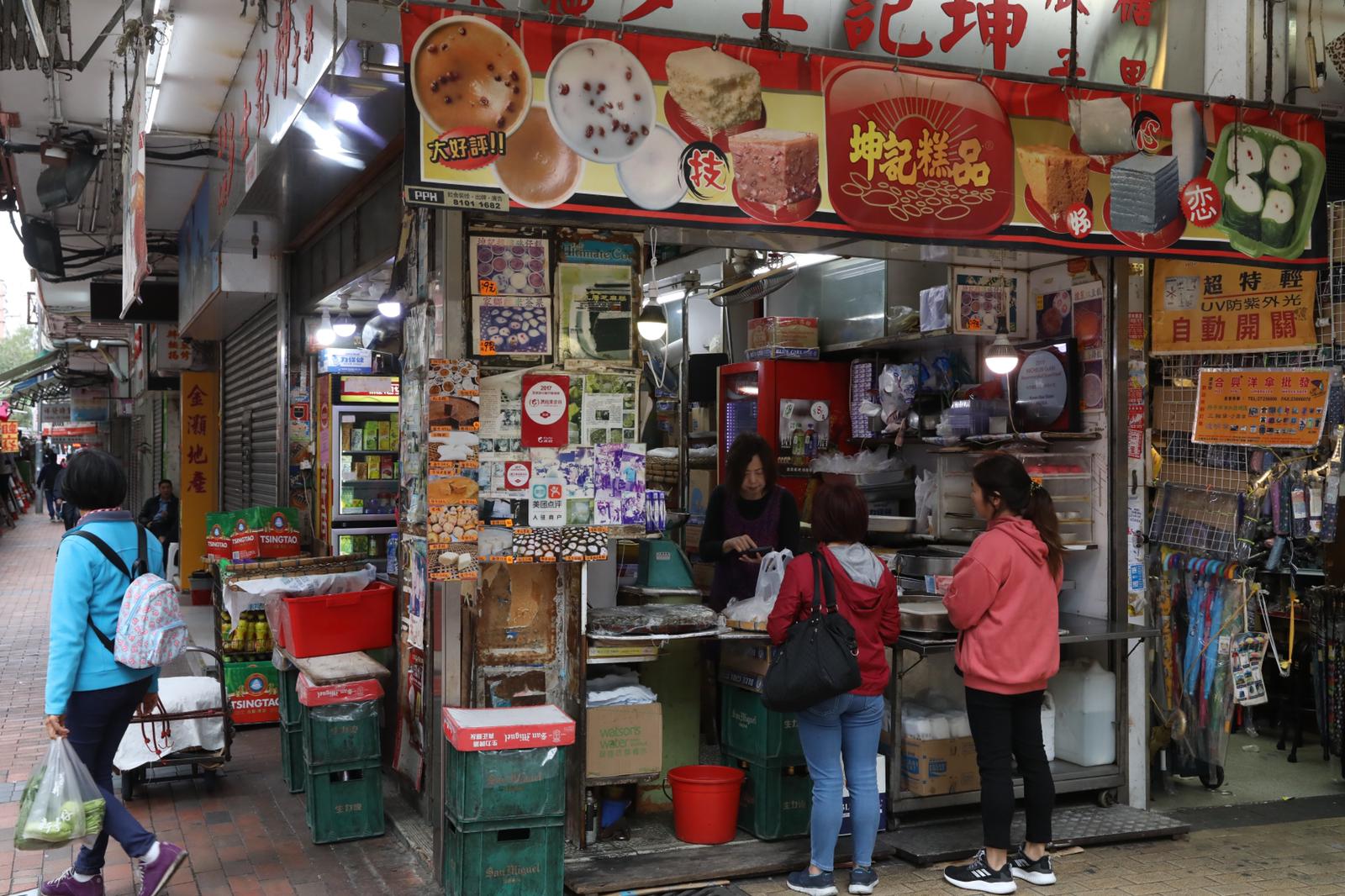
It's sad to hear the news that the snack shop Kwan Kee in Sham Shui Po is closing after over 60 years, as the owner is looking to retire.

The open-air shop is right next to the MTR station (Exit B2), and while the shop sold magazines, bottled water and candies, people went there to buy freshly-made puddings, like put chai goh (a caramel-coloured pudding with red beans solidified in a small bowl and then was eaten on wooden skewers.

Another that I liked was the black sesame pudding cut up in giant cubes, the same could be said for red bean pudding, and coconut jellies that are placed in thin plastic bags.

Its best seller is put chai goh pudding
Not only is this place patronised by locals, it was also given Michelin approval in 2015, in a list promoting Hong Kong's street foods. That designation led to even more people flocking to the shop to try their treats.

The owner, Fu Wing-cheung, told the media in 2018 that if it wasn't for the puddings which bring in the revenue, the shop would have closed ages ago if it just relied on groceries.

"[Puddings] are our main selling point now. The money we make from groceries is only a supplement that can barely cover the electricity bill, Fu explained.

Kwan Kee is a see-dor, or a shop, which were very common in the 1960s and 1970s before supermarket chains sprouted all over the city. 

"We are pretty much the only see-dor left in this district," he said almost five years ago.

His father started Kwan Kee in the 1960s, steaming the puddings in their shack in Sham Shui Po, and then they were sold on the streets by his wife. Fu took over the business in the early1980s and setting up the shop on Fuk Wah Street since 1984.

Black sesame is popular and coconut puddings
Fu's younger brother starts making the puddings at 2.30am, as they need several hours to cool in order to sell, while Fu himself shuttles between the kitchen and shop until 11pm at night. 

He says making the puddings is not complicated, but time consuming.

In 2018 Fu, then 63, said his children were not keen to take over the business "because they are too educated to do this kind of toiling work".

"If the day comes when I reach a certain age, and my children have all grown up then I will simply retire," Fu said. "Don't say I'm shutting this place down; I'm just letting it retire too."

Word on the street is that Kwan Kee will retire in May... 

Kwan Kee
115-117 Fuk Wah Street
Sham Shui Po
(next to Sham Shui Po MTR Exit B2)

Saturday, May 7, 2022

Vote for the Only Candidate


Lee reveals his softer side during an election rally yesterday

Yesterday the sole candidate running for chief executive, John Lee Ka-chiu, made a last push for votes at a highly choreographed rally at the Hong Kong Convention and Exhibition Centre.

Sort of modelled on the US presidential elections, several people came up on stage to endorse Lee, including his campaign director Tam Yiu-chung, the sole Hong Kong representative of the Standing Committee of the National People's Congress, and former chief executive Leung Chun-ying, who is the chief convenor of the Election Committee with his peer, Tung Chee-hwa.

Leung made a pitch to endorse Lee
Interesting Leung made a pitch for Lee when Leung himself had expressed interest in becoming CE again. But perhaps this was the instruction from above, to play nice and support the only person running...

Meanwhile journalists were totally baffled by the slogan for Lee's rally: We and Us A New Chapter Together.

"We and Us"? 

In Chinese it literally says "Me and We", but that's also grammatically weird too, and besides his copywriting team has made many mistakes throughout his entire campaign that is basically a slam dunk.

Finally the man of the hour (if elected), arrived on stage. The emcee even asked people to turn on the lights on their phones and wave them in the air as if Lee were a rockstar about to sing a ballad.

He talked about his humble beginnings, living in Sham Shui Po, and how his family was poor, but his father managed to scrape together enough money to buy a television set. 

"We and Us"? What does that mean exactly?
After dinner they gathered around the TV and opened the wooden door, but closed the iron gate to allow the breeze in, and neighbours would stand nearby to watch the TV behind them. Lee said they later turned up the volume so they could listen and then eventually invited neighbours to come in to watch TV with them.

Then he quickly went over his four or five items on his election platform, including housing, security for stability, and develop the economy among them, and then that was it.

So this is the man Beijing wants to lead Hong Kong, from one of the poorest neighbourhoods in the city to becoming one of the highest paid leaders in the world at over HK$400,000 (US$51,000) a month -- apparently in cash.

What a rags-to-riches story.

He told about when he was robbed by older classmates once and was punched in the chest for not having any money to offer them, and felt angry he didn't dare speak up and decided to become a law enforcer instead, entering the police force at the age of 19. 

That's the reason why the almost 1,500 people on the Election Committee should vote for him.

Do they have any other choice?


VIFF -- Review: Our Mr. Matsura

Matsura (right) with a local in Okanogan County Frank (Sakae) Matsura, was the son of a Samurai in Hirado, Japan, but by the time he was gro...