Showing posts with label Victoria. Show all posts

Saturday, May 2, 2026

Artist Emily Carr's Art in Nature


Only a few of Carr's paintings focus more on the sky than trees


Artist Emily Carr (1871-1945) lived an unconventional life, challenging norms and traditions at the time, and became an artist in her own right. She is best known for her paintings deep in the forest, trees in simplified shapes, but the brushstrokes have a lot of movement and energy.

The Vancouver Art Gallery is showing an extensive assemblage of her work in That Green Ideal: Emily Carr and the Ideal of Nature until November 8 this year.

Wood Interior, 1909
The exhibition shows over 100 works from sketches and charcoal drawings to numerous oil paintings focused on her love of nature and keen interest in Indigenous culture.

There is also a lot of background information about Carr's life. She was born in Victoria, British Columbia in 1871 into a privileged family. Carr was the second-youngest of nine children, her father intent on carrying on English traditions. 

It's surprising to see the exhibition reveal some personal details about Carr, such as when she was around 12 years old her father decided to talk to her about the birds and the bees that completely turned her off from sex... one wonders what he said to her which caused the conversation to have such a profound effect on her for the rest of her life.

Her childhood and life drastically changed when her mother died when Carr was 14 years old in 1886; she believes her father was heartbroken and died two years later. As a result Carr's oldest sister Edith was her guardian.

From a young age Carr showed artistic leanings and her father encouraged her to develop her talent. But it wasn't until two years later in 1890 that she studied art at the California School of Design in San Francisco for three years, then returned to Vancouver Island and then went to England to study painting; she also went to Paris later in her career.

Tree Trunk, 1931
Meeting Lawren Harris of the Group of Seven in 1930 made Carr feel like she was part of a community of painters who had similar philosophies, inspired by nature.

"Find the forms you desire to express your purpose," she wrote in her journal in June 1931. "When you have succeeded in getting them as near as you can to express your idea, never leave them but push further on and on strengthening and emphasising those forms to enclose that green idea or ideal."

Most of the paintings are vertical, showing the height of the trees she painted, admiring their trunks and leaves -- she used a lot of green paint! One painting called Wood Interior, 1909 shows trees at ground level, but with the morning light shining in between the tree trunks. 

Another called Tree Trunk, 1931, focuses on the simplified form of the tree trunk, which looks similar to a Georgia O'Keefe painting in its sensuous curves and earthy palette. 

Only a few works are horizontal, or only show sparse trees, or from a distance and instead focusing on the sky with clouds.

It's such an extensive exhibition, that it is quite an intense Carr retrospective! 

That Green Ideal: Emily Carr and the Ideal of Nature
On until November 8, 2026
Vancouver Art Gallery

Sunday, May 25, 2025

The New Face of The Bay


Liu (right) with her proposed new logo for her shopping malls

There are only a few more days left before customers can get their last purchases from The Bay, as it will be closing on June 1 after declaring bankruptcy.

So far Canadian Tire has offered C$30 million for the intellectual property rights of the 355-year-old company, including the iconic stripes and coat of arms.

Meanwhile Hudson's Bay plans to sell up to 28 of its 39 leases in British Columbia, Alberta and Ontario to Chinese-Canadian billionaire Ruby Liu Weihong's Central Walk at an undisclosed price. The Bay has sought court permission to go ahead with the transaction.

Liu will purchase 28 of The Bay's leases
She plans to open a chain of more than 20 retail stores in the three provinces, naming them after herself -- "Ruby Liu: A New Bay", as she can't use the Hudson's Bay name... unless Liu makes a deal with Canadian Tire.

"We wanted to buy this as well [intellectual property]. But Canadian Tire is a giant company with deep pockets and we are a smaller company. It's also the pride of Canada. They offered more money," she said in a media interview.

Liu didn't think "The New Bay" would be an issue, as she intends to create a new retail experience for shoppers.

It's something she is very familiar with, as Central Walk owns Tsawwassen Mills, Mayfair Shopping Centre in Victoria, and Woodgrove Centre in Nanaimo. 

Liu is originally from Harbin, China, and moved to Shenzhen where she slowly built various small businesses selling wholesale goods. 

In 1994, she started Yijing Investment Development Co. Ltd, and then a subsidiary, Yijing Central Walk in 2002, which later bought a 1.5 million square foot mall in Shenzhen.

She is originally from Harbin, lives in BC
She and her brother sold it in 2019 to a Hong Kong-based real estate investment trust for C$1.25 billion. With that money she bought Woodgrove Centre in 2020, Mayfair Shopping Centre in 2021, and Tsawwassen Mills in 2022.

In 2014 Liu started coming to BC and became a Canadian permanent resident in 2017.

In hiring staff for the new malls, Liu will give priority to staff of The Bay, as well as suppliers and vendors. 

According to the company's press release, Liu gave a statement: 

"Central Walk Canada is planning to conduct a series of transformative initiatives aimed at fostering intergenerational connections, promoting active lifestyles, and empowering youth through meaningful engagement as part of this transaction," she said.

"We are evolving to serve Canadians better. We believe every Canadian family deserves a brighter future. Join us in this journey of growth and connection. Together, we can build a more vibrant, caring and forward-thinking multiculturalist community."

Sounds positive and idealistic... stay tuned to see if it happens...

Saturday, February 22, 2025

Earthquake Felt in Vancouver!

Earthquake was near Sechelt, about 50km from Vancouver

At around 1.26pm, I was in the kitchen washing dishes, when I felt the floor rumble. It felt as if a massive truck was passing by our street, except there wasn't one -- it was an earthquake!

I could hear the glasses in the cupboard clinking. Instead of the procedure -- drop, cover and hold on -- I was standing there, frozen.

"Earthquake! Earthquake!" my dad said upstairs.

The shaking lasted about 10 seconds before I rushed up to see if my parents were OK before going on Bluesky to post, "Just felt some minor shaking in Vancouver... was it an earthquake?"

Two other people responded, so I was not alone.

When I turned on the radio at 1.30pm, CBC Radio Vancouver had jazz playing -- which meant they were not on the air, or technical difficulties. It turns out everyone in the building had to be evacuated in the rain before being allowed back in.

Just before 2pm Kathryn Marlow from Victoria took over the CBC airwaves to anchor a quick radio special to give out essential information, that yes indeed there was an earthquake, first reported as 4.8 on the Richter scale near Sechelt, about 50km from Vancouver; then it was reported as 5.1 and then hours later back down to 4.7.

There were no reports of injuries -- apparently people who were walking outside in downtown Vancouver didn't feel anything, while others reported being jolted from their sleep or were terrified by the shaking. Many reported the same feeling as me -- as if a giant truck was driving by.

On the radio we were encouraged to report our experience to Earthquakes Canada where there is a quick online survey which allows them to crowd source data.  

Before this tremor, we had started (slowly) putting together our emergency kit but now this experience has motivated us to get it together quicker! It includes having water, first aid kit, clothing, documents, cash, non-perishable food, medication and other necessities to survive on for at least the first few days. 

Another good tip is to avoid standing in door frames -- they are not going to protect you. Best to get under a table or desk!

Saturday, November 9, 2024

A Strange Fluffy Find Behind a Wall


Imagine finding 115 stuffed animals stuffed in your wall

A man in Victoria, BC was renovating his garage and removed some drywall.

Instead of finding insulation, Connor Nijsse discovered stuffed animals.

Lots of stuffed animals.

Do any of these remind you of your childhood?
"You can't wrap your head around it," Nijsse told CTV. "This is weird."

He took pictures and showed them to his wife Brianne Hinkkuri and when she got home, she took a video of him removing another panel.

"[More] stuffed animals! Hinkkuri says off camera. "You can't make this up!"

In total they found 115 stuffed animals, the entire wall stuffed with stuffies.

They bought the house over a year ago and that was when they were in contact with the owners who had three children who grew up there, which led Nijsse to think that perhaps when the kids became adults and left, the stuffed animals were used to fill the drywall; he's seen sofa cushions stuffed in the wall before.

The couple posted the video online and it immediately got 5 million views. They followed up with videos showing the stuffed animals freed from the wall and asked people if they recognised them from their childhood.

Some stuffies have found new homes
One woman in Ontario immediately recognised a fluffy yellow duck that she loved as a child. Nijsse mailed not one, but two of the fluffy ducks to her so that her two young children could have them. A few others have found new homes as well in the United States and United Kingdom.

"Honestly it feels like the Canadian spirit to me," she says, reporting that she received the two ducks. "It's spreading joy to so many families. It's wonderful."

"If you can make a difference, why not?" says Nijsse.

Indeed.

Saturday, August 17, 2024

Classical Concert in the Church


Zanrosso and Kahn at the front of the church

Before we headed to San Francisco International Airport, we attended a free concert (well donations of US$20 per person) organised by Noontime Concerts. It was held at Old St Mary's Cathedral, which is near Chinatown. 

We arrived early, so we attended the tail end of mass. The father presiding over mass talked about how Americans need to be more humble, using the Olympics as an example. He said at the closing ceremonies, the French tied sports with the arts in a thoughtful presentation and as the next Summer Games are in Los Angeles in 2028, what do the Americans do? Have Tom Cruise jump out of a plane...

Old St Mary's Cathedral
It was an amusing observation from an American!

After mass was over, the baby grand piano was wheeled in from the side and the concert began, featuring Evan Kahn on cello and Amy Zanrosso on piano. Zanrosso has a Canadian connection, as she studied music at the University of Victoria, in British Columbia, and did a Masters degree at McGill University in Montreal. 

Because we had luggage with us, we sat at the back of the church; that made it hard to focus on the performance with people coming in and out of the church, as the die-hard concertgoers were near the front.

Nevertheless it was nice to hear some classical music in a church where the acoustics are great! The performers got a standing ovation at the end.

Sonata for Cello and Piano in C Major, Op. 102, No. 1 by Beethoven

Melodie for Cello and Piano, Op. 20, No. 1 by Alexander Glazunov

Sonata for Cello and Piano in C Major, Op. 65 by Benjamin Britten


Saturday, June 8, 2024

Klondike Prospectors Paved the Way for Tourists


There isn't normally this much snow on the mountains now

Our ship the Ruby Princess arrived in Skagway, Alaska this morning, but the captain announced at 7am that the ship could not dock -- the water was too shallow and added other ships would not budge either! There are at least three other cruise ships along the same route as us.

As a result, our ship had to stop away from the dock and set up tenders (small shuttle boats) to shore. This plan was scrambled very quickly and kudos to the staff for making it happen relatively fast.

Even the tour operators in Skagway were shocked to see the cruise ship floating around in the water -- our tour guide Paul said in the 18 years he was a tour guide here he had never seen it like that before... but apparently there is a 17-feet difference in the water levels here...

Pitchfork Falls on the left, next to a pipeline
As a result, our tour at 10.15am started a bit late because the previous tour at 8.30am was delayed by this change in logistics.

Nevertheless, Paul was fun and accommodating -- he can drive a bus of 21 tourists, drive and tell us about the history of the gold rush in Alaska in the 1890s! He even uses a drum stick to point to various areas on the map above him!

As we drove along the Klondike Highway, we had stunning views of the mountains that still had snow on them. Paul said usually at this time of year -- June -- just the caps of the mountains would have snow on them. But because this year was particularly cold, the snow was still around. Perhaps it's a good thing considering there isn't much snow in general on the mountains?

He explained in 1896 gold was discovered, but word didn't get out until a year later. People from all over went from Seattle, Vancouver and Victoria by ship to Alaska -- in some boats it was literally standing room only -- and it was an arduous trek with lots of provisions on their backs.

Stunning views and gorgeous weather to boot!
Horses were badly treated, overwhelmed by the weight of the stuff they had to carry and over treacherous terrain that some 3,000 of them died... is it any wonder one of the roads was nicknamed Dead Horse Trail?

Paul also reminded us in the Victorian era, these prospectors didn't have Gore-tex or North Face jackets -- they had wool and it was very heavy and would get wet easily. The women wore dresses. It's amazing they even survived.

But by the time these prospectors made it to Alaska and survived the frigid winters, there was hardly any gold left in 1898 and either called it quits or stayed anyway. 

Paul gave some shocking statistics:
- 100,000 went to Seattle, Vancouver and Victoria in the hopes of getting to Alaska;
- 40,000 made it to Alaska
- 20,000 looked for gold
- 4,000 found gold
- 1,000 found enough gold to live on. One was John W Nordstrom, a Swedish immigrant who used the money he made from gold and set up a shoe store.

The highways we went on to see the magnificent sights were because of the gold rush, and now who benefits? Us tourists.

In 1972 the first ship brought some 200 tourists. Today it's 15,000 a year.

The season lasts from late April to October. On the last day of the cruise season, some of the locals will get together on the dock to give a send off to the last batch of tourists -- they moon them!

Apparently this is an annual tradition!

And one year, a group of tourists on a cruise ship mooned the locals back!

Thursday, February 1, 2024

Vancouver Has Highest Rents in Canada

Vancouver home ownership continues to be further out of reach

Vancouver continues to be the city where average rents are the highest in the country.

Canadian Housing and Mortgage Corporation comes out with an annual report that includes important data on rental figures that were just released today. CHMC says the average rent in Vancouver for a two-bedroom place is C$2,181 per month, Toronto is second with C$1,961, and Victoria close behind at C$1,839.

Montreal is a bargain at C$1,096, cheaper than St John's at C$1,198.

The city leads in the highest rents in Canada
This average is for all rental units, including those who have had the same tenant for years.

When it comes to new two-bedroom rental units, Vancouver is still on top at C$2,601, followed by Toronto at C$2,405, and Victoria at C$2,351. Kelowna is in fourth place at C$2,073.

Looking at the vacancy rate, Vancouver is the lowest in the country at 0.9 percent, and Halifax in second place at 1 percent, and Kelowna at 1.3 percent.

Why is this happening?

Because of high interest rates and inflation, home ownership is even further out of reach of people who want to buy and so they continue renting. They also want to avoid moving to another rental because that may mean higher rents. Another reason is high population growth last year which kept demand high and supply low.

While Vancouver is such a beautiful city, trying to afford to live here is a terrifying reality...


Thursday, November 2, 2023

Neighbourhoods that Gave Out the Most Candy

Science World lit up like a giant glowing pumpkin

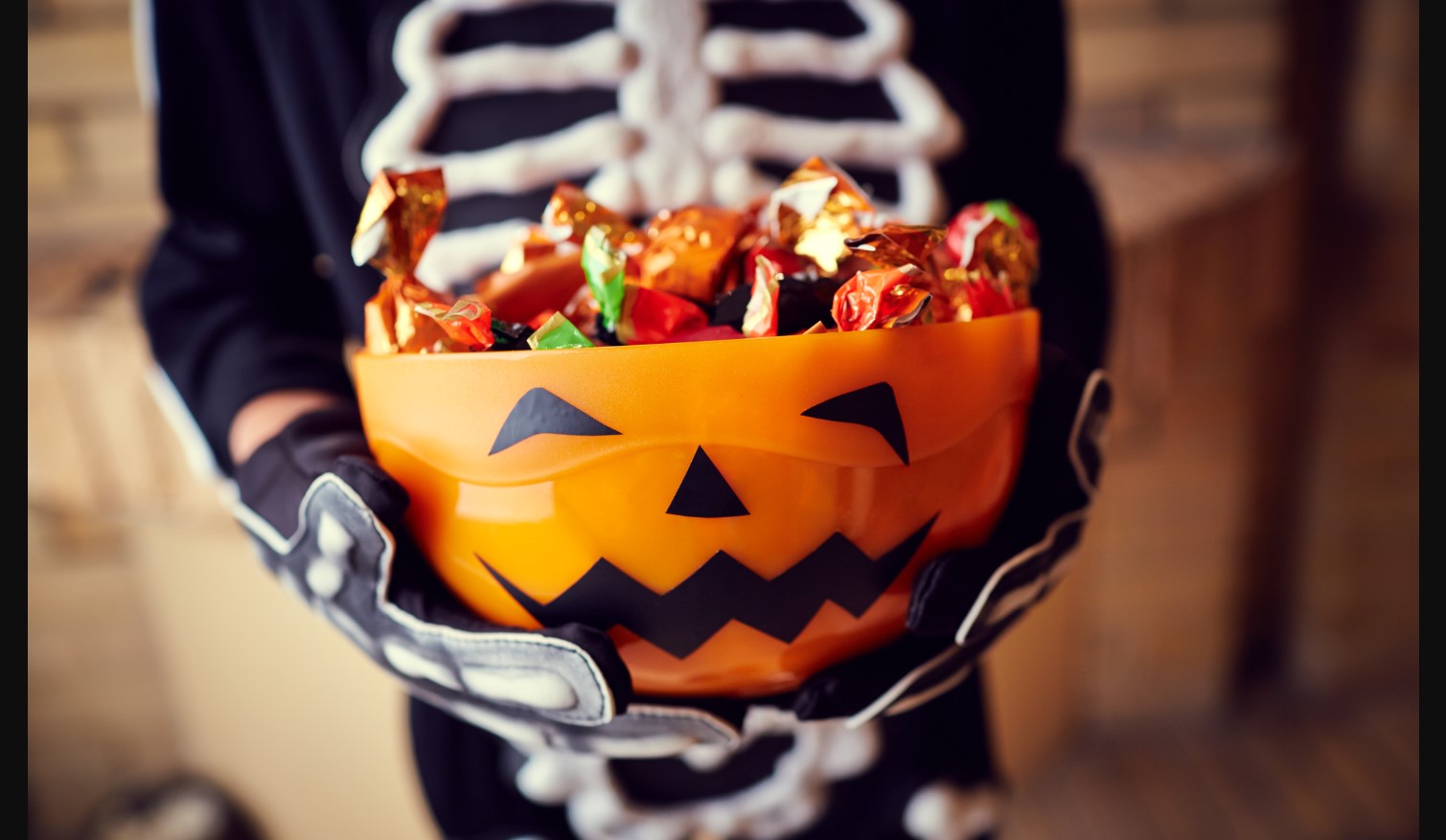
Today people are recovering from their sugar highs from Halloween last night, while one academic has pored over the statistics to see which Metro Vancouver neighbourhood had the most trick-or-treaters.

Since around 2016, Andy Yan, director of the Simon Fraser University City Program has tracked which areas give out the most candy, and the winner like all previous years is... Douglas Park, around West 22nd Avenue and Heather Street near Cambie Village.

One child getting candy via a kiddie slide
One home reported handing out a whopping 2,853 candies, and another 2,475.

Other popular areas are New Westminster's Queen's Park, Surrey's East Clayton, Richmond's Steveston, and Victoria's Rockland.

Yan observed the popular areas for trick-or-treating are located near parks, making them walkable.

"[They have] a density, and yet at the same time, it's density through which I think people feel safe. They feel like they're part of a community," he said in a radio interview this morning.

"I think it's very much about the importance of green space and... this role of parks and how they kind of help anchor a community."

And despite the rising costs of candy this year, more than 80 percent of respondents said inflation did not deter them from buying candy to give out for Halloween.

Interestingly it's the wealthier neighbourhoods that have fewer trick-or-treaters like Shaughnessy, as Yan explains there is a lower "door-to-curb" ratio that forces kids to have to walk or run further to the next house, whereas if the houses are closer to each other, they can collect more candy in the same period of time.

Neighbourhoods near parks gave out lots of candy
It's all about the strategy.

Which includes more "destination trick-or-treating", a relatively new phenomenon where kids are driven around to other neighbourhoods to collect even more candy. 

Whatever happened to just being content with what they got in their own area?

There are also opportunities to trick-or-treat at neighbourhood businesses, as various BIAs or business improvement associations organise shops to give out candy during the day.

Another factor is new immigrants who may not have experienced Halloween before and are unfamiliar with the traditions involved, and hence didn't participate.

Nevertheless, with Metro Vancouver -- heck the province of British Columbia -- focused on densifying cities, will this mean even more candy for kids in the future?


Sunday, October 22, 2023

The Hong Kong Perspective of Housing in Vancouver

Kwok helped develop various areas in Metro Vancouver

A columnist with the Vancouver Sun interviewed a 96-year-old man named Stanley Kwok, who was instrumental in developing the former Expo 86 land into a downtown core filled with condos, that writer Douglas Coupland has called "City of Glass".

Kwok was originally from China, graduated in Shanghai in 1948 and then fled to Hong Kong. He then moved to Vancouver in 1968.

A big project was developing the Expo land
Not only has he had a hand in developing Vancouver, but also Whistler, Victoria's Inner Harbour, Metrotown in Burnaby, and an entire waterfront in Dubai.

When Hong Kong tycoon Li Ka-shing was interested in buying the Expo 86 land, Kwok represented him in the negotiations and ran Concord Pacific.  

As Vancouver is facing a housing crunch these days, with not enough houses people can afford, let alone rent, Kwok's solution is to build higher. 

The era of single-family housing in Metro [Vancouver] is "more and more difficult" to maintain, he said. "So you start living in apartments. Other cities have grown up that way. It's just a different way of living. Why do we have to stick to the past?"

Does Kwok know that Vancouver is in a earthquake zone? Surely building too high is not a good idea? And for some people their goal is to have a detached house for their family. 

Perhaps even more surprising is his idea of what affordable housing should be, again compared to Hong Kong.

Vancouver now known as the City of Glass
"When Hong Kong talks about affordable housing, what they consider is providing a certain amount of square footage per person. That's all they're concerned about. They don't care what it is. They're very small. But here it's different. Here they say the standard has to be this or that. They say, 'To house a family not only do you have to have a bedroom for the parents, you also have to have a bedroom for each kid.' That makes it more expensive. And somebody has to pay for that."

While Kwok may claim this, there are families living in basement suites, or two or three people sharing a one-bedroom place. Everyone is trying to make do with the situation they've got. But he cannot and should not compare apples and oranges. 

He also inadvertently reveals how callous the housing situation is for the poor in Hong Kong. He believes just giving people tiny spaces to live is better than nothing. Perhaps he hasn't seen subdivided flats and cage homes?


VIFF -- Review: Our Mr. Matsura

Matsura (right) with a local in Okanogan County Frank (Sakae) Matsura, was the son of a Samurai in Hirado, Japan, but by the time he was gro...