Showing posts with label Nathan Law Kwun-chung. Show all posts

Thursday, July 23, 2026

Former HK Politician Enters the UK


Wu was released from prison on June 30


Former legislator and leader of the Democratic Party Wu Chi-wai has now been allowed into the United Kingdom after he was initially told he would be deported within seven days.

About three weeks after he was released from prison, Wu arrived at London's Heathrow Airport, but was detained and his British National (Overseas) passport was confiscated. 

He spent four years and five months in prison
Other Hong Kong activists in the UK were concerned that if the 63-year-old former opposition leader was denied entry, that would signal a change in the government's stance on its treatment of those wanted by the police, including former lawmaker Nathan Law Kwun-chung, student activist Tony Chung Hon-lam, and former British consulate staffer Simon Cheng Man-kit. 

But now United States-based activist Frances Hui Wing-ting, and The Collective, an independent Chinese-language media outlet, have confirmed Wu has entered the UK. Apparently he was held by border officials over what has been described as an administrative problem with his paperwork.

What a relief.

Wu is one of 47 who were charged with conspiracy to commit subversion under the National Security Law when they organised and/or participated in pro-democracy primaries that were held in July 2020.

He was arrested in January 2021 and detained, charged the following month and his trial did not come to court until June 2022 when he pleaded guilty, and was sentenced November 2024.

Wu confronted riot police on June 12, 2019
During that period his father passed away May 2021, and mother died in March 2023.

Over seven years ago on June 12, 2019, Wu was on the front lines of the 2019 protests when the Hong Kong riot police fired tear gas and rubber bullets at protestors. He tried to intervene and shouted, "Take me to your commander!" to the officers, who ignored him.

At the time, Wu told The Sydney Morning Herald that in his 25 years of politics, it was the first time he came face-to-face with riot police and threatened with tear gas.

"To me it was a shock," he said.

"I try to separate both sides, so that police can hold their line of defence, and the demonstrators can keep their formation to express their will that the extradition bill be withdrawn."

How things have changed so much in seven years...

Sunday, September 29, 2024

10 Years Ago Umbrellas Became a Symbol


The Umbrella Movement began 10 years ago today

It's so hard to believe it's been 10 years since the Umbrella Movement kicked off in Admiralty, when Hongkongers were politically awakened and began vocally demanding universal suffrage. They began taking part in civil disobedience and saw that it could be a beautiful, happy, almost utopian thing for 79 days when they occupied parts of the city.

I still vividly remember being in the crowd trying to get closer to Tamar where student activists like Joshua Wong Chi-fung were surrounded by police in Civic Square. We chanted they should be let go. People carried umbrellas, some even wearing swimming goggles, as there were rumours that tear gas might be used.

My friend YTSL had just returned from Japan and she managed to find me in the crowd. After a while we felt the stalemate with the police wasn't going anywhere so we went to get a bite to eat at Dan Ryan's in Pacific Place.

Police fired 87 canisters of tear gas in Admiralty
At the time I didn't use Twitter much, but while we were eating I decided to check it and saw that tear gas had indeed been fired on civilians. In the end Hong Kong Police fired 87 canisters of tear gas on the mostly unprepared crowd, who only had umbrellas to defend themselves. 

By the time we returned to Admiralty, people were walking along the highway, dazed at what had happened. They began occupying the area, sitting on the asphalt, preventing cars, buses and trucks from proceeding. Those who saw the footage on television rushed down to the area, incensed that the police had fired tear gas on fellow residents.

This caught University of Hong Kong professor Benny Tai Yiu-ting off guard. He and Reverend Chu Yiu-ming and sociologist Chan Kin-man had planned an occupation of the city as a form of civil disobedience to show Beijing that Hongkongers were not happy that they were not allowed to directly vote for the chief executive, and that the candidates would be pre-approved by China.

The trio hastily declared that Occupy Central was happening now, but the occupiers were more interested in what the youngsters, Wong, Nathan Law Kwun-chung, Alex Chow Yong-kang and Lester Shum had to say. 

The umbrella became a symbol of the movement
Perhaps the highlight was watching the televised debate between these kids and government officials. The students metaphorically ran circles around the adults, it was amusing to watch. 

Chief Executive Leung Chun-ying refused to deal with them -- he left that to his subordinate Carrie Lam Cheng Yuet-ngor. He claimed at the time external forces had influenced people to protest, but even 10 years later he has produced no evidence of the sort.

Even more memorable was the incredible output of art, from people writing their wishes for Hong Kong on multicoloured sticky paper to amateur artists drawing their interpretations of the Umbrella Movement, to a large statue of "umbrella man", to people teaching others how to make small yellow umbrellas out of paper. 

Hanging out there was surreal -- where vehicles used to rush by, we sat there, ate our dinners, walked around and then went home, while others even slept there overnight. There were water bottles available, people came around with garbage collection, and there were study halls for students and tutors available to help.

It was a romantic time that was suddenly crushed on December 15 that year when the police came in, arrested anyone left occupying the streets, and violently took down tents and umbrellas away. 

I thought this kind of occupation would never happen again.

I was wrong.

Friday, August 30, 2024

Two Former Editors Convicted of Sedition in HK


Chung (left) and Lam (right) were convicted of sedition

Two former editors of the now-defunct online news portal Stand News were convicted of conspiracy to publish seditious articles following the implementation of the national security law in 2020.

Judge Kwok Wai-kin, handpicked by the chief executive, ruled that former editor-in-chief Chung Pui-kuen, 54, and ex-acting editor-in-chief Patrick Lam Shiu-tung, 36, had either knowingly approved the illegal articles, or been reckless about the consequences of their actions.

Kwok ruled 11 of the 17 articles presented to the court were seditious, including an interview with journalist-turned-activist Gwyneth Ho Kwai-lam, and a commentary by fugitive former lawmaker Nathan Law Kwun-chung, had advocated anti-government ideologies and disparaged police and prosecutors.

Chung was released on bail following conviction
The district court judge wrote that Stand News had become a "danger to national security".

Their newspaper's editorial line supported "Hong Kong local autonomy", he added. "It even became a tool to smear and vilify the Central Authorities [in Beijing] and the [Hong Kong] SAR Government," he said in a written judgement.

Chung and Lam had both pleaded not guilty; the former attended the verdict, while Lam was not there due to health issues. Kwok did not immediately hand down a sentence, but the pair could face a two-year prison sentence and fined HK$5,000 (US$640). They will be sentenced next month and are currently out on bail.

This case was seen as a litmus test for Hong Kong's press freedoms and the verdict has sent a chill in the local media sector.

During mitigation on Thursday, Lam's lawyer, Audrey Eu read out a letter on his behalf, in which he regretted not telling the police one thing after his arrest:

Lam was arrested in December 2021
"Journalists do not have to be loyal to anyone, support anyone or be enemies of anyone," he wrote. "And if we really have someone to be loyal to, it will be the public and only the public because we believe in freedom of the press and freedom of speech."

However Kwok did not see it that way and convicted the pair using colonial sedition laws.

While the Committee to Protect Journalists called the ruling "another nail in the coffin for Hong Kong's press freedom", the Hong Kong government hailed the verdict, saying: "Any individual organisation that incites hatred and engages in acts and activities endangering national security can never escape sanctions of the law, and such malicious acts will surely be duly punished."

A government spokesman added that journalists were free to air criticism based on facts, but said that "Stand News completely disregarded objective facts and contravened the special duties and responsibilities emphasised by international human rights conventions which journalists must observe."


Friday, December 15, 2023

Five More Activists Have HK$1M Bounties

Five more people have HK$1M bounties on their heads

The Hong Kong government continues its fear campaign by putting HK$1 million (US$128,000) bounties on another five people living abroad for violating the national security law.  

There are arrest warrants for Johnny Fok and Tony Choi, who host a YouTube channel on current affairs, and pro-democracy activists Simon Cheng Man-kit, Frances Hui Wing-ting, and Joey Siu. They are either in the United States or Britain.

Siu, an American citizen, wrote in a post on X, formerly known as Twitter that she woke up to the news about the bounty on her head "for exercising my freedoms in my own country", adding, "I will never be silenced, I will never back down."

Li says the five have betrayed Hong Kong
These five people join the eight other activists also abroad, where the Hong Kong authorities claim they will pursue them for life with these bounties. This declaration has drawn criticism from western governments.

Steve Li Kwai-wah is the chief superintendent of the police national security department and said they have received some 500 pieces of information since the first round of bounties were announced, but this has not led to any arrests -- yet.

The five activists added to the list have allegedly committed various offenses, including colluding with foreign forces and incitement to secession.

"They all betrayed their own country and betrayed Hong Kong," he said in a press conference. "After they fled overseas, they continued to engage in activities endangering national security."

To add further fears, police arrested four other people on Wednesday on suspicion of funding former pro-democracy lawmakers, Nathan Law Kwun-chung and Ted Hui Chi-fung through an "online subscription and crowdfunding platform." The four were alleged to have provided financial support to the pair. The amounts ranged from HK$10,000 to HK$120,000 (US$1,280-US$15,400). 

Cheng is "honoured" to be hunted by HK police
It is believed the online platform the police are alluding to is Patreon.

Cheng, who some may remember, worked for the British Consulate in Hong Kong and was detained on a business trip to Shenzhen. He was arrested by Chinese authorities for allegedly "soliciting prostitutes" and after he was released told of how he was physically tortured in a bid to make him confess he was a spy for Britain. He eventually fled to the UK and has been there since.

On X he wrote of his reaction to having a bounty on his head: "Being hunted by China (Hong Kong)'s secret police, under a one-million-dollar bounty, is a lifelong honor."

Even though these activists say it's an honour to have a bounty on their heads, surely this is counterproductive to the Hong Kong government's efforts to try to lure people to visit the city? By creating an atmosphere of fear, how can they entice people to a "Happy Hong Kong"?

Friday, September 29, 2023

HK's Umbrella Movement 9 Years Ago


Police fired 87 teargas canisters on September 28, 2014

Has it been nine years since the start of the Umbrella Movement?

It seems like a lifetime ago, but it was a seminal moment in Hong Kong's recent history.

Before September 28, 2014, several young people occupied Civic Square at Tamar Government headquarters and they in turn were surrounded by the police.

The occupation of Admiralty lasted 79 days
On that day, hundreds of people descended on Admiralty armed with umbrellas, some wore goggles and shouted at the police to release them. They demanded that they 开门. or "open the gates" but to no avail.

My friend YTSL had just returned from a trip to Japan when she joined in, but was feeling hungry. Seeing as nothing was happening, we went to the nearby shopping mall Pacific Place to have a bite at Dan Ryan's.

While we were eating I happened to check Twitter and the police had shot teargas at the people, around 6pm!

We rushed back to Admiralty Centre and the Umbrella Movement had begun -- people were walking around on what is usually a busy freeway, and traffic had come to a stand still. It was absolutely surreal.

At the time I had to go to Kowloon side for dinner with relatives and watching the TV we were shocked to see the police had fired more teargas -- 87 canisters in total.

This only enraged more people to come out to Admiralty that evening and so on for 79 days and spread to Causeway Bay, Wan Chai and Mongkok.

People of all ages hanging out particularly in Admiralty fostered a sense of community on a large scale; people handed out water bottles, picked up garbage, helped students study, created crafts and art work. 

It inspired artwork and a sense of community
They wrote their hopes for Hong Kong on coloured sticky notes and wore yellow ribbons. 

Then Chief Executive Leung Chun-ying had contempt for student leaders Joshua Wong Chi-fung, Alex Chow Yong-kang, Lester Shum Ngo-fai and Nathan Law Kwun-chung. Most memorable was the televised debate between the young people and the government officials, with the former easily winning in the court of public opinion. 

Leung would deal with academic Benny Tai Yiu-ting, Chan Kin-man, and Chu Yiu-ming later. Tai's grand plan didn't exactly work -- he had to move up his "Occupy Central" idea up a few days and quickly got lost in the shuffle. The media focused on Joshua Wong and he and his colleagues took the reins of the movement.

Nine years later things have completely changed, almost all these people are behind bars or have been convicted for their part, the pro-democratic camp decimated and the Legislative Council only having seats for patriots.

Tens of thousands of people have left Hong Kong and the city is struggling economically and socially.

Meanwhile the Hong Kong diaspora is trying to recreate that community feeling again in their new homes in different ways. It will take time to see if they have succeeded or not. 


Monday, July 24, 2023

Elmer Yuen's Relative Taken into Questioning

Yuen holding his Hong Kong passport in a recent photo

Days after former lawmaker Nathan Law Kwun-chung's parents and brother were questioned by police and then released, another person from the group of eight with bounties on their head has had a family member taken in for interrogation as well.

The police took away trade unionist Mung Siu-tat's brother and took him, his wife and son for questioning, as well as relatives of Dennis Kwok Wing-hang. They were later released without charge.

Yuen's son Derek is married to Eunice Yung
Now a third family has now been affected -- Elmer Yuen (Yuan Gong-yi)'s eldest daughter, Mimi Mi Wahng Yuen was "taken away" by Hong Kong national security police after she arrived in the city from Los Angeles on Monday. 

Over a week ago Yuen, 74, was in Vancouver urging Hongkongers in Canada to take part in a virtual Hong Kong parliament with elections for representatives later this year or in early 2024. For this he has been charged with with subversion of state power and foreign collusion

Yuen, who lives in the United States, had previously urged foreign countries to impose sanctions on Hong Kong officials and members of the judiciary on various online platforms between July 2020 and May 2023.

He has three children. His son Derek is a former advisor for the pro-establishment New People's Party and an academic studying international policy. Derek Yuen told Sing Tao Daily that he had "a brief meeting" with his father and has avoided any financial exchanges.

Yung's notice of severing ties with Elmer Yuen
Derek is married to Eunice Yung Hoi-yan, a pro-Beijing lawmaker and member of the New People's Party. In August 2022, she publicly severed her relationship with her father-in-law Elmer. And since the arrest warrants were announced for the eight people including Yuen, Yung has called for him to return to Hong Kong and surrender.

Now with this latest development, will Elmer Yuen continue to be as gutsy and continuing his campaign in North America? 

Those family members who continue to have some kind of links with the eight with bounties on their heads will put the former in a perilous situation... relations by blood are thicker than water, but in the case of the national security police, do people cave in?


Tuesday, July 11, 2023

Nathan Law's Family Questioned by Police


Law's parents and brother were questioned by police

There is news being reported in the past hour that former legislator Nathan Law Kwun-chung's parents and brother were taken away by Hong Kong national security police for questioning.

According to Sing Tao. the authorities knocked on the doors of two flats in Tung Chung at 6am and took the trio to the police station, and were not arrested. After questioning they were released.

Law is one of eight with arrest warrants
Last week Law was named along with seven others as having an arrest warrant and bounty of HK$1 million each on their heads. 

A day later five others were arrested for allegedly funnelling money to Law from proceeds of the Mee app that promotes the "yellow economic circle", or businesses that have a pro-democracy stance.

However, in August 2020, a month after Law fled Hong Kong, he wrote a social media post saying he had severed all ties with his family and that he had not been in contact with them when he left just hours before the national security law was enacted.

So what more can his family say about him since then?

Lee says the eight will be pursued "for life"
Meanwhile reporters asked Chief Executive John Lee Ka-chiu about the progress on arresting the eight wanted who are living outside of Hong Kong, and if the bounty would be increased.

His response? "We are going to hunt them for life. These eight have committed very serious offences. Anyone can assist police can receive a reward."

Wonder what his response will be next week...

Monday, July 10, 2023

Regina Ip on Yellow Economic Circle

Ip says the five arrested were "supporting illegal activities"

Convenor of the Executive Council Regina Ip Lau Suk-yee is adding her voice in condemning not only the eight pro-democracy activists and lawmakers who have a HK$1 million bounty on their heads, but also the five who were arrested on Wednesday and Thursday for allegedly assisting them.

She said sending money or food from Hong Kong to the eight with arrest warrants was akin to "supporting their illegal activities."

Mee app featured yellow businesses
When a TVB host asked Ip if the arrests of the five men signalled the government was cracking down on the "yellow economic circle", she said "maybe not only the yellow economy, but the activities that involve sending money overseas."

The five reportedly worked on the app Mee which directed users to support shops and restaurants that were sympathetic to the democratic cause and supported exiled politician Nathan Law Kwun-chung financially in the UK. 

"As far as I know, some of the wanted people are very active in the UK," Ip said. "They hold tea parties in areas where many Hongkongers live. On the surface they are Hong Kong-style tea parties, but actually they are designed to brainwash and confuse politicians and to encourage them to condemn and sanction China."

Interesting accusation from Ip without any evidence.

The eight with HK$1M bounties on their heads
"Sending food to the wanted people for their tea parties may also be supporting their illegal activities and the police should investigate thoroughly and stop these activities," she added.

How far the Hong Kong police can investigate these allegations without going to the UK remains to be seen...

Friday, July 7, 2023

Crackdown on Yellow Economic Circle


The "yellow economic circle" app disappeared on Friday

On the heels of Hong Kong police announcing HK$1 million bounties for the arrest of eight pro-democracy lawmakers and activists living in the United Kingdom, United States and Australia, national security police arrested five people in Hong Kong for allegedly working on an app that promoted the "yellow economic circle".

Called Mee, the app was developed during the 2019 protests as a way to support pro-democracy businesses. The app not only directed people to restaurants and shops that were "yellow", but also these places gave customers the opportunity to express themselves with a mini Lennon wall featuring colourful post-it notes, or protest-themed posters and figurines as decoration.

One of the arrested was Ivan Lam
Some landlords are sympathetic to businesses in the "yellow economic circle", and many people patronise these shops and restaurants; some people only eat and shop at these places. Some better known ones were Chickeeduck and AbouThai.

Nevertheless, it was perhaps only a matter of time until the authorities would begin to crackdown on this "yellow economic circle".

Four were arrested on Wednesday, the fifth the next day at Hong Kong International Airport. They are all former members of the defunct political party Demosisto started by Joshua Wong Chi-fung, Agnes Chow Ting, and Nathan Law Kwun-chung. The five were also behind the Mee app, which stopped operating on Friday. 

Chinese state media reported the arrested allegedly used profits from Mee to provide funding for Law living in the UK. The app made money by businesses paying to be featured on the platform, and now these businesses fear they could be future targets. However, their political leanings are open secrets, and it wasn't as if the app was not general knowledge. 

This "yellow" store sells products from Thailand 
Following news of the arrests, some shops immediately took down the Mee sticker on their store fronts to make them easily identifiable to consumers, while others did not... yet. In general they noted an uptick of inspectors from various government departments coming in to check out their businesses with many tedious warnings.

Despite the challenges, these yellow businesses intend to stay open as long as they can, as long as people are coming to support them.


Tuesday, July 4, 2023

HK$1M Bounty on Eight Dissidents

Official NSL arrest warrants for eight activists 

Just as I was going to bed last night, there was breaking news that the Hong Kong police had issued arrest warrants for eight pro-democracy activists, and that there was a HK$1 million (US$127,600) bounty on their heads.

The eight are: former legislators Nathan Law Kwun-chung, Dennis Kwok Wing-hang, and Ted Hui Chi-fung, unionist Mung Siu-tat, lawyer Kevin Yam Kin-fung, and activists Finn Lau Cho-dik, Anna Kwok Fung-yee, and Elmer Yuan Gong-yi.

Lee said the eight would be pursued for life
Chief Executive John Lee Ka-chiu endorsed the arrest warrants, and encouraged people to come forward with any information of the eight activists' whereabouts.

"Police should do it because that's the message not just to Hong Kong, but to those who try to endanger our national security. And we want them to know that we will not sit and do nothing," he said. "We'll be pursuing the [suspects'] criminal responsibilities for life until they surrender themselves."

However, legally the threat was weak considering the activists are residing in the UK, Australia and the United States, where these countries have suspended extradition treaties with Hong Kong following the implementation of the national security law three years ago.

The US said such an application of the security law was a "dangerous precedent" that threatened human rights, while the Chinese Foreign Ministry's office in Hong Kong warned "foreign interference forces" should stop shielding "criminals" immediately.

And are the authorities hoping people in the respective countries will come forward with information about these dissidents?

Law maintains he is doing peaceful advocacy
Interviewed by a Canadian media outlet, Law seemed to think the chances of that happening were slim, but pointed out if someone actually did do that, then they would be assisting the Chinese regime. There is also no clear information about what informers need to do in order to be eligible collect the money.

It is also worth noting the HK$1M bounty is many times more than for murderers and pedophiles who have only HK$100K to HK$300K on their heads.

Law, who is accused of foreign collusion and inciting secession, said on Facebook that he was again targeted by the Chinese authorities and that he felt "invisible pressure", but would not give in.

"All I did was reasonable, justifiable and peaceful advocacy work," he wrote.

In his interview Law said he would continue to live a discreet life in the UK and hoped he would be able to return to Hong Kong in decades.

"I don't know if it sounds optimistic or pessimistic, but most of us have the determination to walk that through like we are running a marathon, not a sprint." 

Sunday, May 1, 2022

Review: Revolution of Our Times

Behind the scenes of the 2019 protests

My friend YTSL told me that the documentary about the 2019 protests, Revolution of Our Times by director Kiwi Chow would be shown in Vancouver and I saw one of the last screenings this afternoon.

When I bought the ticket there were still many available, but that's because it was shown in February, and also a few times in the past two weeks.

Nevertheless it was heartening to see one of the attendees was an older woman in her 60s wearing a yellow raincoat, in reference to Marco Leung Ling-kit, who plunged to his death on June 15, 2019. The cinema was not full, but the vast majority were Asian.

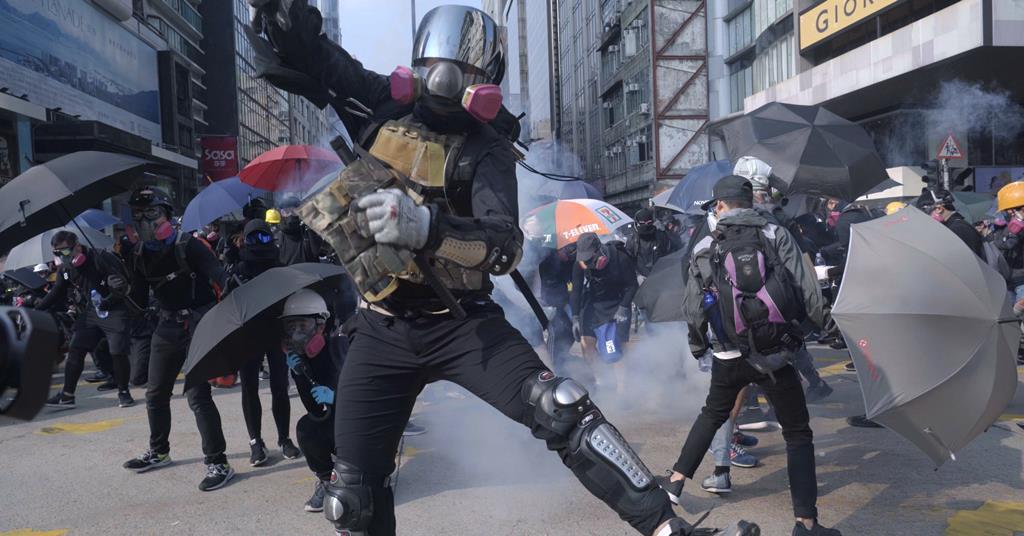
The documentary in general is a good record of what happened in 2019 from the perspective the protestors; it is quite obvious from the footage there was police brutality, which demonstrates how violence escalated in the ensuing months.
Protestors were faceless and leaderless
However, one needs to know the background of Hong Kong's history (a former British colony handed back to China, which then reneged on the "one country, two systems" promise of no change for 50 years) to understand how the city came to this moment. There is only a brief mention of the 2014 Umbrella Movement, which led to the explosion of the anti-extradition protests five years later.

One of the first scenes was of former legislator Claudia Mo Man-ching taking part in the initial peaceful protests -- it would be the first of several times I would cry because she is now languishing in jail, and many other people who are captured in the film are behind bars as well. 

It is very lucky of the director to have interviewed them for the record.

They include Benny Tai Yiu-ting, Avery Ng Man-yuen, Fernando Cheung Chiu-hung, Wu Chi-wai, Joshua Wong Chi-fung, Gwyneth Ho Kwai-lam Agnes Chow Ting, and those who are in exile: Ted Hui Chi-fung and Nathan Law Kwun-chung.
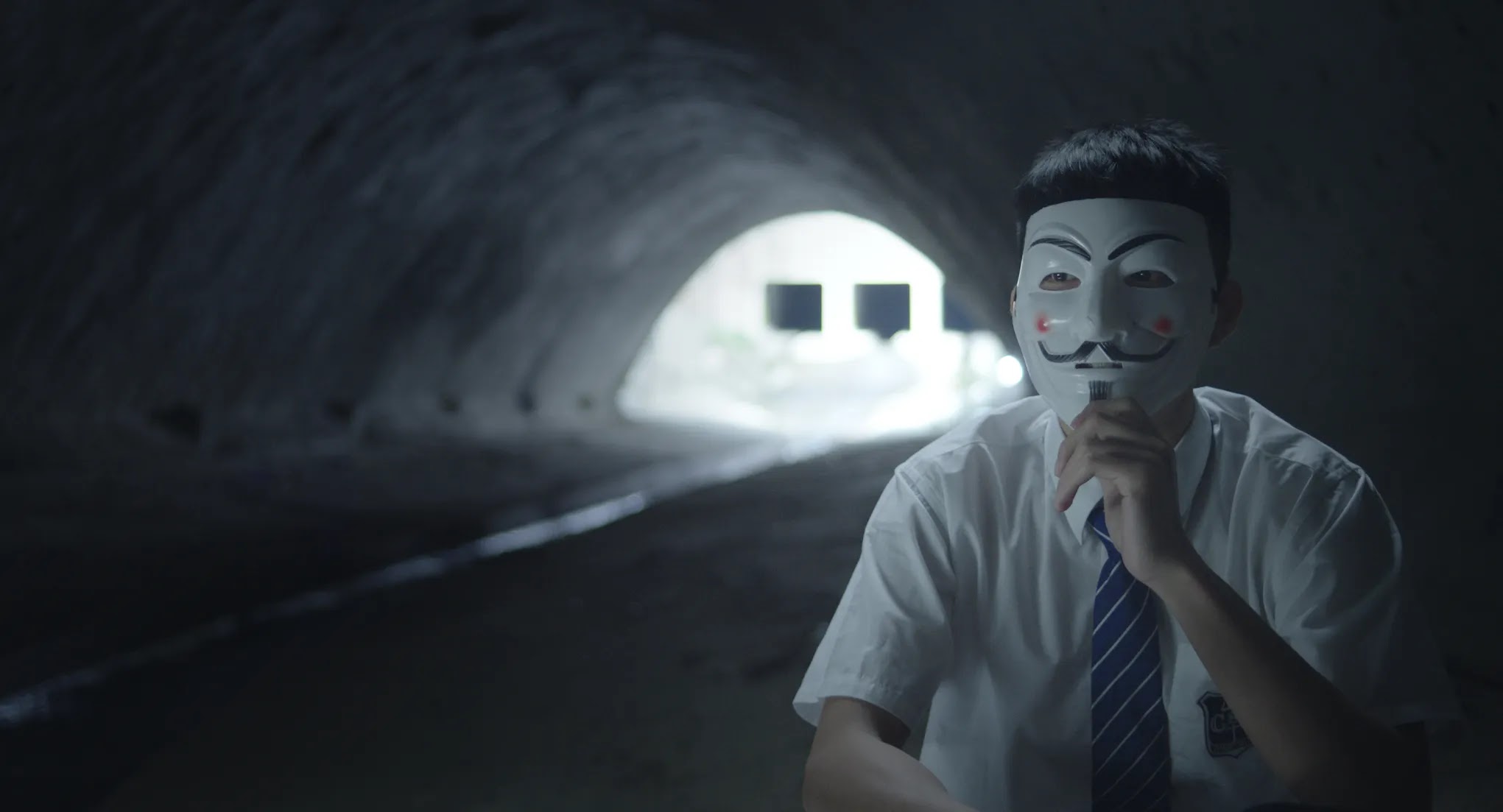
This 16 year old didn't tell his dad about protesting
But the film isn't about them, but the faceless and nameless protestors who followed Bruce Lee's mantra to "be water". They learned from the 2014 protests not to have a leader, but be leaderless and Revolution of Our Times follows their evolution, how 2 million people who came out to peacefully protest against the extradition bill proposed by Chief Executive Carrie Lam Cheng Yuet-ngor and then Secretary for Security John Lee Ka-chiu (and now sole candidate running for the next chief executive).

The turning point, as many remember was July 1, 2019 when some people decided to storm the Legislative Council. This is where Tai says the protest became fractured, where some protestors wanted to remain peaceful, while others said the government was not listening and felt they had to escalate to violence.

There is footage of them inside, but also the confusion and fear -- would the police storm in at anytime and arrest them? Would they come out alive? This is where viewers begin the empathise with them -- and are reminded these are young people in their teens and 20s.

After this interview, Gwyneth Ho is now in jail
As a result of the storming of Legco, there was another motto: "not one less" -- everyone together -- and they began organising themselves, from front-line protestors who lobbed bricks and pushed water barriers around, to rounding up cars to drive people home late at night, to "moms and dads" who provide logistical and emotional support, and those who collect information on the street to inform others on Telegram where to go and figure out strategies and exit routes on maps.

Another big event was July 21, 2019 when white-shirted men with sticks beat up people at the Yuen Long MTR station. There is a lot of horrific scenes of people literally being hit by sticks, and Gwyneth Ho's own footage of being attacked in a Facebook live broadcast shown in full. 

The public immediately complain to the police and the commander hardly acts concerned when he finally arrives at the scene, saying he came as soon as he heard... when the incident was already over. Many people believed the police had colluded with the triads, and there is even a clip of Junius Ho Kwan-yiu instructing the triads to mercilessly beat anyone in black. 

Chief Executive Lam looks like a deer in headlights at a press conference where former RTHK reporter Nabela Qoser grills her the next day about where she was when the Yuen Long attacks were happening; Lam and her ministers beat a hasty retreat. One hollers, "When will you die?"

This first aider gives his mask to an elderly man
As a result the protests escalate further to August 31 with the attack in the Prince Edward MTR station, when police brazenly shot pepper spray in the station and attacked people as they were desperately trying to flee. 

One of the first aiders begged the police to let him in to treat the wounded, but viewers can hear the police tell him he is a piece of excrement. The young first aider, only in his teens, is inconsolable. 

This led to a complete hatred of the police, and there are numerous scenes of them stepping on protestor's faces once they were caught, or kneeing them so they could not breathe, or still beating them, or dragging them on the ground. One protestor points out they understand the legal risks of what they are doing, but if the police do anything wrong, they aren't held accountable.

Meanwhile there is also a profile of Uncle Chan, a 73-year-old farmer who wanted to do his part to protect the young protestors. Wearing his fuchsia hat, gas mask and florescent vest, he tries to stop the police from physically harming the young people on the streets. There is an altercation between him and the police and for several agonising seconds viewers watch blurry chaotic footage, worrying if Chan is OK. 

Uncle Chan (left) tells a protestor to be careful
There is stunning drone footage of the protests, from the start showing the 2 million people flooding Hennessy Road, up at Lion Rock where protestors put up a statue, and unfurl a banner, but most impressive is scene where the police are running up Nathan Road to catch protestors and they disperse as quickly as possible like black ants. The police catch one person, then try to catch another, but another protestor knocks that officer down and then the two of them run their separate ways. 

Another is a comparison between October 1, 2019 in Beijing and how it is marked in Hong Kong. As one can imagine Chinese leader Xi Jinping's celebrations are controlled and grandiose, whereas protestors in Hong Kong tear down upbeat Chinese slogans and prepare to defend their hometown.

It all culminates into the final showdown, first at the Chinese University of Hong Kong, and then at Polytechnic University. Viewers see first hand the chaos and what it was like being on the front line fighting the police at both campuses. The protestors practice using sling shots, bows and arrows, prepare Molotov cocktails and ferry supplies.

But things turn for the worse when the police surround the protestors at Poly U and they are terrified there is no way out. They even try to escape through a sewer but without success. This was perhaps the lowest point of their morale along with fatigue that really hit the protest movement hard despite rallying from people outside the campus. 

Director Kiwi Chow 
Everyone knows the end of the story -- the national security law was implemented on June 30, 2020, abruptly ending the protests unless people were willing to sacrifice themselves to 10 years in jail. Director Chow records how over 10,000 people have been arrested related to the protests and lists the names of former lawmakers and activists who have been imprisoned and still awaiting trial. 

But then Chow tries to end on a high note, having primary school children write pro-Hong Kong messages on Post-It notes, and then has an orchestra and singers in protest gear reprise the protest anthem. It's very contrived compared to the rest of the documentary. It is understandable he wants to incorporate the song into the film, but these scenes are not genuine.

Nevertheless Chow should be commended for having the courage to put Revolution of Our Times together -- another filmmaker was doing a similar project but was spooked by the national security law and gave their footage to Chow to use instead. The people who came forward to be interviewed are brave too, even if they do not fully reveal their faces and voices. 

They are the ones who help the viewers understand their motivations, emotions and beliefs at that time, and how they were all united under one cause. People leaving Hong Kong do not blame the protestors for what they did -- instead they blame Lam and Beijing.

And following the "be water" mantra, exiles abroad are trying to figure out how they can keep the movement alive, because it is their love of Hong Kong that reminds them of why they need to find freedom elsewhere.

Revolution of Our Times
Directed by Kiwi Chow
152 minutes


VIFF -- Review: Our Mr. Matsura

Matsura (right) with a local in Okanogan County Frank (Sakae) Matsura, was the son of a Samurai in Hirado, Japan, but by the time he was gro...