![]() |
| They are a reasonable $5 each |
![]() |
| The egg salad is a bright yellow |
![]() |
| They are a reasonable $5 each |
![]() |
| The egg salad is a bright yellow |
![]() |
| An arborist makes her way up to rescue the cat at the tree top |
Lots of drama in Surrey today with news of a cat stuck in a tree -- a really tall tree for three days.
When Samantha Decamillis was walking her dog on Saturday she spotted the black cat at the top of a tree.
She called the fire department and the City of Surrey about rescuing the cat, but no response until Decamillis said she notified the media.
Today animal services came out, but weren't sure what to do, and got an arborist to climb up the tree. It has no foliage at the top, which means it's a dead tree.
When the arborist finally made it near the top she tried to get the cat into her net, but at first it was terrified of her and didn't want to go in. But in her second attempt, the arborist pushed the cat into the net and there were loud cheers from down below.
However, soon after, the freaked out cat managed to jump out of the net and fell to the ground and was seen scampering away.
Onlookers couldn't find the cat and hope it's OK. They are just relieved it is out of the tree where it had nothing to eat or drink.
The cat has definitely used up one of its nine lives today!
![]() |
| Simporios has won the largest lottery payout ever in Canada |
![]() |
| The 35-year-old immigrant cried tears of joy |
![]() |
| He plans to buy a home and travel to LA |
![]() |
| Metro Vancouver is projected to have 4 million people by 2045 |
![]() |
| Science World lit up like a giant glowing pumpkin |
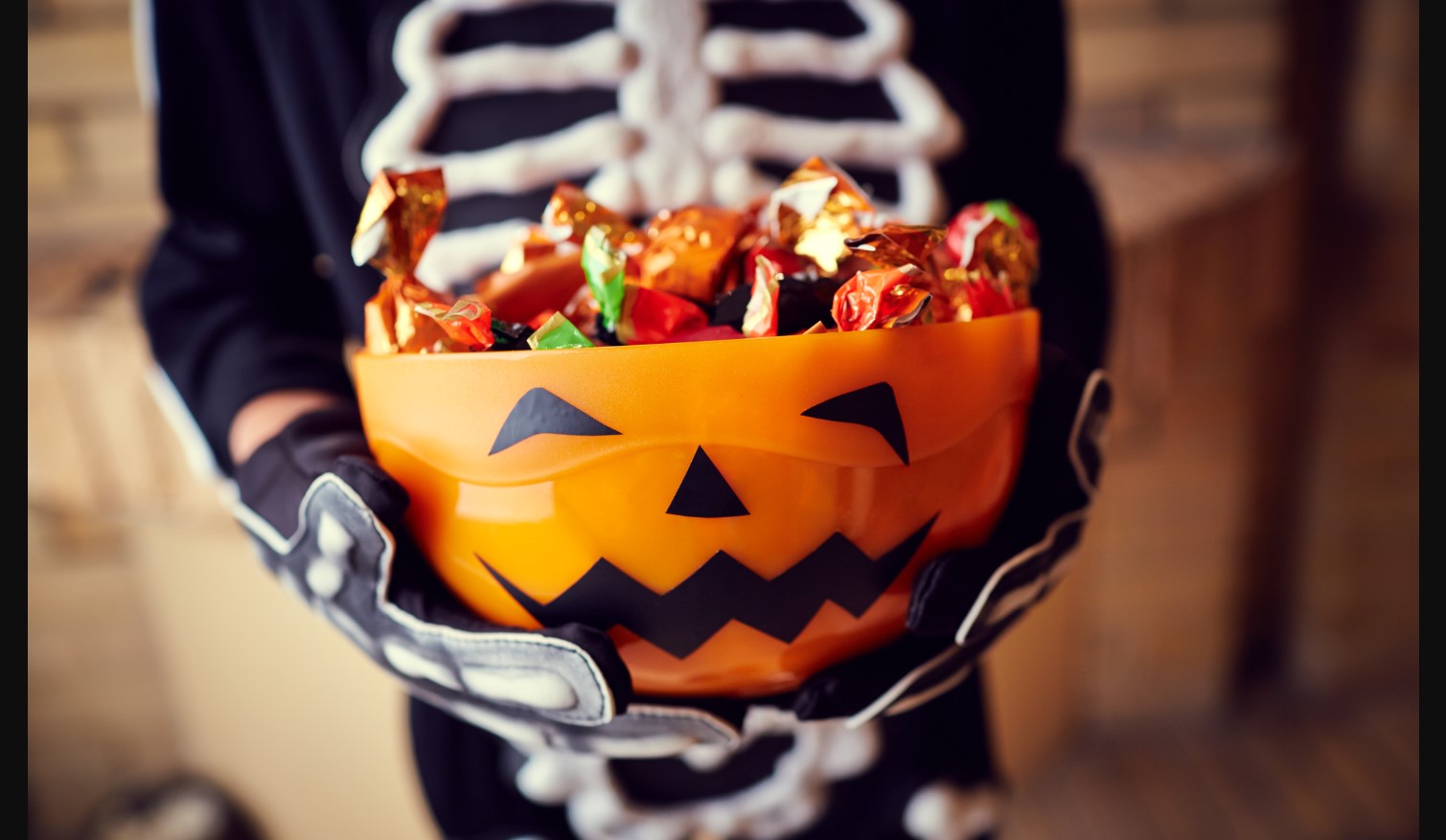
Today people are recovering from their sugar highs from Halloween last night, while one academic has pored over the statistics to see which Metro Vancouver neighbourhood had the most trick-or-treaters.
Since around 2016, Andy Yan, director of the Simon Fraser University City Program has tracked which areas give out the most candy, and the winner like all previous years is... Douglas Park, around West 22nd Avenue and Heather Street near Cambie Village.
![]() |
| One child getting candy via a kiddie slide |
Other popular areas are New Westminster's Queen's Park, Surrey's East Clayton, Richmond's Steveston, and Victoria's Rockland.
Yan observed the popular areas for trick-or-treating are located near parks, making them walkable.
"[They have] a density, and yet at the same time, it's density through which I think people feel safe. They feel like they're part of a community," he said in a radio interview this morning.
"I think it's very much about the importance of green space and... this role of parks and how they kind of help anchor a community."
And despite the rising costs of candy this year, more than 80 percent of respondents said inflation did not deter them from buying candy to give out for Halloween.
Interestingly it's the wealthier neighbourhoods that have fewer trick-or-treaters like Shaughnessy, as Yan explains there is a lower "door-to-curb" ratio that forces kids to have to walk or run further to the next house, whereas if the houses are closer to each other, they can collect more candy in the same period of time.
![]() |
| Neighbourhoods near parks gave out lots of candy |
Which includes more "destination trick-or-treating", a relatively new phenomenon where kids are driven around to other neighbourhoods to collect even more candy.
Whatever happened to just being content with what they got in their own area?
There are also opportunities to trick-or-treat at neighbourhood businesses, as various BIAs or business improvement associations organise shops to give out candy during the day.
Another factor is new immigrants who may not have experienced Halloween before and are unfamiliar with the traditions involved, and hence didn't participate.
Nevertheless, with Metro Vancouver -- heck the province of British Columbia -- focused on densifying cities, will this mean even more candy for kids in the future?
![]() |
| Many municipalities are seeing increases in homeless people |
Every three years there is a count of the homeless people in Vancouver and the surrounding municipalities, and sadly the numbers are getting higher in every area, many of them are indigenous and seniors.
Counting was conducted by the Homelessness Services Association of BC and the statistics are shockingly high in areas like Delta with a 159 percent increase, 91 percent in Richmond, and 86 percent in the Tri-Cities (Coquitlam, Port Coquitlam an Port Moody). Surrey has seen a 65 percent increase to 1,060 who don't have a proper roof over their heads.
Vancouver has the highest number of homeless at 2,420, but among the slowest growth at 16 percent compared to 2020.
![]() |
| Many homeless are indigenous and seniors |
This year 4,821 people across the region are experiencing homelessness, a 32 percent increase since 2020; homeless advocates say this is the "minimum" number, and there are probably many more that volunteers could not find.
The count was conducted on March 7 and 8 this year, finding people in shelters, transition houses, hospitals, police cells, alleys, doorways, parks and vehicles. At the time of the count, two-thirds had a temporary roof over their heads, while the rest were unsheltered, either sleeping outside, living in a tent, or couch surfing.
In addition one in five were over the age of 55, and 10 percent of them said they were experiencing homelessness for the first time as a senior.
"The number of seniors have been going up significantly, and that's really challenging. In an environment with ever increasing food costs and housing costs, seniors are disproportionately being impacted," said Stephen D'Souza, executive director of the Homeless Services Association of BC.
More than two-thirds of the respondents had experienced homelessness for at least a year, a significantly larger number since the last survey in 2020.
The main reason is the skyrocketing rents that have made it so difficult for people on low-income budgets to afford, along with cost of living, substance abuse and mental health issues.
Another interesting point is that the homeless population is mostly made of people from Vancouver -- they are not people who migrated from other parts of the country. Four out of every five people were homeless in the community where they used to be housed.
Mayors blame the province for not building low-income housing fast enough, while the BC government claims the federal government isn't doing enough to release more funds.
The blame game hardly helps the situation -- all levels of government need to earnestly tackle the issue of homelessness quickly and effectively before more people lose their homes in the next few years.
| The patches of gardens are pretty and colourful at Krause |
![]() |
| Blueberry waffles are good to share |
| Lots of pies, like blackberry for sale! |
| Get on the saddle at the wine bar |
![]() |
| More immigrants make up the Canadian population |
![]() |
| Metro Vancouver has 54 percent visible minorities |
![]() |
| Richmond has over 80 percent visible minorities |
Matsura (right) with a local in Okanogan County Frank (Sakae) Matsura, was the son of a Samurai in Hirado, Japan, but by the time he was gro...