Showing posts with label Gwyneth Ho Kwai-lam. Show all posts

Tuesday, November 19, 2024

Sentences Handed Down in HK 47 Trial

Sentences were handed down in the largest NSL case to date

It is a dark day in Hong Kong, as pro-democracy activists, former politicians and academics were convicted of subversion for their roles in the unofficial primary they held in July 2020. 

Sentences range from just over four years to 10 years for legal academic Benny Tai Yiu-ting, who was deemed the mastermind of the primary in a bid to force then Chief Executive Carrie Lam Cheng Yuet-ngor to resign. Beijing saw it as a bid to take down the government.

The primary never happened as the elections were postponed claiming the pandemic as the reason, and 47 people were arrested in January 2021. In the end 45 of them were convicted, totally wiping out key figures in the pro-democracy movement in Hong Kong.

But to the three appointed judges, it did not matter the primary was successful or not: "It was submitted by some of the defendants that the ultimate consequences of serious interfering in, disrupting or undermining the performance of duties and functions of Hong Kong Special Administrative Region government depended very much on the Scheme being carried to the fruition and that would have never materialised. Hence in the present case they said even without disqualification or calling off the LegCo election, the scheme was bound to fail because the participants simply failed to secure sufficient seats," they wrote in the judgment.

"Whether the Scheme would ultimately succeed, it was not for this Court to speculate. What we were sure was that all the participants had put in every endeavour to make it a success."

In general, those who pleaded guilty were given lesser sentences of over four years, while those who claimed they were not guilty were handed heavier ones. For example, Joshua Wong Chi-fung got four years and eight months by pleading guilty, whereas Gwyneth Ho Kwai-lam got seven years pleading not guilty.

But Tai entered a plea of guilty and got the heaviest sentence of 10 years, as the judges believed he instigated "the Scheme". 

As they have all been in custody without bail for over three years, some of them will be released on a year or so.

Many members of the public came to see the people in the dock. Former politician Claudia Mo Man-ching is 67 years old and was sentenced to four years and two months. Her husband, Philip Bowring is in ill health, which the court acknowledged, but would not reduce her sentence. Hopefully he can hang on until she is finally released.

There are also concerns about the health of "Long Hair" Leung Kwok-hung who is 68 years old and was sentenced to six years and nine months. The court did not describe him as having "a positive good character" as he has had a track record of protesting against the government over the years, hence the longer sentence.

The trial was meant to show those who dare to criticise the government can face a similar fate. 

"If you are being critical of the authorities both in Hong Kong and in China, then it's open season," said Steve Tsang, a Hong Kong-born political scientist and director of the SOAS China Institute in London.

"I think that this case will be seen by many in the international community as the final nail in the coffin for the rule of law in Hong Kong," said Thomas Kellogg, the executive director of the Georgetown Center for Asian Law.

Meanwhile Secretary for Security Chris Tang Ping-keung said the sentences showed those who committed national security crimes must be severely punished.

When Joshua Wong was leaving the courtroom, he shouted, "I love Hong Kong, bye bye!"

It's not over yet -- tomorrow Jimmy Lai Chee-ying's trial continues...

Friday, August 30, 2024

Two Former Editors Convicted of Sedition in HK


Chung (left) and Lam (right) were convicted of sedition

Two former editors of the now-defunct online news portal Stand News were convicted of conspiracy to publish seditious articles following the implementation of the national security law in 2020.

Judge Kwok Wai-kin, handpicked by the chief executive, ruled that former editor-in-chief Chung Pui-kuen, 54, and ex-acting editor-in-chief Patrick Lam Shiu-tung, 36, had either knowingly approved the illegal articles, or been reckless about the consequences of their actions.

Kwok ruled 11 of the 17 articles presented to the court were seditious, including an interview with journalist-turned-activist Gwyneth Ho Kwai-lam, and a commentary by fugitive former lawmaker Nathan Law Kwun-chung, had advocated anti-government ideologies and disparaged police and prosecutors.

Chung was released on bail following conviction
The district court judge wrote that Stand News had become a "danger to national security".

Their newspaper's editorial line supported "Hong Kong local autonomy", he added. "It even became a tool to smear and vilify the Central Authorities [in Beijing] and the [Hong Kong] SAR Government," he said in a written judgement.

Chung and Lam had both pleaded not guilty; the former attended the verdict, while Lam was not there due to health issues. Kwok did not immediately hand down a sentence, but the pair could face a two-year prison sentence and fined HK$5,000 (US$640). They will be sentenced next month and are currently out on bail.

This case was seen as a litmus test for Hong Kong's press freedoms and the verdict has sent a chill in the local media sector.

During mitigation on Thursday, Lam's lawyer, Audrey Eu read out a letter on his behalf, in which he regretted not telling the police one thing after his arrest:

Lam was arrested in December 2021
"Journalists do not have to be loyal to anyone, support anyone or be enemies of anyone," he wrote. "And if we really have someone to be loyal to, it will be the public and only the public because we believe in freedom of the press and freedom of speech."

However Kwok did not see it that way and convicted the pair using colonial sedition laws.

While the Committee to Protect Journalists called the ruling "another nail in the coffin for Hong Kong's press freedom", the Hong Kong government hailed the verdict, saying: "Any individual organisation that incites hatred and engages in acts and activities endangering national security can never escape sanctions of the law, and such malicious acts will surely be duly punished."

A government spokesman added that journalists were free to air criticism based on facts, but said that "Stand News completely disregarded objective facts and contravened the special duties and responsibilities emphasised by international human rights conventions which journalists must observe."


Sunday, July 21, 2024

Review: Among the Braves


The book covers the 2019 protests through four activists

There are many books written about the 2019 protests in Hong Kong, such as Antony Dapiran's City on Fire: The Fight for Hong Kong that documents practically every single incident that happened, to Indelible City: Dispossession and Defiance in Hong Kong,  Louisa Lim's memoir that is woven together with detailed history of Hong Kong.

One of the latest books is Among the Braves: Hope, Struggle and Exile in the Battle for Hong Kong and the Future of Global Democracy by journalist couple Shibani Mahtani and Timothy McLaughlin, the former with The Washington Post, the latter a contributing writer to The Atlantic.

Ho is a journalist turned activist, now in jail
It's complicated to explain how the protests exploded on the street in the summer of 2019 without a lot of history and context, and the authors do this through Reverend Chu Yiu-ming's life, how he came to Hong Kong from the mainland, became a pastor and was involved in Operation Yellow Bird, smuggling Chinese student activists in Tiananmen Square out of the country, and then in 2014 the Umbrella Movement, calling for universal suffrage.

He was prosecuted for his involvement in the 79-day occupation of parts of the city, and five years later the next generation takes up the mantle to continue the fight for democracy. 

The book follows four main characters and how they were involved in the 2019 protests: Chinese-American Samuel Chu Muk-man, a protester named Tommy, journalist turned politician Gwyneth Ho Kwai-lam, and UK-based activist Finn Lau Cho-dik.

Lau advocated online for laam chau
July 21 is the fifth anniversary of the horrific events that happened in Yuen Long, when triad members wearing white shirts attacked people in the MTR station with rods. It was a horrific scene watching the video clips posted on Twitter that night.

In particular it was Ho's live-streamed video that was shocking. She was the reporter who bravely recorded a middle-aged man assaulting her and she continued filming the incident live. Among the Braves reports how local residents in Yuen Long knew days in advance the attacks would happen, and so did the police, and yet nothing was done to stop or mitigate the attacks.

When Ho decided to run for the pro-democratic primaries in July 2020, she was mentally prepared to go to jail... where she has been since January 2021.

The book also has a harrowing account of Tommy, who decided to take the risk and flee to Taiwan... by boat and what happened after, and how surveyor Lau became an activist in the UK to raise awareness of what was happening in Hong Kong and proposing "laam chau", the concept of mutual destruction. That resulted in a HK$1 million bounty on his head.

Chu's activism was inspired by his father
Samuel Chu is also profiled in the book as an activist in the US who is... the son of Reverend Chu. Like his father he studied to become a pastor and was active in promoting several causes which gave him experience to set up the Hong Kong Democracy Council, which is he as since left.

Nevertheless Among the Braves follows these four along with then Chief Executive Carrie Lam Cheng Yuet-ngor and the numerous missteps she made in handling the 2019 protests and how this resulted in Beijing taking control over the situation and the city.

It's quite impressive how Mahtani and McLaughlin were able to reconstruct these people's lives, in Ho's case with as many people they could talk to, as she was behind bars. Their back stories help explain their motivations for being involved in the 2019 protests and the authors are sympathetic towards the pro-democracy protesters.

McLaughlin and Mahtani
A minor quibble is how some shocking events that were part of the protests were mentioned in passing to avoid criticism if they didn't include them, such as the young man who was shot by a policeman and protesters setting a man on fire.

In any event Among the Braves is a page turner for sure; those who were in Hong Kong can relive the events in their minds, while hopefully it will enlighten others about what happened in 2019.


Friday, July 21, 2023

Bruce Lee's Philosophy and the 2019 Protests

Lee's saying, "Be water, my friend" inspired 2019 protesters

In North America it's July 20, the 50th anniversary of martial artist Bruce Lee's death at the age of 32.

Even five decades on Lee continues to hold a fascination for old and new fans.

Lee died 50 years ago today in Hong Kong
He inspired the 2019 protesters with his philosophy, "Be water, my friend".  Lee's full quote: "Be formless, shapeless, like water. Now you put water into a cup, it becomes a cup. You put water into a bottle, it becomes the bottle. You put it in a teapot, it becomes the teapot. Now water can flow or it can crash. Be water, my friend."

What he meant was to constantly transform and adapt to situations, and with the protesters' uniform of all black, they were unidentifiable, and they made decisions organically, decentralising the movement.

Lee's saying actually comes from the Chinese philosopher Lao Tzu, who said: "Water is fluid, soft and yielding. But water will wear away rock, which is rigid and cannot yield. As a rule, whatever is fluid and soft, and yielding will overcome whatever is rigid and hard. This is another paradox: what is soft is strong."

Horrific attacks in the Yuen Long MTR station
In Hong Kong, it is the fourth anniversary of the July 21 attacks in Yuen Long. It was also the same day that protesters defaced the emblem of the People's Republic of China at the Liaison Office in Western.

Most people remember what happened in the Yuen Long MTR station and were traumatised watching the images of helpless people being attacked by men in white shirts with rods.  Those assaulted included lawmaker Lam Cheuk-ting, reporter turned politician Gwyneth Ho Kwai-lam. 

Lam is in jail for his part in the Yuen Long attacks when he was a victim -- he was assaulted and had a wound that required 18 stitches on his mouth. Ho recorded someone hitting her with a rod, and she is in prison too.

Most Hongkongers did not trust the police ever again. They still don't and some are triggered seeing officers on the streets.

Ho became a politician after Yuen Long attacks
Tangentially journalist Bao Choy Yuk-ling worked on an RTHK documentary about the Yuen Long attacks, doing some investigative work on the vans that transported some of the attackers. 

For the award-winning documentary she was fired and then arrested for violating the Road Traffic Ordinance for falsely declaring her intention to find out the owners of the vans. 

She was found guilty of two charges and fined.

Last month she finally won her appeal against her sentence which was annulled by the Court of Final Appeal.

This was the one bright victory in the years since that fateful night. 

Meanwhile those who are languishing in jail are making the most of their time there.

Lam needed stitches after being attacked
It has been reported that a 21-year-old inmate earned the best-ever public exam result taken in prison in Hong Kong for the Diploma of Secondary Education Examination.

In addition eight of 18 young detainees who sat for the DSE exam achieved scores good enough to enter a university.

They are not only using their time behind bars to study hard, but it also shows Hong Kong jailing its best and brightest.


Friday, February 3, 2023

Hong Kong Activists Nominated for Nobel Peace Prize

Hong Kong activists have been nominated for the Nobel prize

A bipartisan group of US lawmakers have nominated several Hong Kong pro-democracy activists for the prestigious Nobel Peace Prize.

They include Cardinal Joseph Zen, Apple Daily founder Jimmy Lai Chee-ying, and Joshua Wong Chi-fung of the now defunct Demosisto.

New Jersey Republican representative Christopher Smith, and Senator Jeff Merkley, a Democrat from Oregon, nominated the group "because they are ardent champions of Hong Kong's autonomy, human rights and the rule of law", according to the statement by the lawmakers.

Smith and Rubio are part of the CECC
Smith and Merkley lead the Congressional-Executive Commission on China, which advises the US Congress on policy towards China. Other members of the group include representative Jim McGovern, a Massachusetts Democrat, and Senator Marco Rubio, a Florida Republican.

They also nominated journalist-turned-politician Gwyneth Ho Kwai-lam, Tonyee Chow Hang-tung, a lawyer for a disbanded civil society group, and labour activist Lee Cheuk-yan.

"The nominees are representative of millions of Hongkongers who peacefully opposed the steady erosion of the city's democratic freedoms by the Hong Kong government and the government of the People's Republic of China," said the statement.

"Through the nomination, the members of Congress seek to honour all those in Hong Kong whose bravery and determination in the face of repression has inspired the world."

All the nominees have been charged under the national security law that was imposed on Hong Kong in July 2020.

Wong and Zen are two of the Nobel nominees
This is not the first time Hong Kong pro-democracy activists have been nominated for the Nobel Peace Prize -- Rubio and other CECC lawmakers nominated the entire opposition movement in 2021 in response to the national security law.

If anything this announcement brings attention to the plight of these nominees, almost all of them still in jail for around two years with no chance of bail, except for Zen. The 91-year-old was recently allowed to attend former Pope Benedict's funeral in the Vatican; after Zen returned he was in hospital for a few days because of breathing difficulties.

Thursday, July 21, 2022

Yuen Long Attacks Changed HK


Men with sticks attacked MTR passengers in Yuen Long MTR

In Hong Kong it is the third anniversary of July 21, 2019.

Two incidents happened -- protesters went to the liaison office in Western district and splashed black paint on the Chinese emblem. That led to Beijing stepping up its management of the protests; it denounced the vandalism of its property, particularly the emblem, and state media began reporting on the protests, calling the people actively involved as "rioters". 

Chinese emblem at liaison office was defaced
Up until that point all the protests had been censored on the mainland.

Then the other event that happened that shocked the city and beyond -- was the attack of innocent people at the Yuen Long MTR station by men in white shirts with sticks ranging from bamboo sticks to metal rods.

These people purposely wore masks and indiscriminately beat people, from young and old, even a pregnant woman. There are horrific images of people bloodied in the face, welts on their backs, screaming for mercy and traumatised for life.

It was a planned attack, orchestrated by whom is unclear, though pro-Beijing legislator Junius Ho Kwan-yiu seems to have been involved, seen shaking the hands of men dressed in white.

And the police were no where to be found, leaving people to fend for themselves.

One reporter was on the scene, Gwyneth Ho Kwai-lam, who was with Stand News at the time, filming not only on the chaos, but herself being beaten by a middle aged man in a pink shirt. Is he in jail? Strangely Ho is.

A chef whose back was covered in welts
Other journalists have tried to get to the bottom of the incident. RTHK produced a documentary on Hong Kong Connection called "7.21: Who Owns the Truth." It analyses and identifies individuals suspected to have participated in the Yuen Long attacks based on surveillance footage that day from nearby businesses.

It also questions the slow police response to the incident, why it took them 39 minutes to finally arrive at the scene.

After the documentary was broadcast on July 13, 2020, the government began dismantling the publicly-funded broadcaster, cancelling hard-hitting current affairs shows, resulting in journalists either being let go or fired. 

That was not all -- the government prosecuted one of the producers of the documentary, Bao Choy, for misrepresenting herself when she filled out a Transport Department form, requesting information on the owners of cars that were caught on camera leaving the scene in Yuen Long based on license plate numbers. 

Choy was convicted for finding info on attackers
Apparently on the form there was no option to choose requesting information for media purposes, and she was convicted of misstating her intentions and fined HK$6,000 (US$764). She had pleaded not guilty.

After that the Transport Department made it harder for people to request information based on license plates, terminating one of the ways journalists can do investigative reporting.

Choy did not let go of the 7-21 incident.

A few days ago she and a few colleagues produced another documentary, talking to three witnesses that night. One couple even took 4K pictures of the assailants that clearly identify their faces. They gave these images to the police but to no avail; only a handful of the over 200 attackers have been charged and convicted.

Choy is now doing a fellowship at Harvard University. But the chances of her coming back to Hong Kong are even slimmer after this latest documentary.

Lam was grilled by reporters the next day
Remember the day after the incident? Then chief executive Carrie Lam Cheng Yuet-ngor and her senior ministers held a press conference on the afternoon of July 22 and she was unprepared for the reporters grilling her, in particular RTHK's Nabela Qoser.

She asked questions in Cantonese like: "Did you learn about it only this morning? Were you able to sleep well last night?"

Lam looked like a deer in headlights and cut short the press conference. Embarrassing really for a woman who is known for micromanaging and always wanting to be the best. 

And it was a sign that Lam was no longer in control of the government response to the protests -- Beijing was.

We are all still processing what happened, frustrated there has hardly been any justice for the victims. Another documentary interviewed an elderly woman who injured her knee in the Yuen Long station and had to get surgery. Previously fit and taught dancing to elderly people, she cannot do this anymore, and her mobility is severely restricted by this injury. Thinking back to the event traumatises her, still shocked at what happened.

Looks like collusion between police and attackers
Meanwhile the government has been trying to change the narrative of this incident, now saying both sides were evenly matched which one would like to laugh at, but the injuries were so graphic that one can only have even further resentment at the authorities for not taking witnesses seriously.

They were also caught on camera communicating with men in white shirts, not even investigating or interrogating them.

As a result the Yuen Long attacks also abruptly ended any respect Hongkongers had for the police, from then onwards calling them "black police", not trusting them. Some are traumatised at the sight of these people in uniform even three years later.

So much happened as a direct result of July 21, 2019.

Which is is why we will never forget it.

Sunday, May 1, 2022

Review: Revolution of Our Times

Behind the scenes of the 2019 protests

My friend YTSL told me that the documentary about the 2019 protests, Revolution of Our Times by director Kiwi Chow would be shown in Vancouver and I saw one of the last screenings this afternoon.

When I bought the ticket there were still many available, but that's because it was shown in February, and also a few times in the past two weeks.

Nevertheless it was heartening to see one of the attendees was an older woman in her 60s wearing a yellow raincoat, in reference to Marco Leung Ling-kit, who plunged to his death on June 15, 2019. The cinema was not full, but the vast majority were Asian.

The documentary in general is a good record of what happened in 2019 from the perspective the protestors; it is quite obvious from the footage there was police brutality, which demonstrates how violence escalated in the ensuing months.
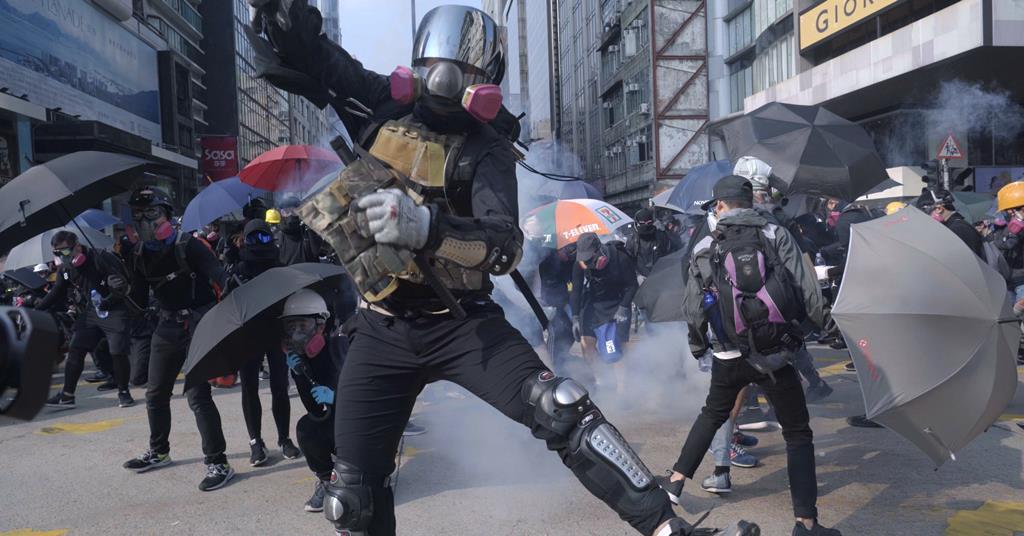
Protestors were faceless and leaderless
However, one needs to know the background of Hong Kong's history (a former British colony handed back to China, which then reneged on the "one country, two systems" promise of no change for 50 years) to understand how the city came to this moment. There is only a brief mention of the 2014 Umbrella Movement, which led to the explosion of the anti-extradition protests five years later.

One of the first scenes was of former legislator Claudia Mo Man-ching taking part in the initial peaceful protests -- it would be the first of several times I would cry because she is now languishing in jail, and many other people who are captured in the film are behind bars as well. 

It is very lucky of the director to have interviewed them for the record.

They include Benny Tai Yiu-ting, Avery Ng Man-yuen, Fernando Cheung Chiu-hung, Wu Chi-wai, Joshua Wong Chi-fung, Gwyneth Ho Kwai-lam Agnes Chow Ting, and those who are in exile: Ted Hui Chi-fung and Nathan Law Kwun-chung.
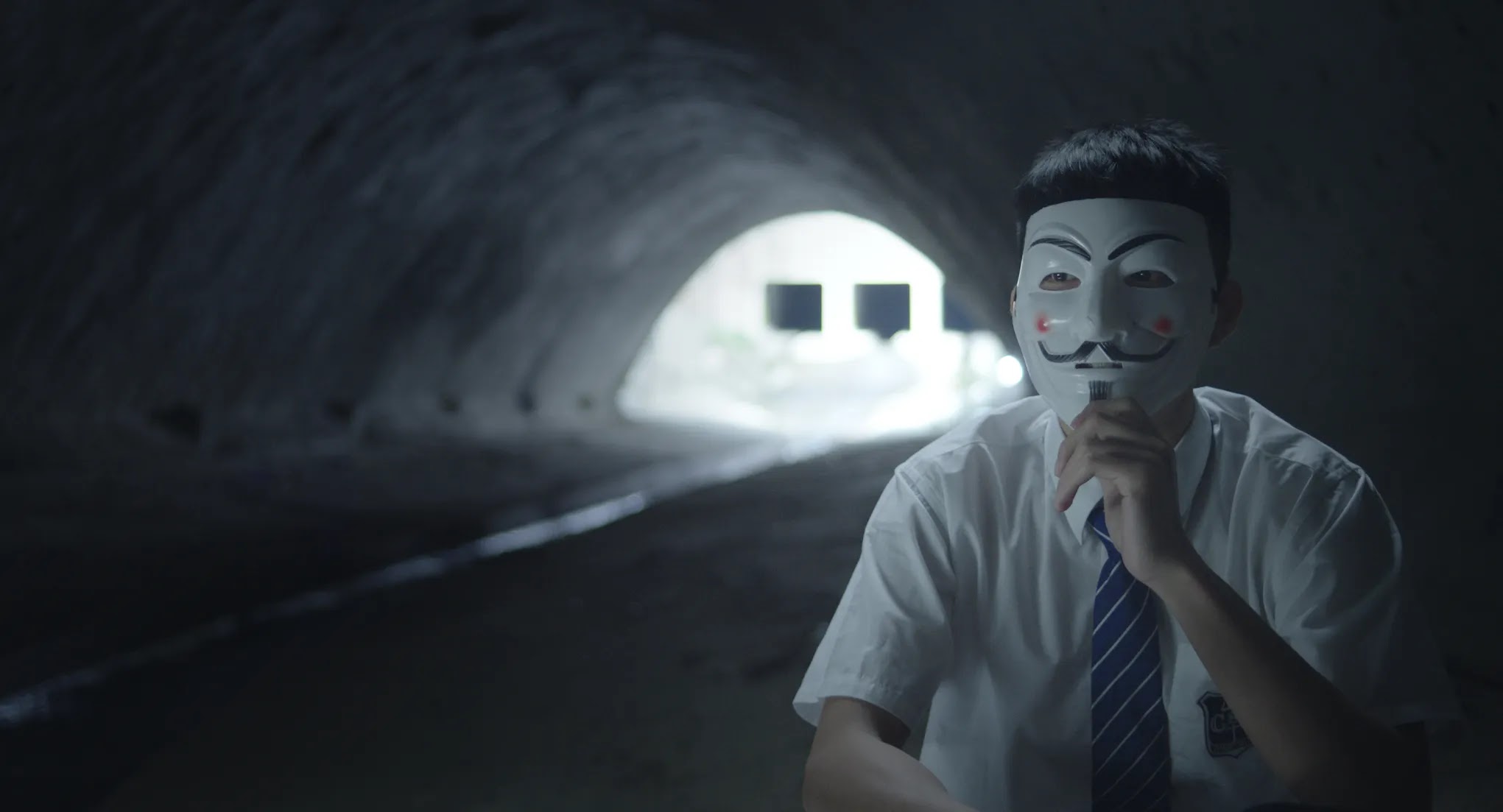
This 16 year old didn't tell his dad about protesting
But the film isn't about them, but the faceless and nameless protestors who followed Bruce Lee's mantra to "be water". They learned from the 2014 protests not to have a leader, but be leaderless and Revolution of Our Times follows their evolution, how 2 million people who came out to peacefully protest against the extradition bill proposed by Chief Executive Carrie Lam Cheng Yuet-ngor and then Secretary for Security John Lee Ka-chiu (and now sole candidate running for the next chief executive).

The turning point, as many remember was July 1, 2019 when some people decided to storm the Legislative Council. This is where Tai says the protest became fractured, where some protestors wanted to remain peaceful, while others said the government was not listening and felt they had to escalate to violence.

There is footage of them inside, but also the confusion and fear -- would the police storm in at anytime and arrest them? Would they come out alive? This is where viewers begin the empathise with them -- and are reminded these are young people in their teens and 20s.

After this interview, Gwyneth Ho is now in jail
As a result of the storming of Legco, there was another motto: "not one less" -- everyone together -- and they began organising themselves, from front-line protestors who lobbed bricks and pushed water barriers around, to rounding up cars to drive people home late at night, to "moms and dads" who provide logistical and emotional support, and those who collect information on the street to inform others on Telegram where to go and figure out strategies and exit routes on maps.

Another big event was July 21, 2019 when white-shirted men with sticks beat up people at the Yuen Long MTR station. There is a lot of horrific scenes of people literally being hit by sticks, and Gwyneth Ho's own footage of being attacked in a Facebook live broadcast shown in full. 

The public immediately complain to the police and the commander hardly acts concerned when he finally arrives at the scene, saying he came as soon as he heard... when the incident was already over. Many people believed the police had colluded with the triads, and there is even a clip of Junius Ho Kwan-yiu instructing the triads to mercilessly beat anyone in black. 

Chief Executive Lam looks like a deer in headlights at a press conference where former RTHK reporter Nabela Qoser grills her the next day about where she was when the Yuen Long attacks were happening; Lam and her ministers beat a hasty retreat. One hollers, "When will you die?"

This first aider gives his mask to an elderly man
As a result the protests escalate further to August 31 with the attack in the Prince Edward MTR station, when police brazenly shot pepper spray in the station and attacked people as they were desperately trying to flee. 

One of the first aiders begged the police to let him in to treat the wounded, but viewers can hear the police tell him he is a piece of excrement. The young first aider, only in his teens, is inconsolable. 

This led to a complete hatred of the police, and there are numerous scenes of them stepping on protestor's faces once they were caught, or kneeing them so they could not breathe, or still beating them, or dragging them on the ground. One protestor points out they understand the legal risks of what they are doing, but if the police do anything wrong, they aren't held accountable.

Meanwhile there is also a profile of Uncle Chan, a 73-year-old farmer who wanted to do his part to protect the young protestors. Wearing his fuchsia hat, gas mask and florescent vest, he tries to stop the police from physically harming the young people on the streets. There is an altercation between him and the police and for several agonising seconds viewers watch blurry chaotic footage, worrying if Chan is OK. 

Uncle Chan (left) tells a protestor to be careful
There is stunning drone footage of the protests, from the start showing the 2 million people flooding Hennessy Road, up at Lion Rock where protestors put up a statue, and unfurl a banner, but most impressive is scene where the police are running up Nathan Road to catch protestors and they disperse as quickly as possible like black ants. The police catch one person, then try to catch another, but another protestor knocks that officer down and then the two of them run their separate ways. 

Another is a comparison between October 1, 2019 in Beijing and how it is marked in Hong Kong. As one can imagine Chinese leader Xi Jinping's celebrations are controlled and grandiose, whereas protestors in Hong Kong tear down upbeat Chinese slogans and prepare to defend their hometown.

It all culminates into the final showdown, first at the Chinese University of Hong Kong, and then at Polytechnic University. Viewers see first hand the chaos and what it was like being on the front line fighting the police at both campuses. The protestors practice using sling shots, bows and arrows, prepare Molotov cocktails and ferry supplies.

But things turn for the worse when the police surround the protestors at Poly U and they are terrified there is no way out. They even try to escape through a sewer but without success. This was perhaps the lowest point of their morale along with fatigue that really hit the protest movement hard despite rallying from people outside the campus. 

Director Kiwi Chow 
Everyone knows the end of the story -- the national security law was implemented on June 30, 2020, abruptly ending the protests unless people were willing to sacrifice themselves to 10 years in jail. Director Chow records how over 10,000 people have been arrested related to the protests and lists the names of former lawmakers and activists who have been imprisoned and still awaiting trial. 

But then Chow tries to end on a high note, having primary school children write pro-Hong Kong messages on Post-It notes, and then has an orchestra and singers in protest gear reprise the protest anthem. It's very contrived compared to the rest of the documentary. It is understandable he wants to incorporate the song into the film, but these scenes are not genuine.

Nevertheless Chow should be commended for having the courage to put Revolution of Our Times together -- another filmmaker was doing a similar project but was spooked by the national security law and gave their footage to Chow to use instead. The people who came forward to be interviewed are brave too, even if they do not fully reveal their faces and voices. 

They are the ones who help the viewers understand their motivations, emotions and beliefs at that time, and how they were all united under one cause. People leaving Hong Kong do not blame the protestors for what they did -- instead they blame Lam and Beijing.

And following the "be water" mantra, exiles abroad are trying to figure out how they can keep the movement alive, because it is their love of Hong Kong that reminds them of why they need to find freedom elsewhere.

Revolution of Our Times
Directed by Kiwi Chow
152 minutes


VIFF -- Review: Our Mr. Matsura

Matsura (right) with a local in Okanogan County Frank (Sakae) Matsura, was the son of a Samurai in Hirado, Japan, but by the time he was gro...