Showing posts with label luxury brands. Show all posts

Monday, July 13, 2026

Vancouverites Priced Out of Oakridge Park

Oakridge Park is bright an airy, but also very expensive

Oakridge Park has partially opened in Vancouver, and after years of watching it being built, many residents were curious to see how the old shopping mall was replaced.

Gone was the large street level parking lot and in its place is a huge upscale mall, parking in the basement, and luxury condos in the towers above. The prices for these units were apparently so expensive that only the uber rich could afford them, and even then there were stories going around that there was valet parking which deterred some prospective buyers.

Lots of luxury brands and a champagne bar
In a bid to showcase Oakridge Park and get some customers in, a section of the mall featuring Time Out Market, the gourmet food hall was opened first in late May.

There was a lot of hype about Time Out Market, and in the first few days there were mobs of people trying to get to this area on the second floor; one report was that it was an hour wait just to get in, and almost as long to get food.

People were enticed to come thanks to a huge social media push that invited influencers to film themselves trying the food. For example, there's Iron Chef winner and celebrity chef Rob Feenie come and offer his Feenie burgers, Lunch Lady has a condensed version of its pho offerings, Top Chef Canada winner Chanthy Yen presenting Mee, a Cambodian menu of rice or noodle bowls, and Beaucoup Bakery and Mello with their pastries and doughnuts respectively.

Nevertheless, the food court is popular because there's a giant screen showing the World Cup games, like when we went the other day.

Cambodian noodles from Mee Bar
I ordered a bowl of noodles from Mee Bar, with slices of braised pork, rice noodles, two prawns, half a soft-boiled egg and bean sprouts with a slightly sour and spicy sauce for $26. Sadly it did not fill me up, and I wasn't about to buy something else in the food hall.

Security also seems overly hyper vigilant. We walked in with a cup of water and a security guard told us no outside drinks allowed. We explained it was just water and at first she refused to let us bring it into the food hall and suggested we use the water dispenser which made no sense -- we already had water! She finally let us go. It was a bit much.

As one can surmise, most of the food offerings are Asian, to target a certain crowd, as evidenced by the retail stores.

The shopping mall itself looks like one that could be found in China or Hong Kong, though Oakridge Park seems to be even grander with the stores all spread out thanks to the wide berth between them.

And yes all the shops are on the high end: Louis Vuitton, Chanel, Tiffany & Co., Alexander Wang, Chow Tai Fook, Rolex, Prada and Dior to name a few.

The mix of stores is very high end and empty
Meanwhile the only cheapest option is Sephora to buy lipstick or a Korean beauty mask until supermarket Safeway opens. There are no toy stores or bookstores, or a range of stores offering various price points.

Some people who have visited Oakridge Park describe it as soulless, similar to an airport mall, full of greed and excess, and makes them feel poor. 

I have to agree... Oakridge Park was planned when there seemed to be a never-ending tap of Chinese money flowing to Vancouver, but the spigot has been turned off and now there are too many condos and not enough buyers to afford them.

Unfortunately we're left with what could soon become a white elephant...

Thursday, December 18, 2025

Shenzhen: Hanging Out in the Mall


MixC is a massive retail development in Shenzhen Bay

During our stay in Hong Kong, we also did a day trip to Shenzhen. We had heard a lot about how the city had changed in the last few years, how people and families go there on the weekends to shop, eat, and have massages with really good ambience and service at a fraction of the cost in Hong Kong.

And it's easy to see why seniors love going across the border, because with a JoyYou card, they can travel to the border for just HK$2. That's even cheaper than regular fare going one stop on the MTR line.

The mall looks sleek, but hardly any shoppers
We took the longer route of taking the MTR from Admiralty to LoWu, and the border control on the Hong Kong side hasn't changed much.

Then we crossed the bridge to the Chinese side where at first foreign passport holders were expected to fill out an arrival card online. There were technical difficulties and the officers gave up and handed out paper forms instead.

I downloaded the app Didi ahead of time and ordered a car -- but as we didn't know the Shenzhen train station well we got lost trying to find the meeting spot! The driver called us and we saw the Shangri-La Shenzhen ahead of us and rushed over there to meet him. Thankfully he was very patient despite only making 36 kuai from us!

He drove us about 30 minutes to a new shopping mall that friends had recommended we check out. It's called MixC and it's been around since 2017, but we went to a new location near Shenzhen Bay, which opened in October, which might explain why it was pretty empty? Or is it a sign of China's slow economy? 

Vietnamese lunch of vermicelli with pork
The mall is sleek and modern-looking, filled with luxury brands from Louis Vuitton to Christian Dior, Gucci Kids (I couldn't even afford a child's handbag), an upscale supermarket called Ole, and a movie theatre.

In the supermarket one could buy a giant king crab, or palm-sized hairy crab, blueberries the size of 5-cent coins, and even Nicholas Tse "low-temperature processed black pork luncheon meat".

For lunch we ate at a Vietnamese restaurant in a kind of food court in the basement, which was busy. We ate pho with beef and sausage, and warm vermicelli with spring roll and pork slices, and a plate of young water spinach that was delicious. We went to another kiosk for gelato that other people were lining up for.

We walked off the calories by wandering the mall. Seeing there was a roof garden, we checked it out and were impressed by the design of the space -- global firm CallisonRTKL, which my architect cousin says is only interested in massive projects like these, with lots of space to design.

The mall is spread over several city blocks
The concept is "city crossing", where we would wander through one part of the mall, emerge outside and see a bridge to the other side, cross it, and enter another part of the mall, and it would continue like this for several city blocks. 

The stores were pretty much empty except for the staff inside them, and the restaurant calibre looked impressive. There was DaDong Roast Duck from Beijing, a Shanghainese restaurant that had a nice decor and menus that were large books filled with big pictures. 

MixC is next to a bullet-shaped tower that had no obvious signage, but it is a China Resources building, as the entire development is owned by the state-owned enterprise. And next to this futuristic building is a nice open space, with water features, and a Monet-like sculpture with figures dancing in a circle.

We ended up having dinner in a vegetarian chain restaurant called Qing Chun Perma, which gives of a zen-like vibe with its minimalist decor. Diners walk into the open kitchen, seeing staff preparing dumplings, stir-frying or making desserts wearing white chef jackets and gray fedora hats.

Mushroom xiaolongbao at Qing Chun Perma
Each table is set in a booth-like atmosphere and shielded with bamboo screens so that you can't see the people sitting at the next table, but you can hear them.

The menu has a mix of Chinese and Western dishes: The mushroom xiaolongbao were big, generous dumplings with thin wrappers, and lots of flavour in the fillings. We also had an asparagus and morel mushroom warm salad, a pumpkin soup with coconut milk, braised tofu with morels, and stir-fried pea shoots.

For dessert, a bowl of glutinous rice dumplings in sweet rice wine, and mango sago cream with pomelo.

At times it was hard to flag down the servers -- all women -- but they were friendly and helpful. When we finally got a hold of someone asking for the bill, she told us to scan the QR code at our table and pay that way. No need to tip. Just pay electronically and then you can leave.

Then we made our way back to Hong Kong, getting a car to drive us back to LoWu, and then after going through Chinese immigration, we took the train back, very tired!


Saturday, July 12, 2025

The OG Birkin Bag Goes for $10M

A picture of Birkin and the original bag in HK

It turns out the OG Birkin bag, the first one co-designed by actress and singer Jane Birkin and Hermes CEO Jean-Louis Dumas in 1984 is worth US$10.1 million and was sold to a lucky collector in Japan at a Sotheby's auction the other day.

The price crushed the most paid for an Hermes bag, a Kelly bag made of white Himalaya Niloticus crocodile skin that was sold at auction in 2021 for $513,040.

Unlike most auctioned Hermes bags that are practically in pristine condition, this original Birkin bag is scuffed up, still has the outlines from political stickers that were placed on the bag for its owner, Birkin, to display her stances on issues, and has the initials J.B. stamped on the bag.

Dumas helped design the Birkin bag in the 1980s
The story of how the bag was created is practically legend, but true: In the 1980s she was on a Paris to London flight when Birkin, who was carrying a tattered woven wicker basket as her handbag, tried to stow it away, when items fell out and onto the floor.

She fortuitously sat next to Dumas, and Birkin asked him why Hermes didn't make bigger handbags. He proceeded to take an air sickness bag and sketch out a bag design for her. 

Their discussion of the bag continued well after the flight until he finally presented Birkin with the bag with the now signature clasps and handle and Dumas asked if the bag could be named after her.

Women today don't use their Birkin bag like she did -- to preserve its value and condition, most people only bring it out for show; after all they had to wait years to be able to purchase it!

Back in the 1990s I was fortunate enough to meet Dumas. He came to Hong Kong several times not only to visit the Hermes shops, but also meet up with his son, Pierre-Alexis Dumas, who was based in the city.

The original Birkin sold for over US$10 million
The elder Dumas was very charismatic, suave and had lots of stories to tell. He was the one who started the idea of setting a theme for every year and artisans at Hermes would create products and designs related to those themes. Basically a clever way to keep customers coming back to their boutiques.

When Dumas took over Hermes in 1978, the company's revenues were $50 million. By 1990 it was $460 million. The year before Dumas died in 2009 it was $2.5 billion.

Birkin kept the bag until 1994 when she donated it for an auction to raise money for an AIDS charity. It was auctioned again in 2000 until now, where it was estimated to be worth around $1 million.

The estimates were wrong by ten-fold.


Friday, June 20, 2025

Man Arrested in Stealing Second-Hand Luxury Goods


The alleged thief was caught in Bangkok, and sent back to HK


When the economy is faltering, there are criminals who turn to stealing to make some money.

Robberies in Hong Kong are rare, and if they happen it's usually in jewellery stores. But recently one thief got creative and hit a store selling second-hand luxury goods.

Some of the 14 stolen Hermes handbags
On Wednesday a mainland Chinese man entered a shop on Hart Avenue in Tsim Sha Tsui where he allegedly rendered a female store employee unconscious and tied her up. 

He then allegedly made off with 14 pre-owned Hermes bags, a Van Cleef & Arpels necklace, and two mobile phones totalling almost HK$3 million (US$382,170).

One wonders how he managed to carry 14 Hermes bags outside on the street without attracting attention.

The robber then fled to Bangkok and was held in custody by the Thai authorities before he was sent back to Hong Kong. Most of the stolen goods were recovered. 

This is not the first time a store selling pre-loved luxury items was robbed.

In November last year, thieves broke into a shop selling consigned luxury brand goods in a grade A office building in Central. They stole 66 Hermes handbags worth a total of HK$10 million in five minutes.

Last November HK$10M in goods was stolen
The store had to compensate all the clients whose bags were consigned were either stolen or damaged.

While selling second-hand luxury goods is a good business, the threat of thieves stealing expensive merchandise is not for the faint-hearted. 

Sunday, September 15, 2024

Dire Straits for Luxury Brands


Hong Kong's luxury malls are looking pretty empty these days

The projections are that big spenders from the mainland won't be splashing the cash in Hong Kong, Paris, Milan and London anytime soon, as China's economy continues on its downward spiral.

Analysts say this year is not good, and aren't even holding their breath for next year either and it's hurting luxury brands in their stock value.

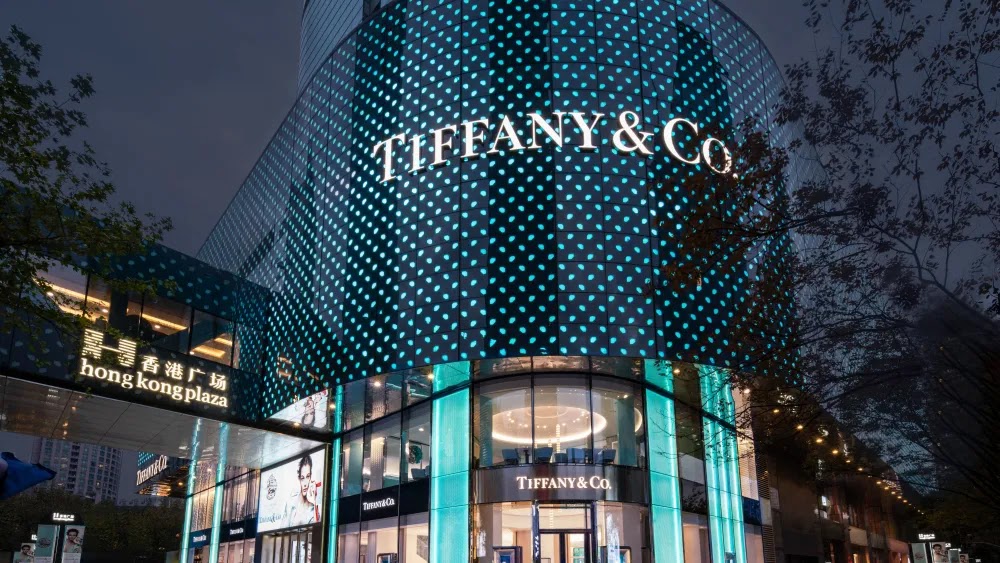
Tiffany & Co's Shanghai shop to halve its space
Burberry Group had its market value plunge 70 percent from the past year, causing the brand to lose its inclusion in London's FTSE 100 stock list. 

Gucci and Hugo Boss have also been hit hard, both losing half their value over the past year. Gucci is owned by Kering, which owns Moet Hennessy and Louis Vuitton, which was Europe's largest company by market cap a year ago, has fallen to second place.

To that end, Tiffany & Co owned by LVMH is looking to halve the size of its Shanghai flagship store, while high-end malls in Hong Kong are practically empty. 

Hermes is sitting pretty with Brunello Cucinelli
The only brands doing well are the ones catering to the uber rich -- Hermes International selling Kelly and Birkin bags, and Brunello Cucinelli with its cashmere sweaters. 

May they live long and prosper!

Thursday, September 5, 2024

HK's Golden Retail Era is Over


A mall with empty shops isn't a very inspiring experience

In another sign that Hong Kong's economy is floundering is to look at the retail sector, plunging to pandemic levels. Yes, not pre-pandemic but during the Covid-19 era.

Mainland visitors, who used to be the priority customers in luxury boutiques snapping up designer handbags to pharmacies for shampoo to baby formula are tightening their belts and preferring a cheaper way to visit the city.

Hong Kong's retail sales plunged 7.3 percent in the first seven months of the year compared to 2023, according to government data that was published on Friday. And that's a big drop considering there was a 52.2 percent increase in visitors during the same period.

Street-level shops are also sitting empty
Mainland visitors who stayed overnight spent HK$6,495 (US$833) per capita in 2023, while same-day visitor spending plunged 37 percent to just HK$1,383 last year.

Why? 

"The reduced spending of middle class Chinese tourists in Hong Kong can be attributed to the economic slowdown -- started by the property downturn, shift in consumption patterns, increased focus on savings due to challenging employment prospects and changing travel preferences," said Christine Li, head of research for Asia-Pacific at Knight Frank.

She says this has led to mainland visitors focused more on experiences than material goods, and there are first-timers to Hong Kong who don't have has deep pockets as previous Chinese tourists. As a result they opt for "zero-dollar" tours, where everything has been prepaid.

"They take pictures for their online accounts, but they don't spend money. They're not spending the same amount of money in shops or restaurants like they used to," observed Simon Smith, Savills' regional head of research and consultancy for Asia Pacific. "The golden era for Hong Kong's retail market is over. That's the reality."

Of the 30 shops in Heritage 1881, only 3 open
Ouch.

To make it even worse for the local retail scene, Smith says Hongkongers are rushing to Shenzhen on the weekends to take advantage of restaurants and shops at one-third of the cost in Hong Kong.

Shopping malls like Heritage 1881 in Tsim Sha Tsui are practically empty. It used to have high-end shops like Tiffany and Co, watch shops and Shanghai Tang, as well as a very expensive Japanese restaurant, but according to Bloomberg, of the 30 shop spaces, only three are occupied now.

Many analysts say it will take a long time before Hong Kong's retail industry bounces back, and when that happens how many shops will survive that long?

Thursday, August 1, 2024

Weak Yen Fuels Luxury Shopping Spree


Many tourists line up to snap up luxury goods in Japan

The weak yen in Japan has led to a splurge in luxury shopping, not by local residents, but by mainland Chinese consumers.

They are flocking to the land of the rising sun to snap up designer goods that would cost more back home. That's because the yen hit a 38-year low against the US dollar last month, which has led to tourists in Asia coming to shop till they drop.

The Louis Vuitton Alma BB handbag
For example, Louis Vuitton's Alma BB handbag costs 14,800 yuan in China, or US$2,050. In Japan it currently goes for 279,400 yen, or US$1,875. Last month when the yen was even lower it could have been snapped up for US$1,725.

It's a problem LVMH, which owns Louis Vuitton and other brands like Dior and Fendi, does not want to have, as the conglomerate is taking in less profits; it cannot adjust prices quickly because of the volatility of the currency.

Tourists, not just Chinese, but also from Southeast Asia and the United States are taking advantage of the weak yen and not just buying designer luxury goods, but also jewellery, watches and spirits. 

In June, Japan had a record 3.1 million foreign visitors, and is projected to beat the annual record of almost 32 million foreign arrivals in 2019 before the Covid-19 pandemic.

Spending by tourists is anticipated to reach 8 trillion yen (US$54.74 billion) this year, according to the government, as tourism is keeping the economy afloat despite the aging population.


Wednesday, July 17, 2024

China Luxury Sales in Big Slump


China's slowing economy affecting global luxury brands

Another sign that China's economy is weakening further -- the sales of luxury goods continues to slump, affecting brand name companies' bottom lines by as much as US$200 billion.

Burberry and Hugo Boss have issued profit warnings, while Richemont has seen a 27 percent drop in sales in China, Macau and Hong Kong, as Chinese consumers stop shelling out for big-ticket items.

Middle-class consumers aren't spending as much
Consultancy company Bain says China accounted for 16 percent of 362 billion euros (US$393.8 billion) of global luxury spending last year.

But this year the country's economic growth in the first quarter was slowed by the property slump and job insecurity. There are no signs things will get significantly better in the second half of the year.

Bain predicts this year will be the weakest for the global luxury market since the pandemic, as China's super rich are avoiding flaunting their wealth for more discreet fashion.

That said, the uber wealthy are still happy to spend, and high-end luxury brands are benefitting, such as Hermes and Brunello Cucinelli.

In early 2023 when China finally lifted its Covid-19 restrictions, Chinese consumers went on a massive spending spree on luxury goods, but that tapered off when the property sector weakened further.

Hugo Boss, Burberry, issued profit warnings
The longer it isn't resolved, the longer the luxury sales slump will continue... and that will have a trickle down effect on other retail and hospitality sectors...

Wednesday, September 13, 2023

10-Year-Old Involved in HK Robbery


Police investigate a robbery in a luxury watch shop in TST

Post-Covid, Hong Kong's economy has not bounced back as hoped, and some people are financially desperate. This has led to a rise in robberies, where teams of people run into a jewellery store and smash-and-grab whatever they can and then leave in seconds.

But yesterday's news was even more shocking -- a 10-year-old school boy was allegedly involved in one of the latest heists.

One suspect is a 10-year-old schoolboy (hooded)
He was arrested for allegedly taking part in a HK$3.7 million robbery (US$472,560), where he may have used a sledgehammer to smash display counters at a luxury watch store. He was allegedly paid HK$5,000 to take part in the smash-and-grab gang raid on a shop in Tsim Sha Tsui, where they took off with 20 luxury watches.

"The investigation revealed that he skipped school on that day and joined the gang to commit the robbery," a source familiar with the case said.

The boy even wore his school uniform, though he had a jacket or pullover on top.

Originally from Pakistan, he is quite tall and big for his age, at 1.7 metres tall and weighing 132 pounds (60kg). The boy came here in 2018 to join his parents. 

The police believe a 14-year-old was also involved in the robbery who allegedly carried a knife during the incident and grabbed some of the expensive watches.

The trio allegedly stole 20 luxury watches
It is believed the third person is a 19-year-old man who was found near Kowloon Peak in Sai Kung, and officers found a backpack with the stolen watches in the bushes nearby. The authorities said all the items had been recovered.

How shocking and sad that kids are involved in robberies. Not much is known about their backgrounds, but it could be various reasons from financial desperation to feelings of neglect or helplessness, or being led astray.

It will all be revealed later in court, and many will be following this case as the investigation progresses.


Saturday, April 22, 2023

Hong Kong Losing its Luxury Lustre

A shopper emerges from Louis Vuitton in Hong Kong

Hong Kong seems to be losing its magnetism to attract mainland shoppers to come and buy luxury brands, losing out to Chinese cities like Shanghai, Chengdu, Guangzhou and even Shenzhen, which is just across the border.

The global luxury conglomerate, that has a portfolio that includes Louis Vuitton, Loewe, Berluti, Rimowa, Fendi, Christian Dior, and Givenchy to name a few, is gradually extracting itself from Hong Kong and moving the regional headquarters to Shanghai along with some of its senior executives.

Christian Dior boutique in Harbour City, TST
Since the 2019 protests till now, Hong Kong has been struggling to lure shoppers back, who used to wait patiently in queues outside these shops to snap up the latest handbag, shoes and clothes, as they didn't have much faith in the same products being genuine on the mainland. It was also a cache to be able to boast purchasing these items on a shopping spree in the city.

But after the three year-long Covid-19 pandemic, it seems like the shine of Hong Kong has gone dull and mainland tourists prefer to go elsewhere or stay closer to home to shop.

For example, duty-free sales in Hainan more than tripled to 49.5 billion yuan (US$7.2 billion) in 2021 from 2019, according to Bloomberg Intelligence. Even during last year's zero-Covid chaos, sales were still more than twice the size of pre-pandemic levels.

Even Macau is getting a slice of the luxury pie. The gambling hub's visitor arrivals have recovered to about 62 percent of 2019 levels over the recent Easter holiday, compared to 44 percent for Hong Kong -- which does not bode well for the latter city.

Shoppers lining up at Gucci in Hainan
As Hong Kong loses its significance in the luxury brand market, it could have a knock-on effect on hotels, restaurants, tourism and retail.

Chief Executive John Lee Ka-chiu needs to think of another way to revive Hong Kong's economy quick otherwise it's going to die the death of ten thousand cuts. Or this was Beijing's plan all along?


Saturday, March 4, 2023

Nordstrom's Closing Shop

The Nordstrom in Vancouver is shuttering in a few months

The Canadian retail scene is getting emptier with the news that Nordstrom is pulling out of the market completely.

After eight years of losing money annually, the American chain retailer is closing all its 13 stores across the country including Nordstrom Rack.

Even the discount stores are closing for good
Nordstrom is seeking bankruptcy protection. In its court filings, in 2022, Nordstrom's Canadian division sold about CAD$515 million worth of goods, but lost $72 million while doing so.

One retail consultant says Nordstrom scaled up too quickly without understanding the differences between customers in Vancouver, Calgary and Toronto, while another says the retailer misjudged customers here.

"They probably just overestimated how rich we are and how much we spend on luxury goods," said retail consultant Bruce Winder. "We just don't have as many people who would desire that kind of merchandise they needed to break even."

YUP. They had no idea how cheap Canadians are!

In addition Winder says, the age of the department store is over... so who is going to take over these massive multi-floor spaces that were meant to be anchor stores in shopping malls across the country?

One wonders how good the sales will be...
In the meantime people are looking forward to the sales that will be happening later this month. Many will be checking them out for any deals like hawks circling their prey...

Tuesday, February 14, 2023

Retail Boom Days may be Over in Hong Kong

Mainland shoppers hauling purchases from Hermes in TST

The cancellation of PCR (Polymerase Chain Reaction) tests for visitors before arriving into Hong Kong did not result in hoards of mainlanders flooding into the city as shop owners had hoped.

Several shop owners, particularly pharmacies lamented that business only increased by 10 percent.

Chanel is a popular luxury brand for Chinese
"During the pandemic, the economy and lifestyle of the mainlanders changed... They have become reliant on online shopping," said pharmacy owner Tony Lee.

"Before the pandemic, there used to be lines of customers queuing outside my shop and this street was full of tourists," he said of San Hong Street in Sheung Shui, across the border from Shenzhen. 

Lee worried business would not go back to pre-pandemic levels because consumers seemed used to shopping online than going to physical stores like his.

While mainland tourists have noticed many shops have shuttered since the pandemic, the biggest winners so far seem to be luxury brands.

Mainlanders believe HK products are real
Mainlanders are still keen to shop at Dior, Louis Vuitton and Chanel because they believe the goods are genuine -- they still perceive the same products in shops in China are fake...

Is this the only thing going for Hong Kong these days?


VIFF -- Review: Our Mr. Matsura

Matsura (right) with a local in Okanogan County Frank (Sakae) Matsura, was the son of a Samurai in Hirado, Japan, but by the time he was gro...