Showing posts with label Benny Tai Yiu-ting. Show all posts

Tuesday, November 19, 2024

Sentences Handed Down in HK 47 Trial

Sentences were handed down in the largest NSL case to date

It is a dark day in Hong Kong, as pro-democracy activists, former politicians and academics were convicted of subversion for their roles in the unofficial primary they held in July 2020. 

Sentences range from just over four years to 10 years for legal academic Benny Tai Yiu-ting, who was deemed the mastermind of the primary in a bid to force then Chief Executive Carrie Lam Cheng Yuet-ngor to resign. Beijing saw it as a bid to take down the government.

The primary never happened as the elections were postponed claiming the pandemic as the reason, and 47 people were arrested in January 2021. In the end 45 of them were convicted, totally wiping out key figures in the pro-democracy movement in Hong Kong.

But to the three appointed judges, it did not matter the primary was successful or not: "It was submitted by some of the defendants that the ultimate consequences of serious interfering in, disrupting or undermining the performance of duties and functions of Hong Kong Special Administrative Region government depended very much on the Scheme being carried to the fruition and that would have never materialised. Hence in the present case they said even without disqualification or calling off the LegCo election, the scheme was bound to fail because the participants simply failed to secure sufficient seats," they wrote in the judgment.

"Whether the Scheme would ultimately succeed, it was not for this Court to speculate. What we were sure was that all the participants had put in every endeavour to make it a success."

In general, those who pleaded guilty were given lesser sentences of over four years, while those who claimed they were not guilty were handed heavier ones. For example, Joshua Wong Chi-fung got four years and eight months by pleading guilty, whereas Gwyneth Ho Kwai-lam got seven years pleading not guilty.

But Tai entered a plea of guilty and got the heaviest sentence of 10 years, as the judges believed he instigated "the Scheme". 

As they have all been in custody without bail for over three years, some of them will be released on a year or so.

Many members of the public came to see the people in the dock. Former politician Claudia Mo Man-ching is 67 years old and was sentenced to four years and two months. Her husband, Philip Bowring is in ill health, which the court acknowledged, but would not reduce her sentence. Hopefully he can hang on until she is finally released.

There are also concerns about the health of "Long Hair" Leung Kwok-hung who is 68 years old and was sentenced to six years and nine months. The court did not describe him as having "a positive good character" as he has had a track record of protesting against the government over the years, hence the longer sentence.

The trial was meant to show those who dare to criticise the government can face a similar fate. 

"If you are being critical of the authorities both in Hong Kong and in China, then it's open season," said Steve Tsang, a Hong Kong-born political scientist and director of the SOAS China Institute in London.

"I think that this case will be seen by many in the international community as the final nail in the coffin for the rule of law in Hong Kong," said Thomas Kellogg, the executive director of the Georgetown Center for Asian Law.

Meanwhile Secretary for Security Chris Tang Ping-keung said the sentences showed those who committed national security crimes must be severely punished.

When Joshua Wong was leaving the courtroom, he shouted, "I love Hong Kong, bye bye!"

It's not over yet -- tomorrow Jimmy Lai Chee-ying's trial continues...

Thursday, May 30, 2024

14 Convicted of Subversion


Leung (in black) was convicted of subversion today


Over two days in July 2020, the pro-democracy camp in Hong Kong held an unofficial primary to help determine who to run in its slate of candidates for the Legislative Council elections that year. It was hoped this would help increase the pan-democrats' chances of winning more seats in the legislature.

Organisers expected around 170,000 but over 610,000 local residents took part in long queues to vote in polling booths that were held in various locations in the city, including a shop selling lingerie and a defunct bus.

Diplomats attended the verdict earlier today
For that exercise, 47 people involved were arrested and in 2021 were charged with conspiracy to commit subversion under the national security law that was implemented a year earlier.

Most of them were remanded in custody ever since.

Of the 47 charged, 16 pleaded not guilty, the others pleaded guilty in a bid to receive shorter prison sentences.

After a 118-day trial, the verdict for the 16 was announced a few hours ago -- 14 were convicted, two were acquitted, but prosecutors have already announced they will appeal.

Those convicted include: Leung Kwok-hung or "Long Hair", Lam Cheuk-ting, Owen Chow Ka-shing, Gwyneth Ho Kwai-lam, Raymond Chan Chi-chuen, and Clarisse Yeung Suet-ying.

They believed they didn't do anything wrong, but the handpicked judges did not see it that way.

The convicted will be sentenced at a later date and could face life in prison.

Chan was also convicted of subverting the govt
Meanwhile, those who have pleaded guilty already are Claudia Mo Man-ching, Benny Tai Yiu-ting, Joshua Wong Chi-fung, Alvin Yeung Ngok-kiu, and Jeremy Tam Man-ho.

Before the verdicts came down, partners and parents of those remanded in custody talked about the emotional toll the trial has had on them, how they try to live each day. 

Those behind bars and their loved ones are all brave and have the courage to deal with such adversity. Many of them are young, and amazingly are still optimistic for the future.


Friday, September 29, 2023

HK's Umbrella Movement 9 Years Ago


Police fired 87 teargas canisters on September 28, 2014

Has it been nine years since the start of the Umbrella Movement?

It seems like a lifetime ago, but it was a seminal moment in Hong Kong's recent history.

Before September 28, 2014, several young people occupied Civic Square at Tamar Government headquarters and they in turn were surrounded by the police.

The occupation of Admiralty lasted 79 days
On that day, hundreds of people descended on Admiralty armed with umbrellas, some wore goggles and shouted at the police to release them. They demanded that they 开门. or "open the gates" but to no avail.

My friend YTSL had just returned from a trip to Japan when she joined in, but was feeling hungry. Seeing as nothing was happening, we went to the nearby shopping mall Pacific Place to have a bite at Dan Ryan's.

While we were eating I happened to check Twitter and the police had shot teargas at the people, around 6pm!

We rushed back to Admiralty Centre and the Umbrella Movement had begun -- people were walking around on what is usually a busy freeway, and traffic had come to a stand still. It was absolutely surreal.

At the time I had to go to Kowloon side for dinner with relatives and watching the TV we were shocked to see the police had fired more teargas -- 87 canisters in total.

This only enraged more people to come out to Admiralty that evening and so on for 79 days and spread to Causeway Bay, Wan Chai and Mongkok.

People of all ages hanging out particularly in Admiralty fostered a sense of community on a large scale; people handed out water bottles, picked up garbage, helped students study, created crafts and art work. 

It inspired artwork and a sense of community
They wrote their hopes for Hong Kong on coloured sticky notes and wore yellow ribbons. 

Then Chief Executive Leung Chun-ying had contempt for student leaders Joshua Wong Chi-fung, Alex Chow Yong-kang, Lester Shum Ngo-fai and Nathan Law Kwun-chung. Most memorable was the televised debate between the young people and the government officials, with the former easily winning in the court of public opinion. 

Leung would deal with academic Benny Tai Yiu-ting, Chan Kin-man, and Chu Yiu-ming later. Tai's grand plan didn't exactly work -- he had to move up his "Occupy Central" idea up a few days and quickly got lost in the shuffle. The media focused on Joshua Wong and he and his colleagues took the reins of the movement.

Nine years later things have completely changed, almost all these people are behind bars or have been convicted for their part, the pro-democratic camp decimated and the Legislative Council only having seats for patriots.

Tens of thousands of people have left Hong Kong and the city is struggling economically and socially.

Meanwhile the Hong Kong diaspora is trying to recreate that community feeling again in their new homes in different ways. It will take time to see if they have succeeded or not. 


Sunday, February 26, 2023

Review: We Have Boots

Chan's doc on the Umbrella Movement


It's hard rewatching footage of the 2019 Hong Kong protests, police indiscriminately firing tear gas canisters at protesters, roughly pushing them down on the ground, and the scenes of officers beating up commuters in Prince Edward MTR station are horrifying every time, as well as the white shirted men with sticks attacking people at the Yuen Long MTR station.

How did this all happen within a span of days, weeks and months?

But these scenes only make up a small part of director Evans Chan's documentary, We Have Boots: Hong Kong on the Edge (2020) that was shown online as part of the Global Hong Kong Studies at the University of California.

Yellow umbrellas became symbol of movement
His film actually focuses more on the 2014 Umbrella Movement, how it happened (spontaneously), thousands of people occupied parts of the city and ended without a proper resolution 79 days later as police arrested people and cleared the streets.

Chan demonstrates the consistency of the Hong Kong government to ignore the Basic Law, to ignore the will of the people and to reinforce Beijing's authority over the city. He focuses on a few pro-democracy activists, both young and old and how they each found their way to be part of this movement.

They include legal scholar Benny Tai Yiu-ting, former sociology professor Chan Kin-man, Agnes Chow Ting, Alex Chow Yong-kang, localist Ray Wong Toi-yeung and social worker Shiu Ka-chun.

It's interesting to hear Agnes Chow explain how she got politically involved through a Facebook page, and threw herself into the cause, while Tai and Chan rationalise the need to have this civil disobedience exercise in the streets. They look to Martin Luther King Jr for inspiration, and believe (naively or not) that people inherently have the right to protest on moral grounds and that they will persevere in the end.

Film interviews Tai (middle) and Chan (right)
Meanwhile the documentary notes that the localist movement grew out of the 2014 movement because they were not given a chance to speak to the crowds in Admiralty, to provide another opinion. The pro-democracy movement acknowledges this mistake which caused the movement to splinter into groups like Hong Kong Indigenous.

While Chan and Tai said they were mentally prepared for prison time by not using air conditioning as much as possible, for Shiu it was heartbreaking to see him with his mother and knowing she would be on her own for several months while her son was in jail. He was doing it for the greater good, but at the same time he was pained to know he would not be there to look after his mother.

However, the documentary feels like it's missing Joshua Wong Chi-fung -- who was considered a key part of the 2014 movement, and pushed onto the international stage by the global media. There is no interview with him at all to learn how he was dealing with being one of the ring leaders of the movement, and also the decisions they were making at the time.

Apple Daily founder Jimmy Lai-Chee-ying is also missing in this film, who was literally at Admiralty everyday. He and his newspaper played a major role in helping to get the crowds out.

There is a lot of reflection from Alex Chow, who was a key member of the Occupy Movement and then he became a Buddhist in jail and went overseas to study, probably never to return. 

Chan puts events into context
Director Chan gives a lot of background to explain how the 2014 Umbrella Movement came to be, as more mainlanders flooded the city to buy goods, leaving locals overwhelmed and beginning to identify more strongly as Hongkongers and realising the government was not standing up for them, that they had to do it themselves.

However after the movement was shut down without any resolution, many people were depressed and despondent. So is it any surprise how they were determined to learn from their mistakes in 2014 and have a leaderless pro-democracy movement?

By this time people like Wong and Tai were in jail, the government thinking it had everything under control. Chinese officials in the Liaison Office were completely out of touch with what was going on too, as evidenced by the November 2019 District Council elections where pro-democracy candidates swept 17 out of 18 districts. 

We Have Boots gives a condensed taste of what happened with the government's bungling of the extradition bill and how young people were very creative in fighting back. Their fight became an existential one of literally fighting to keep Hong Kong's rights and freedoms -- a huge burden for the next generation. But they felt they had no choice.

It is believed Chan has plans to follow up We Have Boots with a closer examination of the 2019 protests and that would be good to have some analysis and more importantly a record of what happened. While it is re-traumatising to watch this footage over and over, we need to remember this happened and we saw it happen.

We Have Boots: Hong Kong on the Edge
Directed by Evans Chan
2hours, 9 minutes


Monday, February 6, 2023

Review: Indelible City: Dispossession and Defiance in Hong Kong

This book is part history, part memoir

There are several books about the 2019 protests and Louisa Lim's Indelible City: Dispossession and Defiance in Hong Kong combines numerous threads that are subtly woven through the chapters and then magically come together into a striking record. 

One thread is Lim's family history and childhood in Hong Kong, another is her interest in a crazy artist nicknamed the King of Kowloon who painted childlike graffiti all over the city, and the last thread about Hong Kong's history and how the once barren rock transformed into an international metropolis thanks to British policies and the sheer hard labour of the Chinese, mostly refugees.

Throughout its entire history, Hong Kong's people were never given a say of their fate. In the negotiations leading up to the signing of the 1984 Joint Declaration by British prime minister Margaret Thatcher and paramount leader Deng Xiaoping, there was another group tangentially involved -- the Unofficials.

Author and journalist Louisa Lim
They were a small group of local elites who tried to advise the British to not trust the Chinese, but they were completely sidestepped and felt betrayed. 

The proof is in a series of confidential interviews these Unofficials gave to Hong Kong political scientist Steve Tsang in the 1980s and 1990s with the promise they would be kept secret until 30 years later, which is now.

Lim read every single page and distills how the Unofficials felt at the time, betrayed by the British despite their loyalty, and trying to keep a brave face in front of the public as all their negotiations were to be top secret -- not even their wives or friends were to know what was discussed.

And it is interesting to note how these Unofficials' fears of what would happen to Hong Kong have come true, how the vagueness of the Basic Law would lead to Beijing interpreting it, and not give Hongkongers the rights they were promised, which have led us to where we are today.

Another fascinating read is when she recalls the time she was a reporter at TVB during the 1997 handover. The TV station had planned programming to the minute for up until the handover ceremonies were held, but then were completely lost the following days afterwards as to what they should focus on, much like the city trying to feel its way with the Basic Law as its new constitution.

She also interviews the last governor of Hong Kong, Chris Patten, now decades later on looking back on what happened to the city. His response was far from the polished politician he usually is.

Tsang with his numerous graffiti writings
The book then moves fast forward to 2014 and the Umbrella Movement, how it was such an extraordinary protest at the time for the city, but also marked the beginning of the authorities using lawfare -- weaponising the law against defendants like Benny Tai Yiu-ting and Joshua Wong Chi-fung.

Lim notes how the movement, which paralysed the city for 79 days, ended so abruptly that protesters found it difficult to process and figure out what to do next.

That came five years later in the 2019 extradition protests that exploded into months of protests on the streets. Lim shuttled back and forth between Melbourne and Hong Kong to cover the protests periodically. Not only was she trying to cover them as a journalist, Lim was trying to process it all as a Hongkonger -- what was happening to her city?

It's something many of us were grappling with as we watched the street battles, the violent clashes, the blank-faced government officials and the determined protesters day after day. 

Meanwhile Lim also weaves into the book her obsession with Tsang Tsou-choi, a poorly-educated man who believed Kowloon belonged to his ancestors and thus him, and began protesting by painting crude Chinese calligraphy on government property. In a way it was also his way of marking his territory.

She recalls how he was written off as a madman and then suddenly became a superstar, his work even exhibited at the Venice Biennale in 2003 and auctioned off by Sotheby's the following year. 

The early extradition protests in June 2019
To Lim in a quirky way he represented Hongkongers fighting for their rights, and how he is an important part of the city's art development and culture.

Sadly she notes how Beijing has a strong hand over Hong Kong in the last few years, observing how the government labelled the protesters as "rioters", thus changing the narrative, and brutal police tactics seemed to have repeated how protests in Chengdu were shut down in 1989.

And she mourns how press freedom ended the day Jimmy Lai Chee-ying was arrested, followed by the swift demise of his paper, Apple Daily.

"A million copies were printed for this city of 7.5 million. They sold out. The next day the newspaper's entire archive vanished from the internet. As Beijing imposed its narrative control by force, it was simply too dangerous for other versions of the past to exist," she writes.

Indelible City is an incredible book, deftly weaving these threads together to create a page turner for anyone who is interested in Hong Kong and its history. 

Many times I found myself nodding my head in agreement or thrilled to read someone else had come to a similar observation or conclusion as me. I was not the only one.


Sunday, August 21, 2022

29 of 47 Hong Kong Pro-Democracy Activists Plead Guilty

Supporters hold banners for the 47 involved in the primaries

The 47 pro-democracy activists, lawmakers and academics who were arrested in January 2021 for participating in a primary election to help determine who would be the strongest candidates to run in the Legislative Council elections (that were later rescinded). 

They were charged with subversion of state power by attempting to "seize the ruling power of Hong Kong", according to the liaison office in Western.

Tai, organiser of the primaries, pleads guilty
But in July 2020 when the primaries were held over a weekend, hundreds of thousands of people took part. And primary elections are legal according to Article 52 in the Basic Law. 

And before that in November 2019. the pro-democracy camp practically swept the district council elections, taking 17 of the 18 districts. For many of the voters, it was a referendum on how the Hong Kong government dealt with the anti-extradition protests.

The pro-democracy activists are being punished severely, charged with violating the national security law. If convicted the minimum sentence is 10 years, maximum life in prison.

So how do you plead when you legally did nothing wrong, but you know you won't win in court, and yet you want to spend as less time in prison as possible?

Of the 47, 29 have opted to plead guilty, which means the remaining 18 will go to trial.

Wong Ji-yuet pleads guilty for shorter jail time
One reason why they may have pleaded guilty is because going to trial is tiresome for the prisoner who has to go through a series of procedures designed to be humiliating and physically demanding. A former prisoner, Samuel Bickett has suggested it's easier to just keep your head down in jail to be able to survive another day.

He admires those who have decided to go to trial, which could last months, and at the same time has high regard for those who have chosen the path of less resistance and pleaded guilty.

PLEAD GUILTY:

Benny Tai Yiu-ting
Au Nok-hin
Andrew Chiu Ka-yin
Ben Chung Kam-lun
Tiffany Yuen Ka-wai
Fergus Leung Fong-wai
Andy Chui Chi-kin
Jimmy Sham Tsz-kit
Claudia Mo Man-chung
Frankie Fung Tat-chun
Nathan Lau Chak-fung
Joshua Wong Chi-fung
Jeremy Tam Man-ho
Kinda Li Ka-tat
Tam Tak-chi
Wu Chi-wai
Eddie Chu Hoi-dick
Sam Cheung Ho-sum
Prince Wong Ji-yuet
Andrew Wan Siu-kin
Kwok Ka-ki
Carol Ng Man-yee
Roy Tam Hoi-pong
Ventus Lau Wing-hong
Alvin Yeung Ngok-wai
Gary Fan Kwok-wai
Hendrick Lui Chi-hang
Lester Shum
Henry Wong Pak-yu

PLEAD NOT GUILTY:

Gordon Ng Ching-hang
Clarisse Yeung Suet-ying
Michael Pang Cheuk-kei
Kalvin Ho Kai-ming
Lawrence Lau Wai-chung
Helena Wong Pik-wan
Sze Tak-loy
Ng Kin-wai
Gwyneth Ho Kwai-lam
Raymond Chan Chi-chuen
Owen Chow Ka-shing
Lam Cheuk-ting
Leung Kwok-hung
Mike Lam King-nam
Ricky Or Yiu-lam
Lee Yue-shun
Winnie Yu Wai-ming
Cheng Tat-tung


Sunday, May 1, 2022

Review: Revolution of Our Times

Behind the scenes of the 2019 protests

My friend YTSL told me that the documentary about the 2019 protests, Revolution of Our Times by director Kiwi Chow would be shown in Vancouver and I saw one of the last screenings this afternoon.

When I bought the ticket there were still many available, but that's because it was shown in February, and also a few times in the past two weeks.

Nevertheless it was heartening to see one of the attendees was an older woman in her 60s wearing a yellow raincoat, in reference to Marco Leung Ling-kit, who plunged to his death on June 15, 2019. The cinema was not full, but the vast majority were Asian.

The documentary in general is a good record of what happened in 2019 from the perspective the protestors; it is quite obvious from the footage there was police brutality, which demonstrates how violence escalated in the ensuing months.
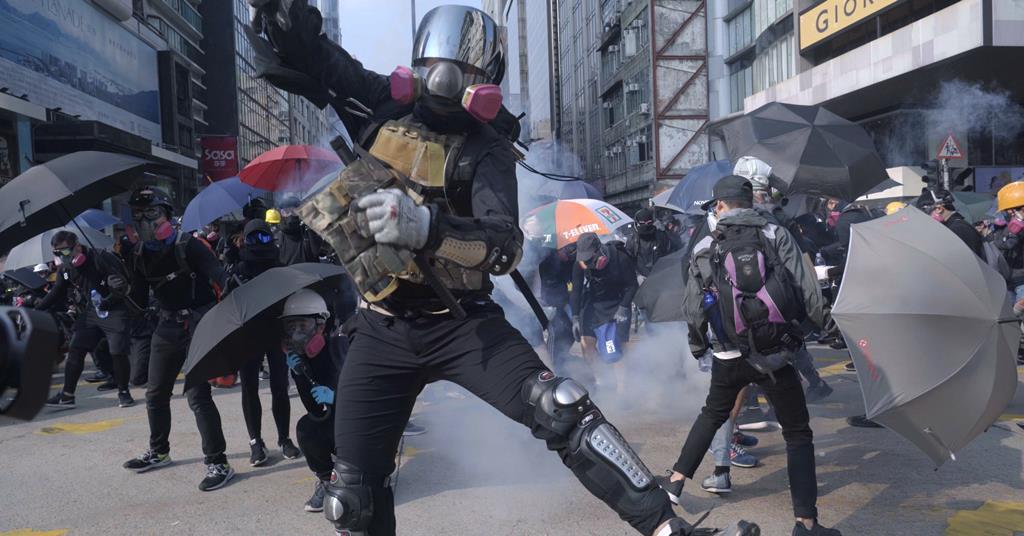
Protestors were faceless and leaderless
However, one needs to know the background of Hong Kong's history (a former British colony handed back to China, which then reneged on the "one country, two systems" promise of no change for 50 years) to understand how the city came to this moment. There is only a brief mention of the 2014 Umbrella Movement, which led to the explosion of the anti-extradition protests five years later.

One of the first scenes was of former legislator Claudia Mo Man-ching taking part in the initial peaceful protests -- it would be the first of several times I would cry because she is now languishing in jail, and many other people who are captured in the film are behind bars as well. 

It is very lucky of the director to have interviewed them for the record.

They include Benny Tai Yiu-ting, Avery Ng Man-yuen, Fernando Cheung Chiu-hung, Wu Chi-wai, Joshua Wong Chi-fung, Gwyneth Ho Kwai-lam Agnes Chow Ting, and those who are in exile: Ted Hui Chi-fung and Nathan Law Kwun-chung.
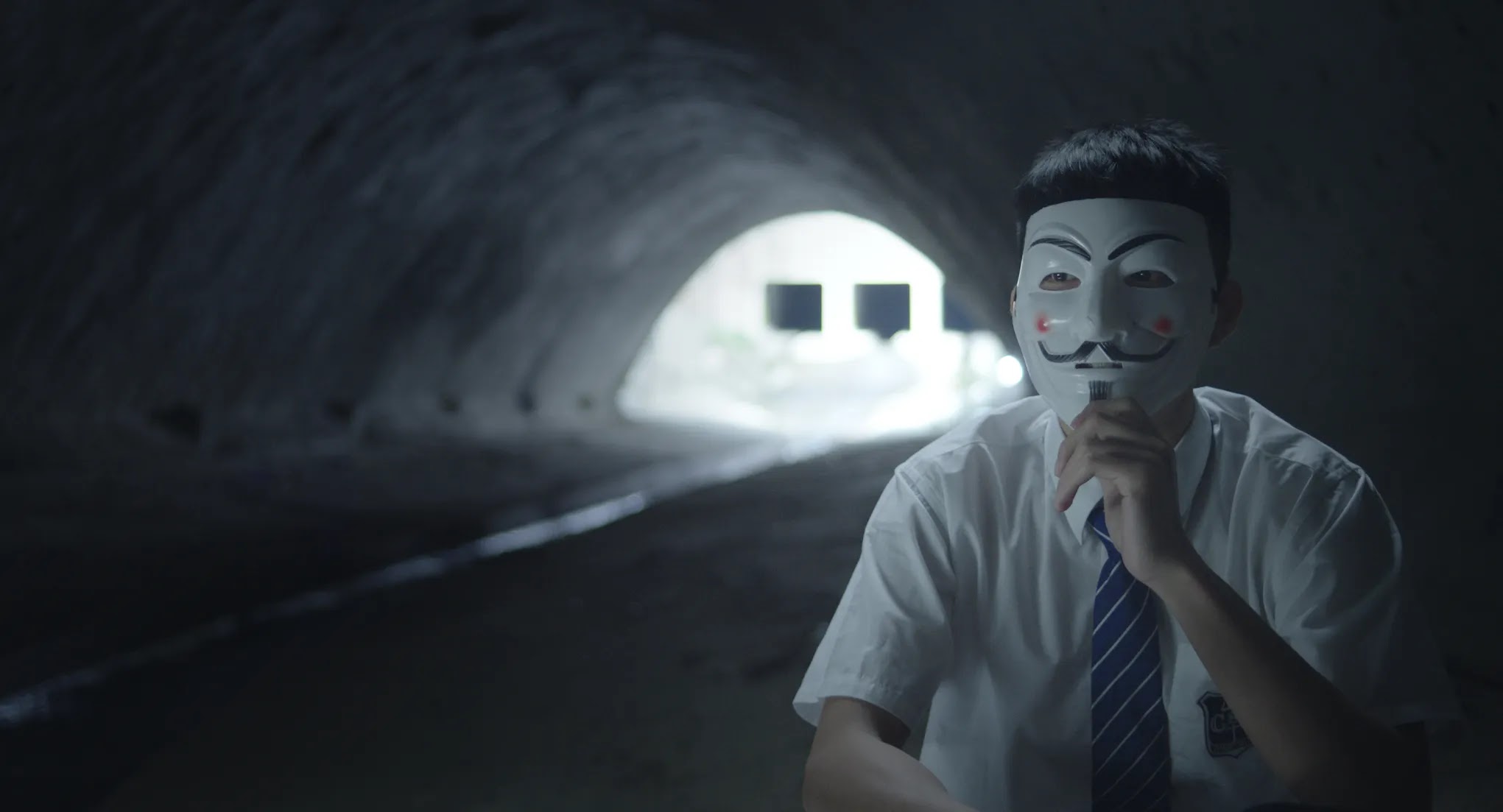
This 16 year old didn't tell his dad about protesting
But the film isn't about them, but the faceless and nameless protestors who followed Bruce Lee's mantra to "be water". They learned from the 2014 protests not to have a leader, but be leaderless and Revolution of Our Times follows their evolution, how 2 million people who came out to peacefully protest against the extradition bill proposed by Chief Executive Carrie Lam Cheng Yuet-ngor and then Secretary for Security John Lee Ka-chiu (and now sole candidate running for the next chief executive).

The turning point, as many remember was July 1, 2019 when some people decided to storm the Legislative Council. This is where Tai says the protest became fractured, where some protestors wanted to remain peaceful, while others said the government was not listening and felt they had to escalate to violence.

There is footage of them inside, but also the confusion and fear -- would the police storm in at anytime and arrest them? Would they come out alive? This is where viewers begin the empathise with them -- and are reminded these are young people in their teens and 20s.

After this interview, Gwyneth Ho is now in jail
As a result of the storming of Legco, there was another motto: "not one less" -- everyone together -- and they began organising themselves, from front-line protestors who lobbed bricks and pushed water barriers around, to rounding up cars to drive people home late at night, to "moms and dads" who provide logistical and emotional support, and those who collect information on the street to inform others on Telegram where to go and figure out strategies and exit routes on maps.

Another big event was July 21, 2019 when white-shirted men with sticks beat up people at the Yuen Long MTR station. There is a lot of horrific scenes of people literally being hit by sticks, and Gwyneth Ho's own footage of being attacked in a Facebook live broadcast shown in full. 

The public immediately complain to the police and the commander hardly acts concerned when he finally arrives at the scene, saying he came as soon as he heard... when the incident was already over. Many people believed the police had colluded with the triads, and there is even a clip of Junius Ho Kwan-yiu instructing the triads to mercilessly beat anyone in black. 

Chief Executive Lam looks like a deer in headlights at a press conference where former RTHK reporter Nabela Qoser grills her the next day about where she was when the Yuen Long attacks were happening; Lam and her ministers beat a hasty retreat. One hollers, "When will you die?"

This first aider gives his mask to an elderly man
As a result the protests escalate further to August 31 with the attack in the Prince Edward MTR station, when police brazenly shot pepper spray in the station and attacked people as they were desperately trying to flee. 

One of the first aiders begged the police to let him in to treat the wounded, but viewers can hear the police tell him he is a piece of excrement. The young first aider, only in his teens, is inconsolable. 

This led to a complete hatred of the police, and there are numerous scenes of them stepping on protestor's faces once they were caught, or kneeing them so they could not breathe, or still beating them, or dragging them on the ground. One protestor points out they understand the legal risks of what they are doing, but if the police do anything wrong, they aren't held accountable.

Meanwhile there is also a profile of Uncle Chan, a 73-year-old farmer who wanted to do his part to protect the young protestors. Wearing his fuchsia hat, gas mask and florescent vest, he tries to stop the police from physically harming the young people on the streets. There is an altercation between him and the police and for several agonising seconds viewers watch blurry chaotic footage, worrying if Chan is OK. 

Uncle Chan (left) tells a protestor to be careful
There is stunning drone footage of the protests, from the start showing the 2 million people flooding Hennessy Road, up at Lion Rock where protestors put up a statue, and unfurl a banner, but most impressive is scene where the police are running up Nathan Road to catch protestors and they disperse as quickly as possible like black ants. The police catch one person, then try to catch another, but another protestor knocks that officer down and then the two of them run their separate ways. 

Another is a comparison between October 1, 2019 in Beijing and how it is marked in Hong Kong. As one can imagine Chinese leader Xi Jinping's celebrations are controlled and grandiose, whereas protestors in Hong Kong tear down upbeat Chinese slogans and prepare to defend their hometown.

It all culminates into the final showdown, first at the Chinese University of Hong Kong, and then at Polytechnic University. Viewers see first hand the chaos and what it was like being on the front line fighting the police at both campuses. The protestors practice using sling shots, bows and arrows, prepare Molotov cocktails and ferry supplies.

But things turn for the worse when the police surround the protestors at Poly U and they are terrified there is no way out. They even try to escape through a sewer but without success. This was perhaps the lowest point of their morale along with fatigue that really hit the protest movement hard despite rallying from people outside the campus. 

Director Kiwi Chow 
Everyone knows the end of the story -- the national security law was implemented on June 30, 2020, abruptly ending the protests unless people were willing to sacrifice themselves to 10 years in jail. Director Chow records how over 10,000 people have been arrested related to the protests and lists the names of former lawmakers and activists who have been imprisoned and still awaiting trial. 

But then Chow tries to end on a high note, having primary school children write pro-Hong Kong messages on Post-It notes, and then has an orchestra and singers in protest gear reprise the protest anthem. It's very contrived compared to the rest of the documentary. It is understandable he wants to incorporate the song into the film, but these scenes are not genuine.

Nevertheless Chow should be commended for having the courage to put Revolution of Our Times together -- another filmmaker was doing a similar project but was spooked by the national security law and gave their footage to Chow to use instead. The people who came forward to be interviewed are brave too, even if they do not fully reveal their faces and voices. 

They are the ones who help the viewers understand their motivations, emotions and beliefs at that time, and how they were all united under one cause. People leaving Hong Kong do not blame the protestors for what they did -- instead they blame Lam and Beijing.

And following the "be water" mantra, exiles abroad are trying to figure out how they can keep the movement alive, because it is their love of Hong Kong that reminds them of why they need to find freedom elsewhere.

Revolution of Our Times
Directed by Kiwi Chow
152 minutes


VIFF -- Review: Our Mr. Matsura

Matsura (right) with a local in Okanogan County Frank (Sakae) Matsura, was the son of a Samurai in Hirado, Japan, but by the time he was gro...