Showing posts with label New Territories. Show all posts

Thursday, December 11, 2025

A Trip Down Memory Lane with Noodles


This shop apparently has better quality noodles

My mom's formative years were spent on a farm in Kam Tin in the New Territories. She has told me many times how after school she and her siblings had to help inoculate lots of baby chicks before dinner and then do her homework.

On the weekends, a big treat was being able to go into town -- in this case Yuen Long -- and watch a movie, and then have a bowl of noodles at Ho To Tai.

Plump wontons with egg noodles in soup
The noodle shop was opened in 1946, and still retains its old school look, with the menu of 16 items written outside the shop complete with a phone number with five digits! Today there are eight.

The interior still has a lot of tiles on the walls, uncomfortable tables and chairs, and glass Coke bottles for drinks. Customers can also buy boxes of dried noodles to make at home.

When we came back this time, our relatives told us the Ho To Tai business had split up between two families, one taking the Yuen Long shop, the other set up the next station over in Long Ping, and the latter's noodles were supposedly better.

So we made a pilgrimage to that place, a quiet district that didn't have a giant shiny imposing shopping mall like Yoho Mall in Yuen Long.

Less than a 10-minute walk from the station we found Ho To Tai and it wasn't busy.

Tender beef brisket with radish
The menu is pretty straight forward and the three of us, my aunt, mom and I ordered several things to share: wonton noodles, noodles with dried shrimp roe generously sprinkled on top, beef brisket with radish, a plate of vegetables, and deep-fried dace fish balls with a briny sauce.

The noodles weren't extra thin and springy like those at Mak's Noodles, but they were comforting to eat, simple and delicious. The beef brisket was very tender, and the dace fish balls were bouncy and flavourful.

It was a simple dinner, and while my aunt and mom ate, they began reminiscing about their childhoods; they are nine years apart in age, so their experiences growing up were different. But it was fun listening to them talk about commuting to school, going to the wet market to buy food for their elder brother to cook, or boarding at school with five other girls in a room.

They had much tougher childhoods than me, though they seemed to find joy in their experiences, or grateful for the discipline drilled into them, or just accepted that this was the way life was back then.

Deep-fried dace fish balls with a briny sauce
After we finished eating, we paid the bill at the cashier, where the were yellow and orangey-red boxes piled high. The yellow ones were shrimp noodles at HK$70, but the latter were more expensive at HK$98! When we asked why, the staff explained it was because they were totally covered in shrimp roe compared to the former.

We only wanted to give the best to my uncle so the HK$98 box it was!

It took us about an hour to get to Long Ping and another to get back, but it was a nostalgic trip worth spending the time.

Ho To Tai
G/F, Fook On Building
67 Yuen Long On Ning Road, Yuen Long (Long Ping MTR station)

The other noodle shop is at
G/F, 67 Fau Tsoi Street, Yuen Long (Yuen Long MTR station)

Saturday, August 16, 2025

HK Government Rethinks Water Budget

HK government tried to cut costs by buying water from China

Times are tough in Hong Kong when the government is cutting back on the kind of water it supplies to its staff.

Previously it was Watsons Water, provided by Watsons Group, in other words, a Li Ka-shing company.

But in June, Hong Kong's Government Logistics Department announced it had awarded the three-year drinking water supply contracts to mainland Chinese companies for the first time in a bid to save HK$16 million annually.

A water brand has serious quality issues
Government offices in Kowloon would continue to get water from Watsons Group, but its sub brand called Cool, while those in the New Territories would be supplied the water brand Happy Xishi from Professional Trade International Limited.

And government offices on Hong Kong Island and the Outlying Islands would get the water brand XinLe from Xin Dong Xin Trade Co., Ltd.

Local officials said the selection process used rigorous quality standards despite the cost savings.

However, media outlet HK01 reported XinLe had a history of safety concerns. From 2014 to 2017, the company was repeatedly flagged by China's food safety authorities for exceeding acceptable levels of harmful substances, including bromate, which can be a potential carcinogen, as well as microbial contamination.

So today, the Hong Kong government has announced it has partially terminated its contract with Xin Dong Xin Trade Co., Ltd.

The press release added the Government Logistics Department will decide if it will fully terminate the contract and has referred the incident with the police. 

In the meantime the government has asked Watsons Water to temporarily supply Cool water to offices on Hong Kong Island and the Outlying Islands.

Sometimes you can't be too petty on saving money when it comes to water. You can wear cheaper clothes and shoes, and take cheaper transportation, but you really can't be too cheap when it comes to what you put in your stomach...

Wednesday, October 23, 2024

Promoting Construction with Construction

The Kau Yi Chau project will create 1,000 hectares of land

The Hong Kong government is pushing ahead with developing the New Territories with the Northern Metropolis and creating manmade islands called Kau Yi Chau Artificial Islands to build new housing and boost the economy, as the city integrates further into the Greater Bay Area.

Kau Yi Chau will create 1,000 hectares of land, but environmental groups are concerned about how the construction of the islands will impact the natural habitat, not to mention the cost, at the price tag of HK$580 billion over 10-15 years.

The Development Bureau is banking on these two massive infrastructure projects that it is proposing to shell out a whopping HK$600 million (US$77.2 million) to build an exhibition hall in Wan Chai to promote these projects by 2027.

Last year's policy address highlighted the need for exhibition space to showcase these two projects and Wan Chai North Promenade was chosen, directly across from the Hong Kong Academy for Performing Arts.

The space, which is about 5,000 square metres, will house a building that will be three to four stories high with a total area of about 8,000 to 10,000 square metres.

Construction will begin next year to open sometime in 2027.

What happens to the building after those two projects are completed?


Friday, April 19, 2024

Delicious Budget Thai Eats in Yuen Long

Whetting the appetite with pomelo and prawn salad

When I was in Hong Kong, a foodie friend was keen to take me to a dai pai dong in Sham Shui Po called Oi Man Sang. Customers have to queue for a table, but many believe it's worth it, as the place is known for cooking fresh seafood. We were all looking forward to it -- until we found out it would be closed on Qing Ming, or grave-sweeping day, one of the few holidays the staff get off.

Braised beef in a tart soupy sauce
So, we had the second-best thing -- a Thai restaurant in Yuen Long, about a 20-minute walk from Yoho Mall II in the New Territories. 

My friend drove us there along with his cousin and her husband, along with another chef acquaintance to Thailand East. When we got there it's a large compound, with people eating outside and inside, and parking at the back.

We were shown to a indoor area and upstairs where practically all the tables were filled. While the place served Thai dishes like green papaya salad and skewers, they also had claypot rice -- very Cantonese, and soy sauce chicken.

To start the pomelo and shrimp salad was delicious, large chunks of the citrus fruit together with plump shrimp, cherry tomatoes and peanuts, with a light soy dressing that was seasoned with fried garlic chips. Soon came the pork and beef skewers dipped in a thick peanut sauce.

Claypot rice with Chinese sausages was spot on
In a large stainless steel bowl was a giant beef bone, seasoned with garlic and coriander. The bits of beef fell off the bone easily and the slightly tart soup was delicious. I could have eaten the soup on its own and be fully satiated.

Next came two piping hot claypot rice, and they had the crispy rice at the bottom. The first had Chinese sausages, including one with offal and pork belly, the other with small pork ribs. Both were delicious and just depended on which flavour your were more partial to. How a Thai restaurant prepared spot on claypot rice I don't know, but practically every table had at least one.

A pre-ordered baked soy chicken arrived sitting up on a mini stake with a bowl at the bottom to catch the drippings. It seemed disconcerting at first to see a headless chicken sort of standing upright, but we took pictures anyway. After the photo session it was whisked back to the kitchen for the chef to expertly chop into pieces.

Roasted chicken was tender, hardly dry
For vegetables, water spinach with a touch of chillis was just right, along with more fried rice with pork belly and scrambled eggs on top. 

By this point we were pretty full, but wait there's dessert! We had the standard black sticky rice with mango and coconut milk, and a plate of taro-flavoured jellies with small cups of coconut milk jelly. 

Together with good conversation mostly about food, and talking about what we ate, it was a very enjoyable evening at a restaurant on the side of the road. For five people the bill came to around HK$1,300 including drinks, about HK$260 per person. Practically Shenzhen prices! No wonder the place was packed!

Black sticky rice with mango and coconut milk
Thailand East
G/F, 1 Tung Shing Lei
Yuen Long
9790 6118

Tuesday, April 9, 2024

MTR is Hong Kong's Pride and Joy

The Tuen Ma line is very efficient


The MTR system continues to grow in Hong Kong, and I experienced first hand how convenient it is to commute from the New Territories to Central in minutes.

This morning I went to Yuen Long to visit a friend who has a 15-month-old boy and another baby three months old. She made it easier for me by suggesting we meet in Yoho Mall, which is attached to the Yuen Long MTR station.

It took me just under an hour to get there from North Point by going to Admiralty, then taking the East Rail to Hung Hom, and changing to the Tuen Ma line, the longest line on the MTR network. 

But going back to Central, it only took 30 minutes, by going from Yuen Long to Nam Cheong then to Hong Kong station. I was very impressed. Not only that I got to my lunch appointment on time despite helping my friend with her kids, and even holding onto the older one by the hand as he walked a bit in the mall.

This MTR line enables people to live in cheaper areas and commute into work in Central or Tsim Sha Tsui East within 30 minutes. Where else in the world can you find such an efficient public transport system?

This is Hong Kong's strength -- being able to transport people quickly and efficiently. This MTR system is not trumpeted enough, the envy of every other major city in the world.


Friday, March 8, 2024

Fact of the Day: Public Housing Wait Gets Longer

The wait for public housing is now an average of 5.8 years

People waiting to be able to rent a public housing flat now have to wait 0.2 years longer at an average of 5.8 years, according to the Housing Authority.

Last year around 13,700 public rental flats were allocated, much fewer than the 26,400 in 2022. The Housing Authority said it was because there were fewer rental flats to allocate, the "lowest in recent years".

The government body explained it was due to construction delays, such as one accident in 2022 when a crane in Sau Mau Ping collapsed and killed three workers, causing other construction projects to be suspended for inspections.

Meanwhile, the average wait time for elderly one-person applications increased by 0.1 years to four years.

Nevertheless, the Housing Authority said more public housing flats were on the way in Tuen Mun, Tung Chung and the New Territories that would be completed in two years.

Dealing with the housing issue was among those mentioned by Chinese leader Xi Jinping when he visited Hong Kong in 2022.

"Currently, the biggest aspiration of Hong Kong people is to lead a better life, in which they will have more decent housing," Xi said at the time.

Interestingly the number of applicants for public housing has fallen in recent years, from 155,100 at the end of 2017 to 129,400 at the end of last year, and yet the wait has risen.


Wednesday, October 11, 2023

VIFF Review: Winter Chants

A record of village life in Ho Chung

Since she was a teenager, Tsang Tsui-shan has wanted to preserve the culture and stories of Ho Chung, the Sai Kung village she was born and grew up in, in Hong Kong's New Territories.

She became a documentary filmmaker and Winter Chants is her latest work recording the Peace and Light Festival that pays tribute to the village, those who have passed, and thanks the gods for protecting them. It is an event that is only held once every 10 years and those living overseas use this as an opportunity to return and hold family reunions.

Tsang returned to her village in early 2020 to begin documenting the preparations for the event, but then Covid-19 began to spread, and while it was relatively contained in Hong Kong, the government did not want large crowds to gather which put the festival organisers in a difficult situation...

The simplicity of life in Ho Chung village
In Winter Chants, she uses a lot of archival footage and photographs to demonstrate not only how large scale the event was and what performances and rituals were held for several days, but also how Tsang herself participated as an emcee for one or two events. While she doesn't reveal her face explicitly, Tsang narrates the documentary.

She also shows how the next generation is keenly aware of how important it is to preserve the village's culture through fraternal twins who create and publish a magazine about villages in Sai Kung. They note how Westerners have a publication called "Sai Kung", but even though it's about the same district, the local twins can't relate to the stories at all.

Their own magazine talks about village life in Chinese, and the twins deliver a copy to every mailbox and leave several copies in various business establishments. It's heartening to see young people in their 20s very passionate about where they come from, not necessarily from a political standpoint, but a cultural one, with making money not the priority.

Another man with an artistic bent paints murals on the wall bordering the village to welcome back the diaspora to the festival, and he even encourages young children to help him paint. It's a lovely way to encourage inter-generational participation, and the end result reflects activities and culture of the village.

The multi-day festival appeases the gods
Meanwhile the village elders are trying to organise the festival, but have to keep watching the government regulations change constantly, with then Chief Executive Carrie Lam Cheng Yuet-ngor's voiceover explaining how people need to wear masks, keep their distance, and how people will be fined if too many people gather together.

The pace of the documentary is slow, much like village life in Ho Chung. Children play in the narrow paths, elderly people chit chat outside, but it isn't bogged down either. Winter Chants is like a poetic love letter to Ho Chung village and its people, documenting this important cultural event that brings the villagers together in a bid to appease the gods to protect them from, ironically, disease!

One gets the sense that Ho Chung will continue to thrive despite what is going on around it, thanks to young people who are willing to continue traditions forward, and to record and document the past to ensure a smooth continuum. 

Winter Chants
Directed by Tsang Tsui-shan
102 minutes


Friday, September 8, 2023

Hong Kong Deluged by Flooding

A bus submerged in the torrential rains that flooded HK

A few hours ago pictures and videos of the epic flooding in Hong Kong were posted all over social media -- the muddy waterfall pouring into Wong Tai Sin MTR station, vehicles plowing through water in the Cross Harbour Tunnel, a woman still holding onto her umbrella as she slid about 50 metres along a street, trying to grab onto the railing.

The city is still under a black rainstorm warning 14 hours after it was posted, with rain falling 158.1mm deep between 11pm and midnight last night, an unprecedented amount since records were kept in 1884. In total over 400mm of rain has fallen.

Needless to say today schools are closed, and most people are working from home as the black rainstorm warning is expected to continue until midnight this evening.

Wong Tai Sin MTR station deluged by water
Chai Wan seems to have received the brunt of the intense rain left over from Typhoon Haikui. The New Territories also suffered with the Shenzhen government giving very little notice to its Hong Kong counterpart that it would discharge water from the reservoir -- that knock-down effect left 15 minutes for residents in the area to prepare to evacuate.

So far there are no reports of fatalities, but residents are not impressed by the government's response, with the Chief Secretary Eric Chan Kwok-ki holding a press conference right now (2.30pm HK time) to report on what the authorities are doing together with the Security Bureau some 12 hours later.

Chief Executive John Lee Ka-chiu didn't make any public statements and instead published two social media posts urging people to stay safe. Hongkongers bombarded the comments section questioning why the government's response was so behind, compared to the preparations made when Typhoon Saola was approaching the city.

One commenter by the name of Veronica Law wrote: "Not everyone was on Facebook. Why wasn't even an SMS sent to residents in this kind of situation?" Another user named Emi An said: "Is the chief executive sleeping? Are you aware of the severe flooding out there?"

A shopping mall in Chai Wan flooded
At the press conference going on now, acting director of drainage services Chui Si-kay said Hong Kong's drainage system could not cope with the torrential rainfall, and denied that Shenzhen releasing water from the reservoir did not cause flooding in the New Territories, that it was all from the rainfall. 

One may never be quite sure what the situation was there, but for sure the city will have a lot of water and sludge to get rid of in the streets, in shopping malls, MTR stations, and people's flats. 

There are still questions on how the city's authorities and the Hong Kong Observatory did not prepare residents with the possibility of a deluge of rain...


Tuesday, April 4, 2023

Hong Kong's Declining Workforce, Student Populations

Hong Kong doesn't have enough workers across all fields

In yet another sign that Hong Kong's population is decreasing, last year the city lost over 94,000 employees, the biggest drop in the working population since records began almost 40 years ago.

The downward trend has been happening since the 2019 protests and in the last four years some 220,500 workers have left Hong Kong. The drop has been exacerbated by baby boomers retiring at 60 or 65, and experts say the combination of these factors will continue for the next year or two.

Many workers left Hong Kong or retired
"Many of the people who were born in the 1960s, when Hong Kong was experiencing the post-war baby boom, have reached retirement age. Meanwhile, the city is also seeing many emigrate to other regions and countries," said Professor Paul Yip Siu-fai, associate dean of the University of Hong Kong's faculty of social sciences.

As a result there are 73,150 job vacancies in the private sector, a jump of 20 percent from last year.

The education industry is in dire need of people with 7,750 positions that need to be filled, followed by transport and logistics at 7,390 jobs. Human health services is third at 6,510 vacancies.

Hong Kong's official population figures show the population has dropped for a third consecutive year to 7,333,200, a 1 percent drop from 2021.

Schools with few students may need to close
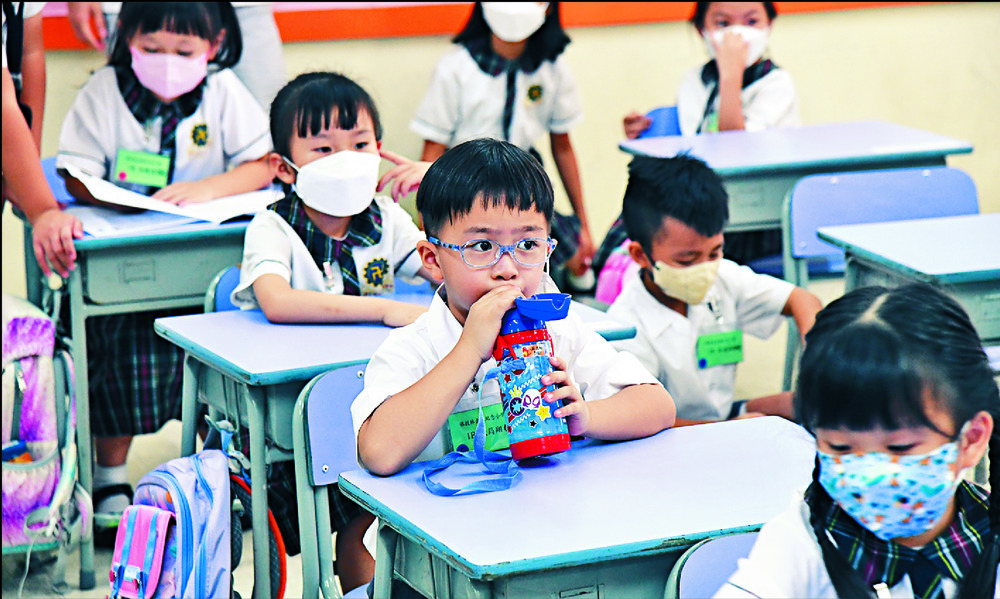
And because of the falling population, at least two primary schools may close because they don't have the minimum of 16 students to stay open.

Pupils and teachers have been leaving Hong Kong during the school year, and that coupled with the declining birth rate has led to fewer Primary One classes. The actual number of Primary One classes won't be known until the school year starts.

However, it is worth considering that with the government's push to develop the Northern Metropolis, the area near the border with the mainland, there could be an increase in students there. The plan is to turn this area into a residential and tech hub with some 900,000 flats and up to 650,000 jobs.

"If we axe schools now, when the population of the district goes up again in the future, there will not be enough schools," says Chu Wai-lam, vice-chairman of the New Territories School Heads Association.


Tuesday, January 17, 2023

Over 40K Isolation Beds Collecting Dust in HK

The isolation centre at Lok Ma Chau Loop is empty

Remember when Hong Kong rushed to build Covid-19 isolation units, and even brought over mainland Chinese construction workers who built units that featured squat toilets? They had to be retrofitted with sit-down toilets after this were reported to the shock and horror of local residents.

While the pandemic is still ongoing but the latest variant, XBB.1.5 is not as severe though it is more infectious, the Hong Kong government has given up on forcing people into isolation, unless their living situation is such that they need to keep away from others for a few days.

Some were built with squat toilets at first
Only the facilities at Kai Tak and Penny's Bay are being used at the moment.

That means over 40,000 beds in an area covering 72 hectares (177 acres) are unused, the equivalent to 86 football fields.

Who knew the city had that much land -- remember it was suddenly donated by tycoons? Wonder if they want their land back now?

The facilities are in the New Territories in Tsing Yi, San Tin, the Hong Kong-Zhuhai-Macau Bridge, Ma Sik Road in Fanling, Hung Shui Kiu, Tam Mi and in the Lok Ma Chau Loop.

Lawmaker Dennis Leung Tsz-wing said he understood the facilities had been closed for more than half a year, and that about 5,400 workers, including security guards and cleaners, were laid off last May. 

Units at Penny's Bay are still being used now
Not to mention it cost billions of dollars to build these units that were used for about a year, if that? And who paid for them?

Pro-establishment lawmakers (as they are the only ones in the Legislative Council these days), are pushing the government on this, suggesting these units not become white elephants, but be quickly repurposed into housing.

Some suggest it be used for low-income housing for individuals or families, or dormitories for large construction sites, or donated to other countries -- how benevolent. 

In response, some think it's too much trouble to repurpose them into housing units, while others say they should be moved elsewhere as some of these are in far-fetched locations.

Surely these units can be repurposed somehow?
Not even trying to repurpose these units just shows how wasteful the authorities are, and can't be bothered to challenge local architects and engineers to think of creative ways to reuse them.

It also reveals the government not even following its own mantra of telling people to reduce, reuse and recycle...


VIFF -- Review: Our Mr. Matsura

Matsura (right) with a local in Okanogan County Frank (Sakae) Matsura, was the son of a Samurai in Hirado, Japan, but by the time he was gro...