Showing posts with label CCP. Show all posts

Sunday, January 14, 2024

Taiwanese Vote for Self-Determination in DPP Win

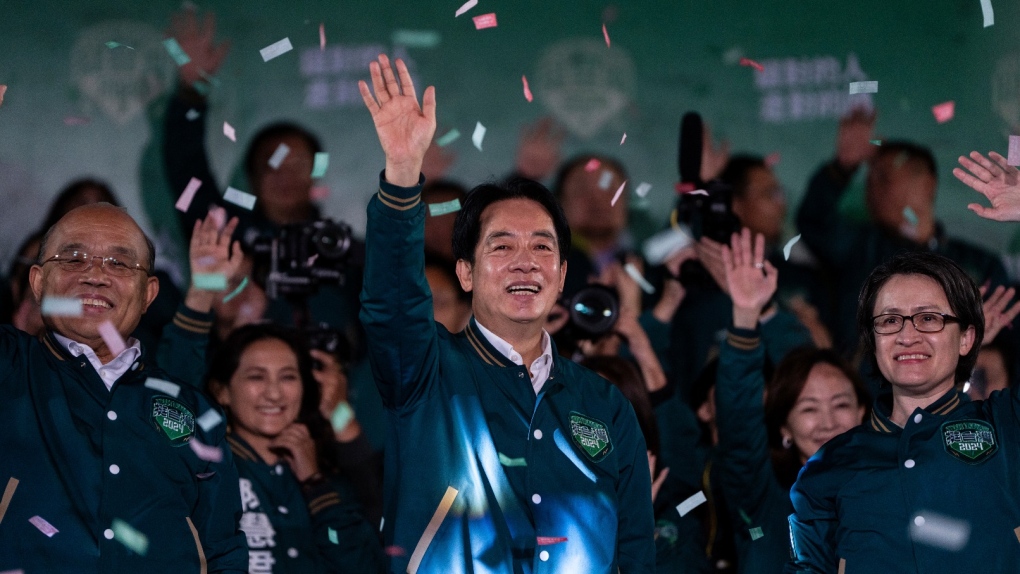
Lai of the DPP will be the next President of Taiwan

Before the Taiwan election on January 13, the People's Republic of China had warned voters to "make the right choice", and the Taiwanese heard it loud and clear -- re-elect the Democratic Progressive Party back into office, this time with Tsai Ing-wen's deputy Lai Ching-te as the next leader of the island.

Lai won about 40 percent of the vote, followed by the Kuomintang's Hou Yu-ih at 33 percent, and Ko Wen-je of the Taiwan People's Party with 26 percent.

Although votes still need to be counted, Lai will become the next President of Taiwan, though the DPP may not have full control of the legislature with a projected 51 seats out of 113, while the KMT is expected to have 52 seats, eight for the TPP.

KMT is projected to have more seats in parliament
Nevertheless, the third consecutive win for the DPP shows the island is keen on standing its own ground and does not want to be usurped by Communist China, particularly by force. 

There are concerns former KMT president Ma Ying-jeou should not have said that Xi Jinping should be trusted, which may have turned off voters; but after the Taiwanese had front-row seats watching what happened to Hong Kong in 2019 and 2020 with the imposition of the national security law, they don't want the same thing to happen to them.

Meanwhile Hongkongers wistfully looked to Taiwan and watched its residents able to freely exercise their right to vote, and wondered if the city would ever achieve universal suffrage.

Lai is 64 years old and a former doctor turned politician, whose party is pushing for self-determination, social justice and rejection of China's threats. 

However, Beijing painted Lai as a stubborn "Taiwan independence worker", a "destroyer of cross-strait peace", and potentially a "creator of a dangerous war". 

Taiwan has over 19 million eligible voters
Nevertheless, Lai took a less radical approach during his campaign, saying Taiwan did not need formal independence, and in his victory speech said he would seek "cooperation with China", following the path of of his predecessor Tsai. 

This seems to have appealed to voters, much to the chagrin of Beijing, which does not seem to understand how it is perceived on the island.

It's a well-known trend that the older generations are generally more supportive of the KMT, as they were the ones who moved to Taiwan after 1949 and want to see some kind of reunification. However, the younger generation voters identify themselves as Taiwanese. They are well aware of the existential threat that Beijing imposes, but they do not align themselves with China.

Beijing will have to recalibrate its response to the election results as Lai is signalling his willingness to have some kind of balanced approach to cross-straits relations. Constant threats by China have had the opposite effect and made the Taiwanese more interested in controlling their fate the best they can. 

Wednesday, September 20, 2023

Hong Kong No Longer World's Freest Economy


The mighty has fallen -- HK loses its freest economy title

Hong Kong is no longer the city with the freest economy of 165 in the world -- it is now Singapore. 

That's according to the Fraser Institute, a public policy research organisation based in Vancouver. It had ranked Hong Kong as the freest economy "since the first time comprehensive data became available in 1970", but now it has been demoted.

Singapore gains top spot in institute's ranking
The Fraser Institute cites China and its interference in the city's affairs as the reason for Hong Kong's second spot, though the government denies this.

It went on the defensive, rejecting several of the institute's conclusions, and insisted it had been "fully, faithfully and resolutely implementing the principles of the 'one country, two systems'," with "Hong Kong people administering Hong Kong" and a high level of autonomy based on the Basic Law.

But the institute warned the city's ranking could deteriorate even more.

"This is the first year Hong Kong has not ranked number one on the index since its inception, and the expectation is that its score will only fall further as the Chinese Communist Party continues to suppress freedom of all sorts," said Fred McMahon, the holder of a research chair in economic freedom and a resident fellow with the Fraser Institute.

The report examined regulation, openness to international trade, the size of government, the legal system, and property rights of the 165 places.

Implementation of NSL caused HK ranking drop
Other criteria the institute looked at were new regulatory barriers to entry, limits on the employment of foreign labour and rising business costs as reasons to lower the scores for Hong Kong in its regulatory freedom component.

The survey also claimed the city allowed "increased military interference" in its rule of law and diminished confidence in its courts and judicial system, which had caused a decline in its legal system and erosion of property rights.

However, a government spokesman says the think tank's judgment of the regulatory environment are "factually wrong", and that Hong Kong continued to strive as an international financial hub.

He also said the city's judicial system was robust, as it is enshrined in the Basic Law. 

"Equality before the law is a fundamental principle observed in Hong Kong. The allegation against the independence and impartiality of our judiciary is totally groundless and unsupported by objective evidence," he insisted.

Survey says HK's legal system has declined
The spokesman also said the institute was biased in its opinion about the implementation of the national security law...

In case you were wondering, Switzerland ranked third, followed by New Zealand, and the United States in fifth place. Venezuela was in last place.

Friday, July 28, 2023

HK to Crackdown on "Soft Resistance"

Patriotism is a sign of agreement with Beijing

The Chinese Communist Party is determined to win at all costs.

After implementing the national security law in July 2020, Beijing thought it would defeat all dissent in Hong Kong following the 2019 protests.

However, people have found ways to continue their "soft resistance" in various ways, such as patronising the "yellow economic circle", refusing to sing the Chinese national anthem, not registering for organ donation because of its mainland links, and openly jeering at mainlanders in the city.

There is word Beijing is not pleased and wants to continue further repressing Hongkongers who refuse to bend in the CPC way.

Tang says soft resistance will be tackled
Secretary for Security Chris Tang Ping-keung said on July 25 that "soft resistance" must be tackled, and even hinted that some media, and people in arts and culture may be culprits of this soft resistance.

Earlier this month on July 3, Tang told Ta Kung Pao newspaper that Article 23 will include provisions to deal with "soft resistance", as he believed discussion about this would radicalise people... There are plans to pass Article 23 next year. 

Readers may remember the Hong Kong government under then chief executive Tung Chee-hwa tried to pass this legislation in 2003, but a mass street protest resulted in it being shelved -- until now.

There is the constant comparison that other countries like the United States and Canada have national security laws too, but these democratic countries do not weaponise it like Hong Kong and China.

So far 270 people have been arrested on national security charges in Hong Kong since mid 2020, around 70 have been tried in court, and all of them found guilty, says former lawmaker and journalist Emily Lau Wai-hing.

"This is a 100 percent conviction rate. I'm not casting aspersions on anybody," she said.

However, pro-Beijing senior counsel Ronny Tong Ka-wah claims the city continues to uphold free speech, saying: "Rest assured you can say anything you like in Hong Kong."

Lau says NSL has 100 percent conviction rate
Hard to believe Tong, previously a democrat who co-founded the Civic Party before doing a 180-degree turn towards Beijing.

In any event, there are concerns that the existence of "soft resistance" in Hong Kong gives Beijing a mandate for further repression in the city in a bid to extract complete submission.

"It's almost as if the government is saying the word 'patriot' is code for you agree with us. If you agree with us, then you can be in the district council, you can be in LegCo, you can be in the election committee and all these things. But if you don't agree with us, then you're resisting," says John Burns, an honorary professor of politics and public administration at the University of Hong Kong.

The people who are left in Hong Kong are seeing their space for resistance quickly diminishing... how much longer can they keep going? 


Friday, March 24, 2023

Hearing Chris Patten's Thoughts on HK


Patten (left) and Vines have a good chat over dim sum

Green Bean Media was started by former Hong Kong journalists who have migrated to the UK and want to keep reporting on news about their hometown.

They have followed people making the big move to the UK as well as developments in the 47 defendants charged in allegedly subverting the state for organising primaries, and Cantonese food.

Their latest video has garnered a lot of attention because it's an interview with Chris Patten, the last governor of Hong Kong. One might assume members of Green Bean Media were terrified of interviewing him themselves so they rounded up fellow exile journalist Steve Vines to do it.

The video is here: https://www.youtube.com/watch?v=MoA8iMymy8c&t=561s

And they aptly arranged to have the video interview in a cha chaan teng in London. The small cafe pulled out all the stops, giving "Fat Pang" the opportunity to eat some HK-style food, including his favourite egg tarts.

Patten's book on HK
Personally doing food interviews, it seems rude to eat while someone is asking me questions, but Patten seems very happy to dig into the dishes even as Vines is asking him something! 

The 29-minute video focuses on Patten's thoughts about Hong Kong in his book called The Hong Kong Diaries, from his personal diaries he kept when he was governor from 1992 to 1997.

In it he says foreign secretary and ambassador to Beijing Percy Cradock believed Patten should not have caused so much trouble trying to fight for democracy for Hong Kong, that he should have just done his five years as governor and then left quietly.

"He wrote the Chinese leaders may be thuggish dictators, but they're men of their word," recalls Patten. "We know that they were thuggish dictators, but one thing we know for certain is that they weren't men of their word."

Patten remembers speaking to British and Hong Kong businessmen who believed the average person was not interested in democracy, only in making money, and yet these elites had foreign passports tucked in their back pockets. 

"It was always interesting when I looked at some of my critics just to think through what they would do if things went wrong," he says.

Cradock believed Chinese would keep their word
He adds some of them have since passed, but did not reveal any of their names in the interview, which he should have done for the record.

Meanwhile Vines shares a conversation he had with a friend back in Hong Kong, as they previously believed through crises like SARS and the economic downturn that the city would bounce back, but this time they didn't have this optimism anymore.

"I think the reason why he and you are more pessimistic now is what the Chinese Communist Party wants is Hong Kong without Hongkongers," Patten says. "Maybe you have a city but you don't have a thriving city, you don't have a city with any heart."

He talks about how young people from Hong Kong come up to him and ask if they should go back and Patten says he has no answer. While he has seen from history authoritarian states have disappeared at the snap of fingers, he doesn't know when that will happen in China. 

Vines mentions the BNO scheme, that has allowed over 140,000 Hongkongers to migrate to the UK with the possibility of settling there permanently.

Patten believes it is successful because people understand the plight of Hongkongers, and that they will be a boon to the UK economy.

Patten in Hong Kong on June 30, 1997 
The former governor cites the example of meeting one man in his late 20s who had just qualified to become a doctor and was on his way to a job interview with the local health authority in Oxford. 

"People from Hong Kong will make this a more successful country," he says. "They will be strong members of civil society."

He adds sardonically that perhaps the UK should thank the Chinese for giving them all these Hongkongers.

Vines' plight is also worth highlighting. He was a well known correspondent in Hong Kong, was the founding editor of the Eastern Express newspaper and Spike magazine, a commentator and interviewer on RTHK and author.

But after the national security law was implemented in July 2020, Vines began feeling the pressure of watching what he was saying and doing, even though he had written a book about the 2019 protests.

While he says in the video he found it unhealthy to be constantly watching his back, Vines did receive calls hinting it would be best if he left Hong Kong.

Within months he sold his food business and his flat in Sai Kung, packed up 34 years' worth of possessions and moved back to the UK in July 2021. 

Vines was well known commentator on RTHK
He is active in the Hong Kong community in the UK and says there isn't a day where he isn't talking to someone from the city or writing about it.

What comes through most in the interview is Patten's genuine love of Hong Kong and its people, and how he has carried the burden of wondering if he had done enough for them since 1997.

Which is why he is constantly advocating and doing whatever he can from his privileged perch, from writing to the Prime Minister about Jimmy Lai, to greeting migrants settling in their new home.

But once the interview is over, that good food can't go to waste, and Patten reaches over to pick up a slice of pork belly with his fingers.


Sunday, March 5, 2023

60 Years of Lei Feng Propaganda

It is the 60th anniversary of Lei Feng Day

Today March 5 is the 60th anniversary of "Lei Feng Day" in China.

Lei Feng was a model soldier that the Chinese Communist Party likes to trot out once a year to remind people of his selflessness and altruism. 

For example he was reported to have hand washed his fellow comrades' uniforms and even exposed counterrevolutionaries.

Lei was apparently a model selfless soldier
But ironically he was not known until after his death at the age of 21 when a telephone pole, struck an army truck, hit him as he was directing the truck in backing up.

He kept a diary, recording all his good deeds, which made him a perfect example for generations of CCP members to follow. But some scholars believe his diary was forged under the direction of Lin Biao to improve Mao Zedong's image following the disastrous Great Leap Forward.

Then in 1963 Mao declared March 5 Lei Feng Day, urging people to "Learn from Lei Feng".

Last year a Chinese state media crowed: "Lei likened himself to a small yet indispensable 'screw' inside a machine, and vowed to 'never rust'." 

How poetic.

Even Western companies got into the game. Kentucky Fried Chicken branded one of its China-based outlets with a Lei Feng theme four years ago, featuring Lei's quotes on the walls and "words from his poems playing as background music".

Hilarious.

Even superheroes need to learn from Lei (Cowhig)
Chinese leader Xi Jinping is perpetuating Lei's image, describing him as a "role model of an era." Last week Xi announced that "learning from Lei Feng" was essential to "building a modern socialist country."

However, the public may not be following Xi's lead -- three official Lei Feng biopics in 2013 played to "near empty" theatres, state media reported.

Why?

Han Rongbin, associate professor of international affairs at the University of Georgia and expert on authoritarian propaganda says Lei's relevance "has withered over time."

However, while Lei "doesn't generate a huge resonance, especially among the middle class... but it's still a propaganda symbol, so I don't think the [CCP] is going to give it up anytime soon," Han said.

So... Happy Lei Feng Day to you!

Friday, January 20, 2023

Review: Red Roulette


A captivating book about the CCP today

The day before Red Roulette was supposed to hit bookstore shelves, the author Desmond Shum got a phone call from his ex-wife, who he hadn't heard from in four years.

In 2017 she was snatched from her office in Beijing and was never seen again. But in September 2021 he heard her voice on the other end of the line, begging him not to release the book he had written, a story about his humble beginnings over 50 years ago and how his career mirrored the rise of China.

It was his ex-wife, Whitney Duan Weihong who had taught him the ropes of how to do business in mainland China, and together they made multi-billion dollar deals that made them immensely wealthy.

Duan and Shum on their date before marrying
She was the one who cultivated their top-drawer contacts -- from local cadres rising up the ranks, to top senior officials in the Politburo. It really does sound like betting on horses and hoping that yours manages to cross the finish line without corruption charges in tow.

Shum was born in Shanghai, but as a child his parents sacrificed their relatively decent lifestyle to start all over in Hong Kong. He was frustrated at first, but his height and athleticism helped him become accepted in school, learning Cantonese and English, and later university in the United States.

After returning to Hong Kong, Shum managed to manoeuvre his way into China in the late 1990s and saw how anything was possible, but how?

Enter Duan, who would show him how it's done.

Red Roulette chronicles their rapid rise to the top where they flew private jets, bought expensive art work and had homes in various places. It's practically dizzying how Shum nonchalantly reels off how much they spent on wine and jewellery, but that it was the cost of doing business.

Wining and dining businessmen in Bordeaux 
Nevertheless, he reveals very interesting insider observations: Those headlines of officials charged with corruption or caught with lots of prostitutes are mostly false. Shum says they are concocted to justify taking these officials down, when in fact they led pretty clean lifestyles to climb up the political ladder.

Shum describes his relationships with a few of these officials who were later caught, and in the time that he knew them over several years, he claims they would not logistically even have time to cavort with hookers as they were tied up in meetings (with male officials) all day and night.

But he still does not know why Duan was taken and why she has never been formally charged. 

In media interviews, Shum has said that when she called him, he knew someone was next to her telling her what to say, and warning that someone was going to get hurt if the book was released.

He claims he wrote Red Roulette for his son Ariston, who is now 12 years old so that he will know what his parents had achieved and that Shum has no regrets.

Duan, Ariston and Shum in happier times
He also reveals his support for Hong Kong -- even attending the 2019 protests early on and voted in the last District Council election. But with the implementation of the national security law, which Shum says is heavy handed, he believes this is the end of Hong Kong as an international financial hub.

Before the book ends, Shum talks about Xi Jinping before and after he became the leader of China and makes some interesting personal observations about him.

A fascinating read that ties in various news stories that I have read over the years and interesting to see Shum's take as he knew many of these people personally.


VIFF -- Review: Our Mr. Matsura

Matsura (right) with a local in Okanogan County Frank (Sakae) Matsura, was the son of a Samurai in Hirado, Japan, but by the time he was gro...